
Designing a luxury living room is not simply about adding an expensive sofa, marble surfaces and a statement chandelier. What usually makes the biggest difference is whether the furniture fits the scale of the room, people can move through the space comfortably, the lighting has enough depth, and the colors and materials work together naturally.
This matters even more in a large living room. Filling the space with more furniture or more expensive finishes can easily make it feel scattered, oversized or difficult to use. A better approach is to decide how the room needs to function first, then plan the furniture, built-ins, lighting, materials and decor around that.
This guide covers the main decisions involved in luxury living room design, from choosing a style and planning the layout to selecting furniture, lighting, materials and finishing details.
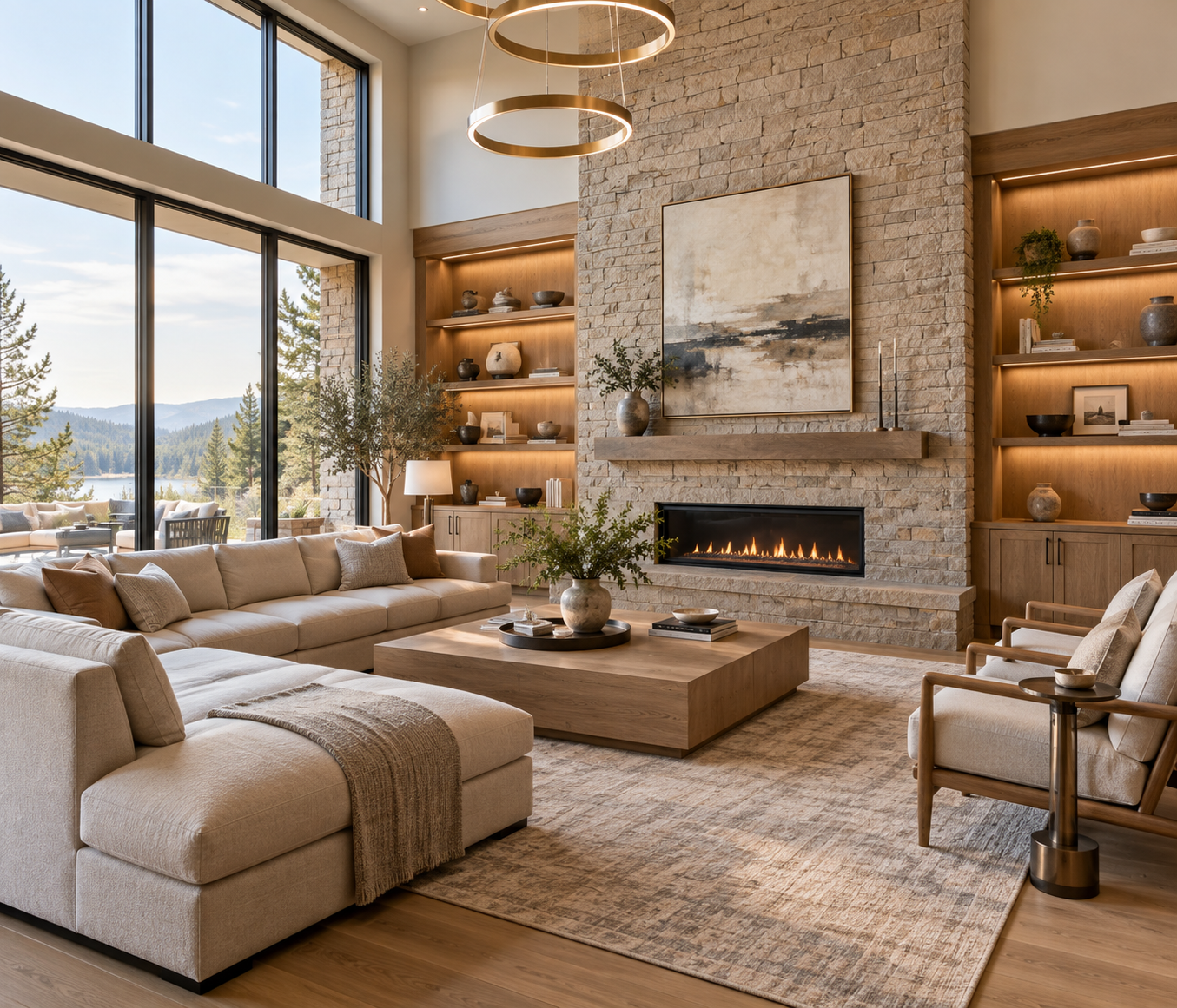
What Makes a Living Room Look Luxurious?
A living room usually feels luxurious because of three things: proportion, visual hierarchy and consistency.
Proportion
The sofa, coffee table, rug, cabinetry and wall features should feel appropriately scaled to the room and to one another.
Visual hierarchy
A sofa grouping, fireplace, media wall, artwork or statement light can lead while the rest of the room supports it.
Consistency
Wood, stone, metal, glass and fabric can coexist when their colors, scale and use have a clear relationship.
Furniture that is too small can make a large room feel unfinished, while oversized pieces or too many furnishings can make the space feel crowded.
Not every part of the room needs to compete for attention. Repeating one wood tone across a media wall, built-in cabinetry and selected furniture often creates a more cohesive look than using a completely different finish in every area.
A well-designed luxury living room is not the room with the most decoration. It is a space where every element feels intentional and the room still looks organized after years of everyday use.
How Do You Choose the Right Luxury Living Room Style?
Do not rely on inspiration photos alone. Consider whether the look fits the size of your home, your lifestyle and how much maintenance you are comfortable with.
| Style | Best for | Key characteristics | What to consider |
|---|---|---|---|
| Modern Luxury | Medium to large rooms and open-plan homes | Clean lines with wood, stone and metal | Relies on strong proportions and material quality |
| Modern Classic | Homes used frequently for entertaining | Symmetry, wall detailing and substantial furniture | Too much detail can overwhelm a smaller room |
| Traditional Luxury | Larger rooms with higher ceilings | Rich architectural detail and larger-scale furniture | Can feel heavy with standard ceiling heights |
| Minimal Luxury | Contemporary homes and smaller rooms | Fewer pieces, hidden storage and restrained color | Requires careful clutter and scale control |
If you entertain often, a more formal seating arrangement may make sense. If the room is mainly used for watching TV, reading or relaxing with family, comfort and ease of maintenance should take priority.
Homes with children or pets also need durable upholstery, easy-to-clean surfaces, rounded edges where appropriate and enough closed storage to keep everyday items out of sight.
Before committing to a style, ask:
- Does the ceiling height and room size support this type of furniture?
- How will the living room actually be used most days?
- How much maintenance are you willing to put into the space?
Those answers are usually more useful than the style label itself.
How Do You Plan a Luxury Living Room Layout?
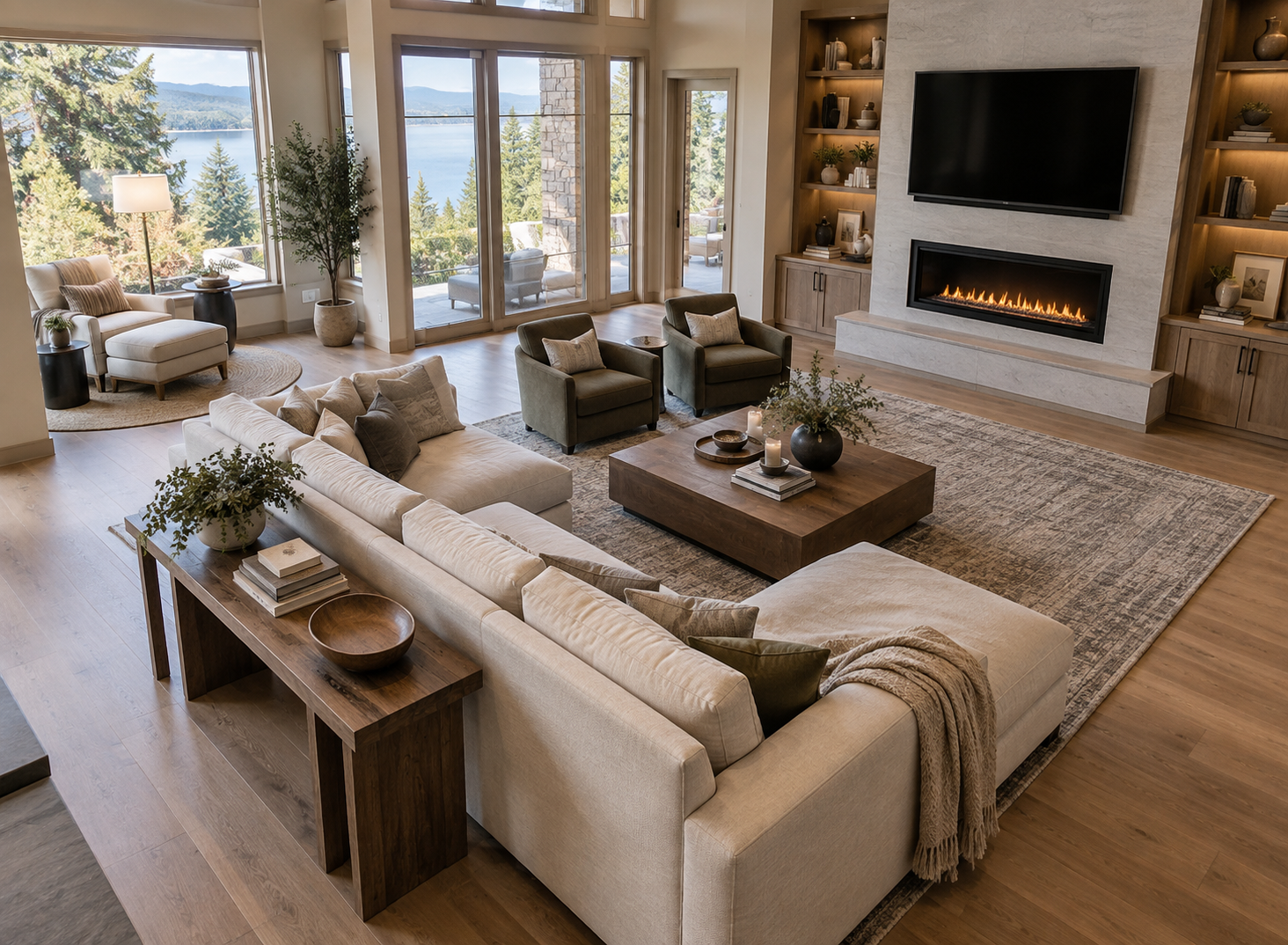
The first step is not choosing the sofa. It is deciding how the room needs to function.
Some living rooms are centered around family movie nights. Others are used mainly for entertaining. Larger rooms may need to support conversation, reading and relaxing. These differences affect sofa placement, furniture quantity and how the space should be divided.
5 Steps to Plan the Layout
- 01
Decide how the room will be used
Clarify whether TV, entertaining, reading or a mix of activities matters most. Let the main use shape the seating relationship before choosing a sofa style.
- 02
Mark the main traffic paths
Identify routes between the entry, dining area, patio doors and hallways. No one should need to squeeze around a coffee table, chair or sofa corner.
- 03
Position the largest pieces first
Place the sofa, media wall, fireplace and major built-ins before coffee tables, accent chairs or side tables.
- 04
Divide a large room into activity zones
Use seating and rugs to define a main conversation area, then add a reading corner or secondary seating zone when needed.
- 05
Recheck dimensions before ordering
Mark furniture footprints with painter’s tape and confirm clearances, doors, wiring and the delivery route.
| Area | General planning reference |
|---|---|
| Main walkway | About 36 inches or more |
| Secondary passage | About 30 inches |
| Sofa to coffee table | About 14–18 inches |
| In front of doors and drawers | Enough room to open fully and stand comfortably |
These are general planning references, not fixed rules. The right spacing depends on furniture size, room layout and the way your family moves through the space.
Before ordering furniture, take accurate measurements using a room measurement guide.
Painter’s tape can reveal a sofa blocking a walkway, a coffee table sitting too far from seating, cabinet doors without enough clearance, or a piece that fits the room but cannot pass through the entry, elevator or stairwell.
If you are planning a media wall, display cabinet, bar cabinet or full-height storage, establish the main dimensions during the layout phase so outlets, lighting, wiring and furniture placement can be coordinated together. For rooms that need a more integrated approach, a custom living room plan can be developed before individual furniture pieces are finalized.
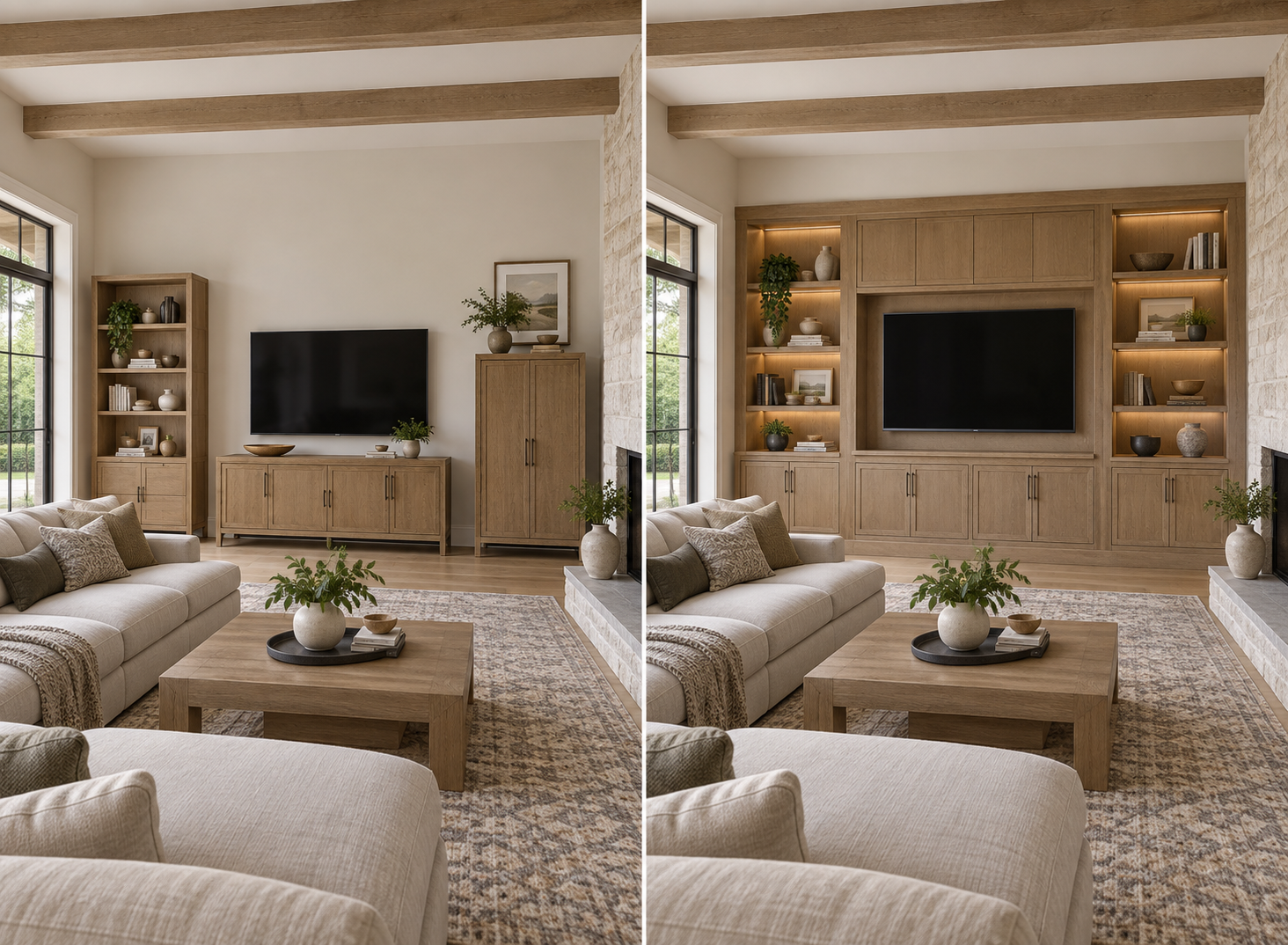
What Living Room Furniture Is Worth Customizing?
A luxury living room does not require every piece of furniture to be custom made. Customization is most valuable when a piece needs to respond directly to wall dimensions, storage requirements, wiring or an unusual layout.
| Furniture or feature | Customization value | When customization makes sense |
|---|---|---|
| Sofa | Medium to High | Standard sizes do not fit, or a specific length, sectional layout or upholstery is needed |
| Media Wall / TV Cabinet | High | The design must integrate storage, wiring, displays and the TV |
| Full-Wall Storage | High | A large wall needs to balance visual order with practical storage |
| Bookcase / Display Cabinet | High | Wall dimensions are unusual or lighting and display sizes must be integrated |
| Coffee Table | Low to Medium | Specific dimensions or materials are needed |
| Accent Chair | Low | Freestanding pieces are usually easier to source and add visual variety |
The sofa is one of the most important pieces to size correctly. A large room may suit a longer modular sofa or a seating group that combines a main sofa with accent chairs. A smaller room usually works better with a cleaner silhouette and less visual weight.
If standard sizing does not work, consider a custom sofa designed around the room—but confirm that the finished piece also fits through the front door, hallways, elevator and other access points.
Full-wall cabinetry is often even more valuable to customize. Buying a media console, display cabinet and storage unit separately can create visual breaks in height, color and material. Designing them as one system can feel more intentional while making room for wiring, electronics, books and everyday items.
Closed storage can sit along the lower section or sides, while selected areas use glass doors, open shelving or display lighting. If the room needs substantial book storage, a custom wall bookcase may work better than several freestanding cabinets.
Coffee tables, side tables and accent chairs can be added later. They are often useful for introducing contrast so the room does not feel overly coordinated.
How Do You Plan Lighting for a Luxury Living Room?
Luxury living room lighting is not about making the space as bright as possible. It is about having the right kind of light for different activities and times of day.
| Lighting layer | Purpose | Common examples |
|---|---|---|
| Ambient | General room illumination | Chandeliers, recessed lights, concealed lighting |
| Task | Supports reading and specific activities | Floor lamps, wall sconces, table lamps |
| Accent | Highlights materials, artwork and cabinetry | Spotlights, wall washers, cabinet lighting |

In a room with high ceilings, a chandelier can become an important focal point, but its scale needs to match the room. The main fixture should not be the only light source.
Recessed lights, directional fixtures and concealed LED lighting can illuminate walls, walkways and cabinetry so the center is not bright while the perimeter remains dark.
If the room has a stone wall, wood paneling, artwork or display cabinetry, accent lighting can bring out those details. Do not highlight everything equally; the room still needs a clear hierarchy.
Floor lamps, sconces and table lamps make a large room feel more comfortable in the evening. Keep color temperatures relatively consistent and control the chandelier, recessed lights, accent lighting and lamps in separate zones.
Finally, check for glare. Avoid aiming spotlights directly toward seating and do not place overly bright fixtures close to the TV. Lighting locations are easier to finalize after the major furniture positions are confirmed.
How Do You Combine Colors and Materials?
The goal is not to use as many luxury materials as possible. The goal is to control the number of finishes and give each one a clear role.
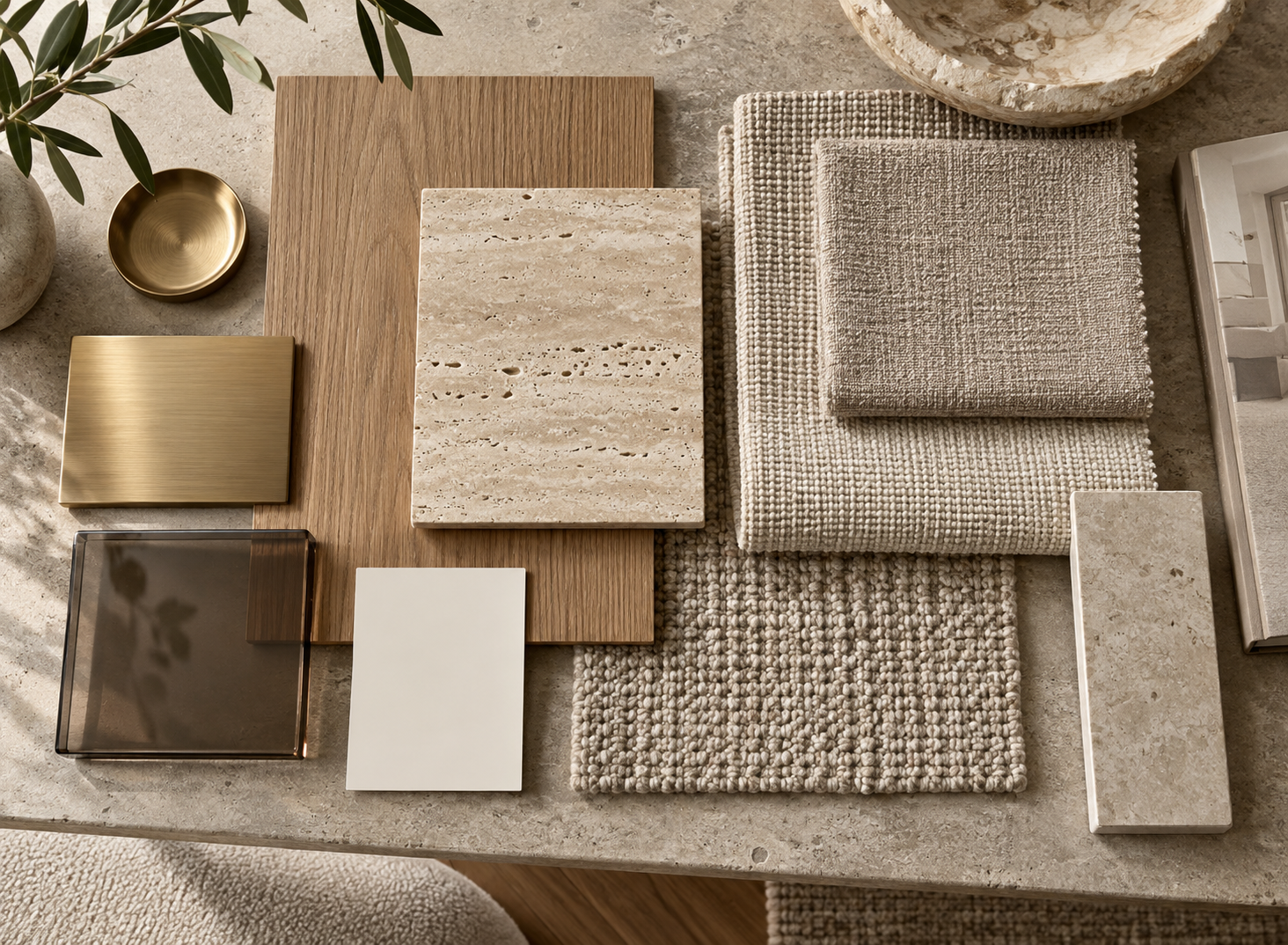
Wood, stone, metal, glass, leather and fabric can all work in the same room, but they should not compete for attention.
| Material | Best uses | What it adds | What to consider |
|---|---|---|---|
| Natural Stone | Feature walls, coffee tables, selected surfaces | Natural movement and visual weight | Large amounts can feel cold or heavy |
| Wood | Cabinetry, wall panels, furniture | Warmth and visual continuity | Too many wood tones can feel busy |
| Fabric | Sofas, drapery, rugs | Softness and comfort | Light fabrics require more maintenance |
| Metal | Lighting, hardware, furniture details | Refinement and contrast | Usually works best as an accent |
| Glass | Display cabinets, tables, dividers | Lightness and transparency | Fingerprints and maintenance matter |
Walls, floors and large furniture pieces take up the most visual space, so they should form the base of the palette. Warm beige, soft gray, light wood and cream can create a calm background; darker wood, natural stone or a small amount of metal can add contrast.
Materials should balance one another. If a media wall already uses heavily veined stone, there may be no need to repeat strong stone patterns on the coffee table, side tables and flooring. Wood and fabric can soften the harder appearance of stone.
Likewise, softer upholstery, curtains and rugs can keep a dark full-wall cabinet from feeling visually heavy.
Do not evaluate finishes only as individual showroom samples. Compare wood, stone, fabric and metal together in the actual room and under the lighting conditions in which they will be seen. Maintenance matters too, especially in homes with children, pets or heavy daily use.
If the room includes extensive cabinetry or built-in furniture, establish the main finishes through the living room furniture design first, then select softer decorative elements afterward.
How Do You Style Rugs, Artwork and Accessories Without Overdecorating?
Decor should not fill every empty surface. Its job is to complete the relationships that already exist in the room.
Use the rug to connect the seating
In a large living room, a properly sized rug can visually connect the sofa, accent chairs and coffee table. If it only covers a small area under the coffee table, the furniture can feel disconnected.
If stone, wood grain or upholstery already has a lot of visual movement, a quieter rug may work better. If the room is restrained, the rug can introduce a modest amount of color or pattern.
Scale artwork to the wall
A small piece centered on a very large wall can feel isolated. One appropriately scaled piece—or two or three related works—often feels more intentional than many small frames.
Leave negative space around accessories
Books, vases, sculpture and personal objects can be grouped while leaving room around them. If you own many items, combine open display with closed storage rather than leaving everything visible.
There is no need to buy large amounts of decor simply to make the room feel more luxurious. Travel objects, well-used books and pieces kept for years often make a room feel more personal than a complete set purchased at once.
A comfortable luxury living room should reflect the people who live there. It should not feel like a showroom that no one is allowed to touch.
Frequently Asked Questions
How much does it cost to create a luxury living room?
There is no fixed price. Cost depends on room size, existing conditions, furniture quality, custom cabinetry, stonework, lighting and installation. It is more useful to divide the budget into furniture, built-ins, surface materials, lighting and installation.
Can a small living room look luxurious?
Yes. Careful furniture sizing, fewer materials, less visual clutter, layered lighting and a few high-quality finishes can create a refined look without making the room feel crowded.
When is custom living room furniture worth it?
Custom furniture is most useful when standard pieces do not fit the wall dimensions or when storage, wiring, unusual proportions or multiple functions need to be solved together.
How do you make a large living room feel cozy rather than empty?
Divide the room into clear activity zones using sofas, chairs, rugs and lower-level lighting. A main conversation area plus a reading or secondary seating zone feels more natural than placing furniture only along the walls.
Can a luxury living room be practical for families with kids or pets?
Yes. Choose durable, easy-to-clean upholstery and finishes, reduce sharp edges where appropriate, and include enough closed storage for everyday items.
Conclusion
Luxury comes from coordination, not accumulation.
A truly luxurious living room is not created by stacking expensive furniture and decorative finishes together. It comes from coordinating layout, furniture scale, lighting, materials and the way the room will actually be used.
Before choosing the sofa, lighting or accessories, decide how people will move through the room, where the main activities will happen and which walls or areas need to provide storage.
The best luxury living rooms feel visually complete, but they are also comfortable, organized and practical enough for everyday life.