

Custom Shoe Cabinets for a More Organized Entryway
Design shoe storage around your entryway, footwear collection, and everyday routine. From slim hallway cabinets to floor-to-ceiling storage and built-in benches, each cabinet can be customized to fit the available space.
- Made to fit your entryway dimensions
- Adjustable storage for different shoe types
- Ventilation and easy-clean options available
Shoe Cabinet Types for Different Entryways
The right shoe cabinet depends on your available wall space, hallway width, storage capacity, and whether you want to add seating, a mirror, or other entryway features.
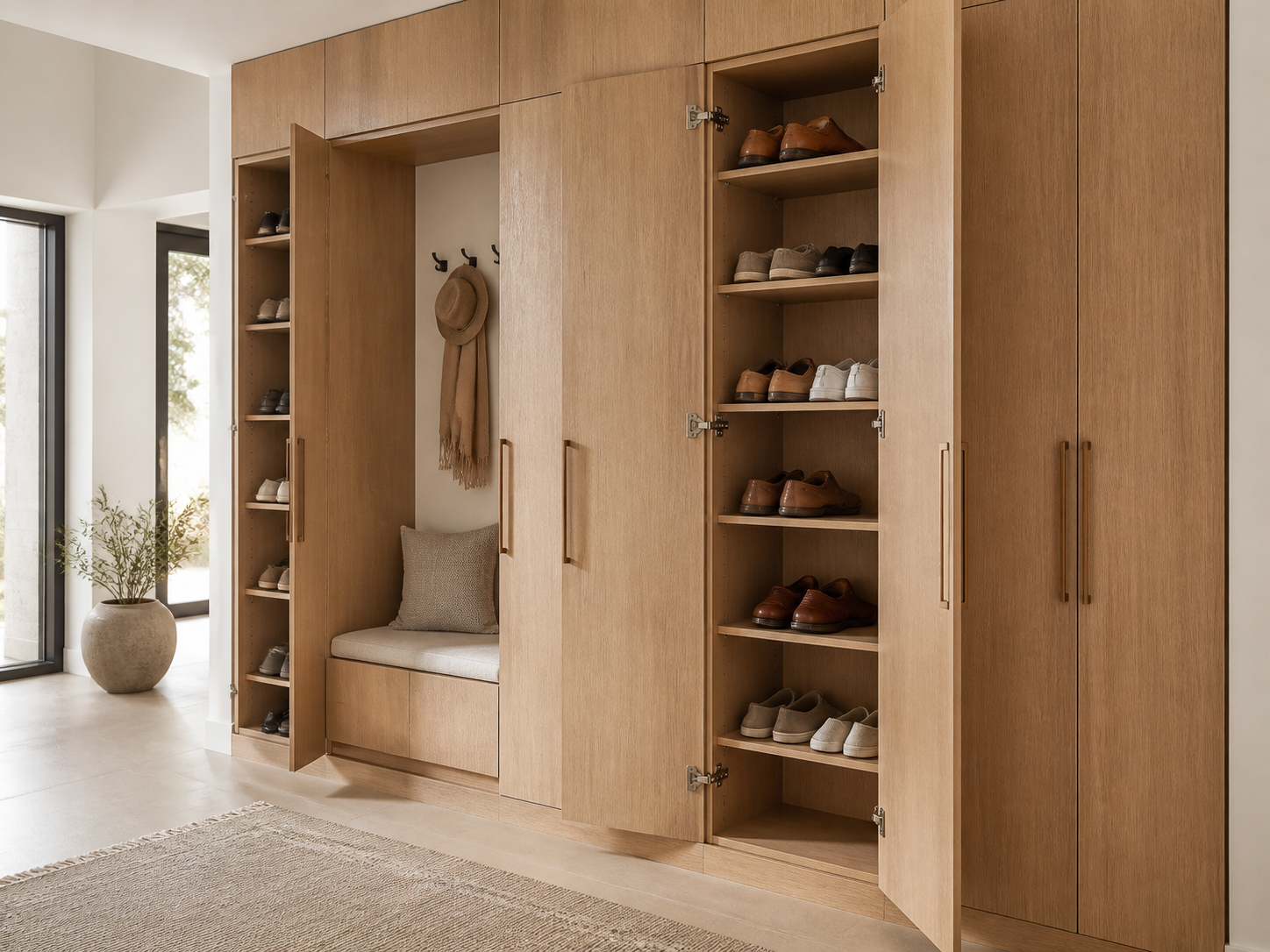
Entryway Shoe Cabinets
Closed cabinets keep everyday footwear organized and help reduce visual clutter near the front door. Adjustable shelves make it easier to adapt the interior as your shoe collection changes.
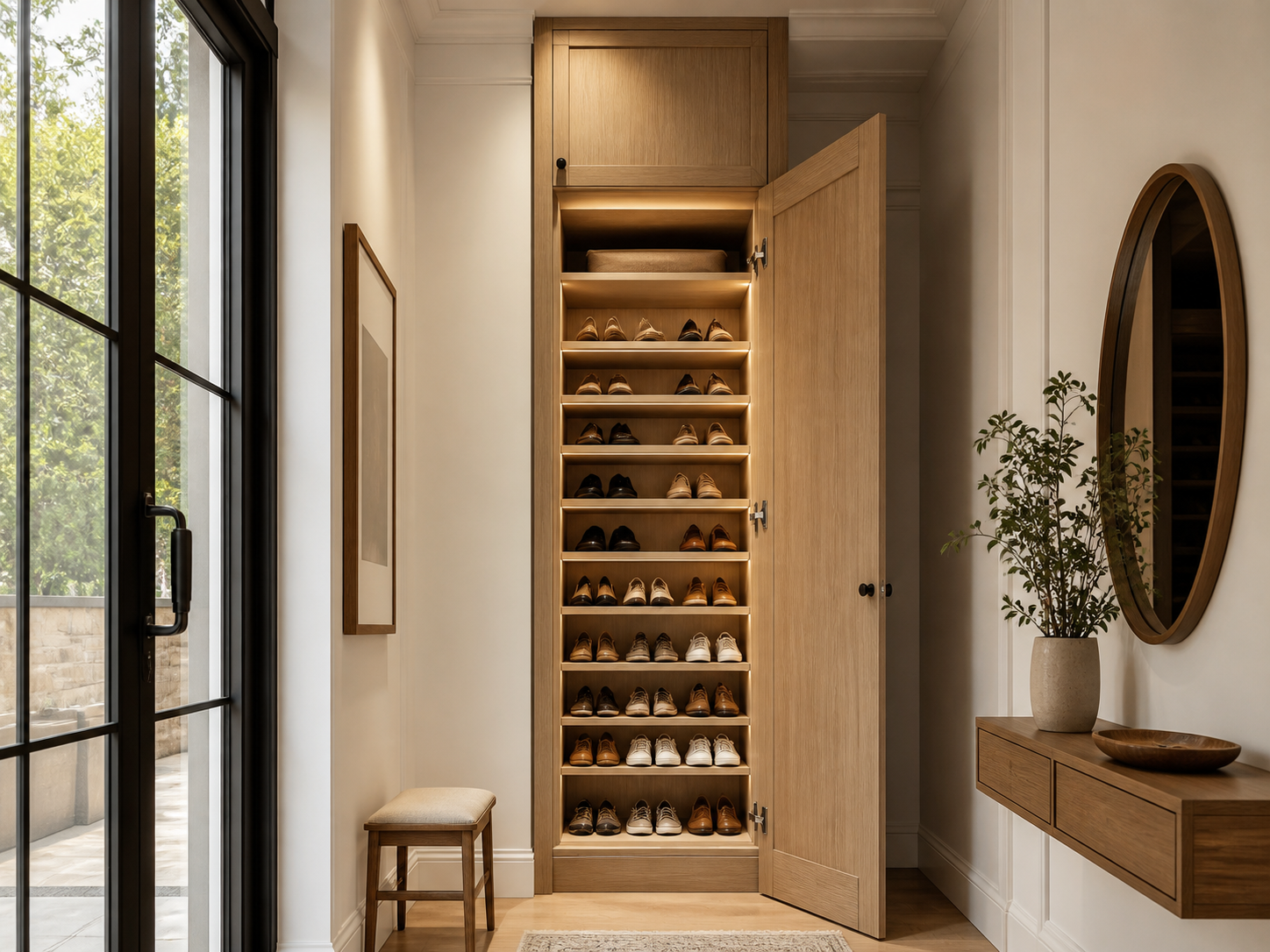
Tall Shoe Cabinets
Floor-to-ceiling storage makes better use of vertical space and works well for larger shoe collections. Upper sections can hold seasonal footwear or less frequently used items, while everyday shoes stay within easy reach.
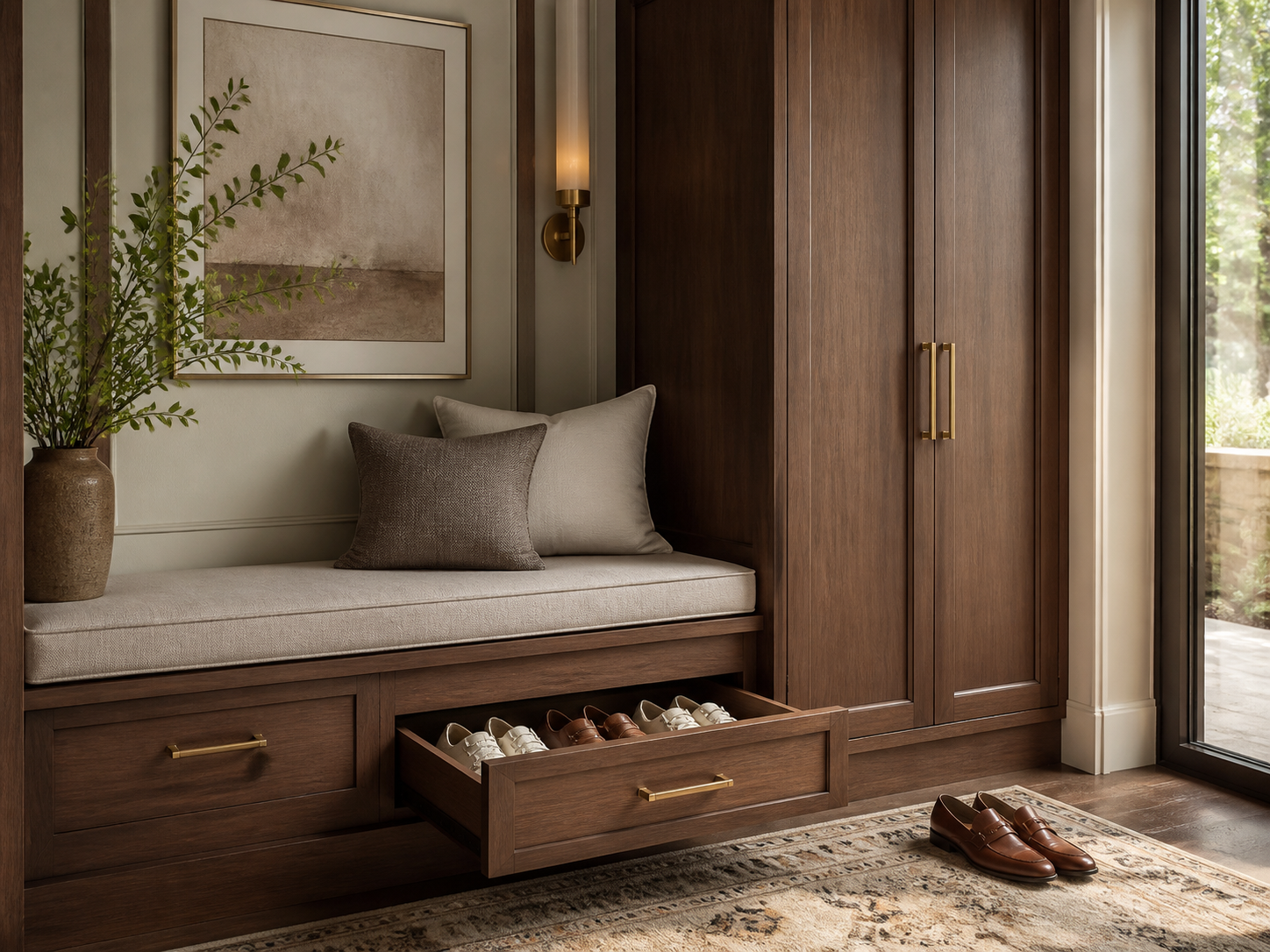
Bench Shoe Cabinets
A built-in bench gives you a comfortable place to sit while putting on or taking off shoes. Storage can be added below the seat, beside it, or in taller cabinets around the bench.
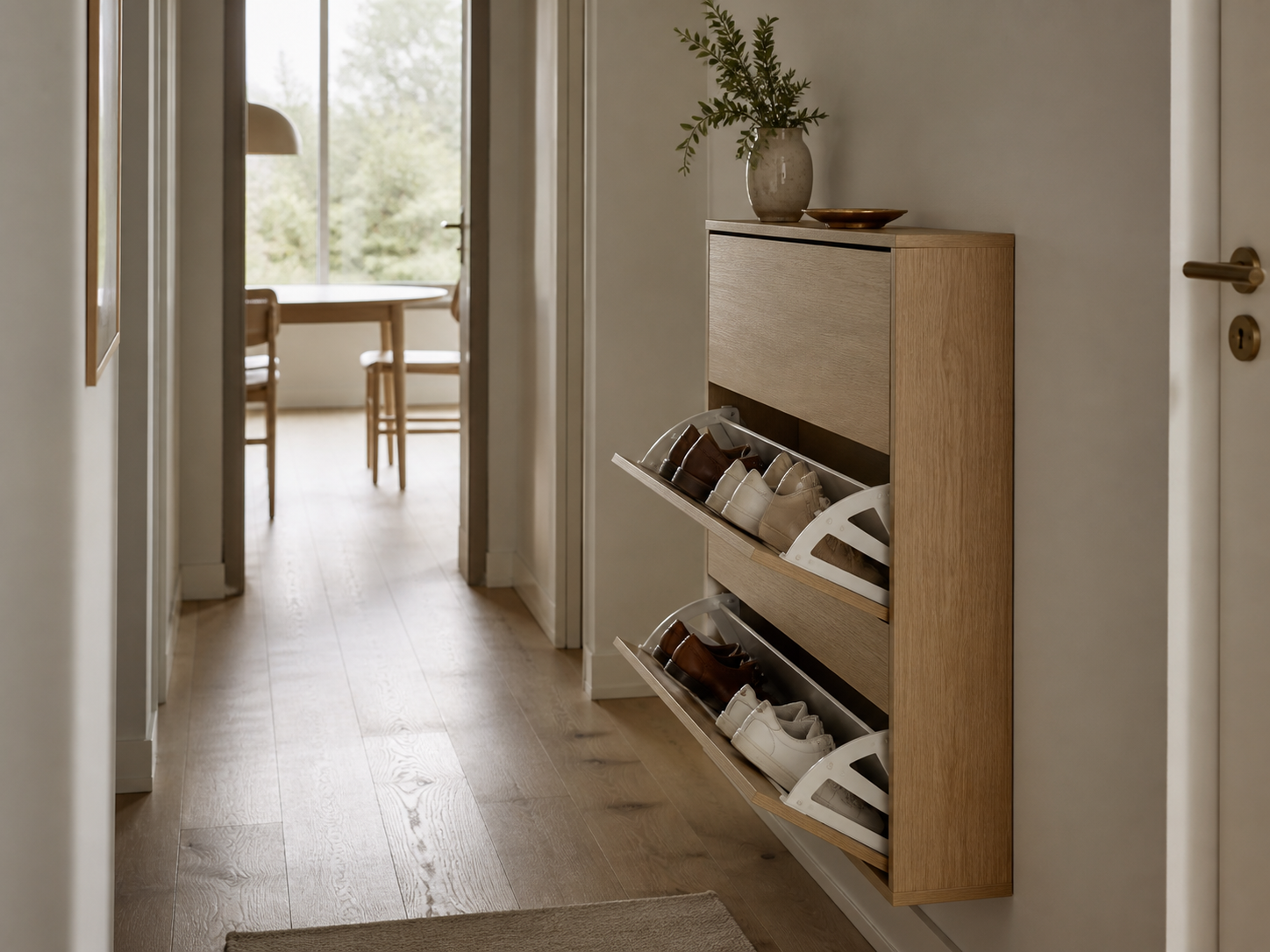
Slim Tilt-Out Cabinets
Slim tilt-out cabinets work well in narrow hallways and compact entryways. The shallower footprint saves floor space, while the internal angle and compartment height can be adjusted around the footwear you actually own.
Shoe Cabinet Size and Depth
Shoe cabinet depth should be based on shoe length, shelf design, door style, and the amount of walkway space available. Standard dimensions are useful for early planning, but the final cabinet should be sized around the actual entryway and footwear.
Planning note: Before finalizing cabinet depth, check baseboards, outlets, door swings, wall returns, and the narrowest point of the walkway.

Standard Flat-Shelf Depth
A practical starting range for many everyday shoes stored front to back.
Slim Tilt-Out Depth
A shallower option for tight entryways. The final depth depends on shoe size, tilt angle, and hardware design.
Typical Shelf Spacing
Suitable for many sneakers, flats, and lower-profile heels. Adjustable shelves make it easier to accommodate different shoe heights.
Boot Compartments
Taller clear space may be needed for ankle boots, high-tops, and other taller footwear. Final height should be based on the shoes you plan to store.
Storage for Different Types of Shoes
A practical shoe cabinet does not need identical shelf spacing from top to bottom. Adjustable shelves and dedicated compartments can make better use of space while keeping different types of footwear easier to reach.
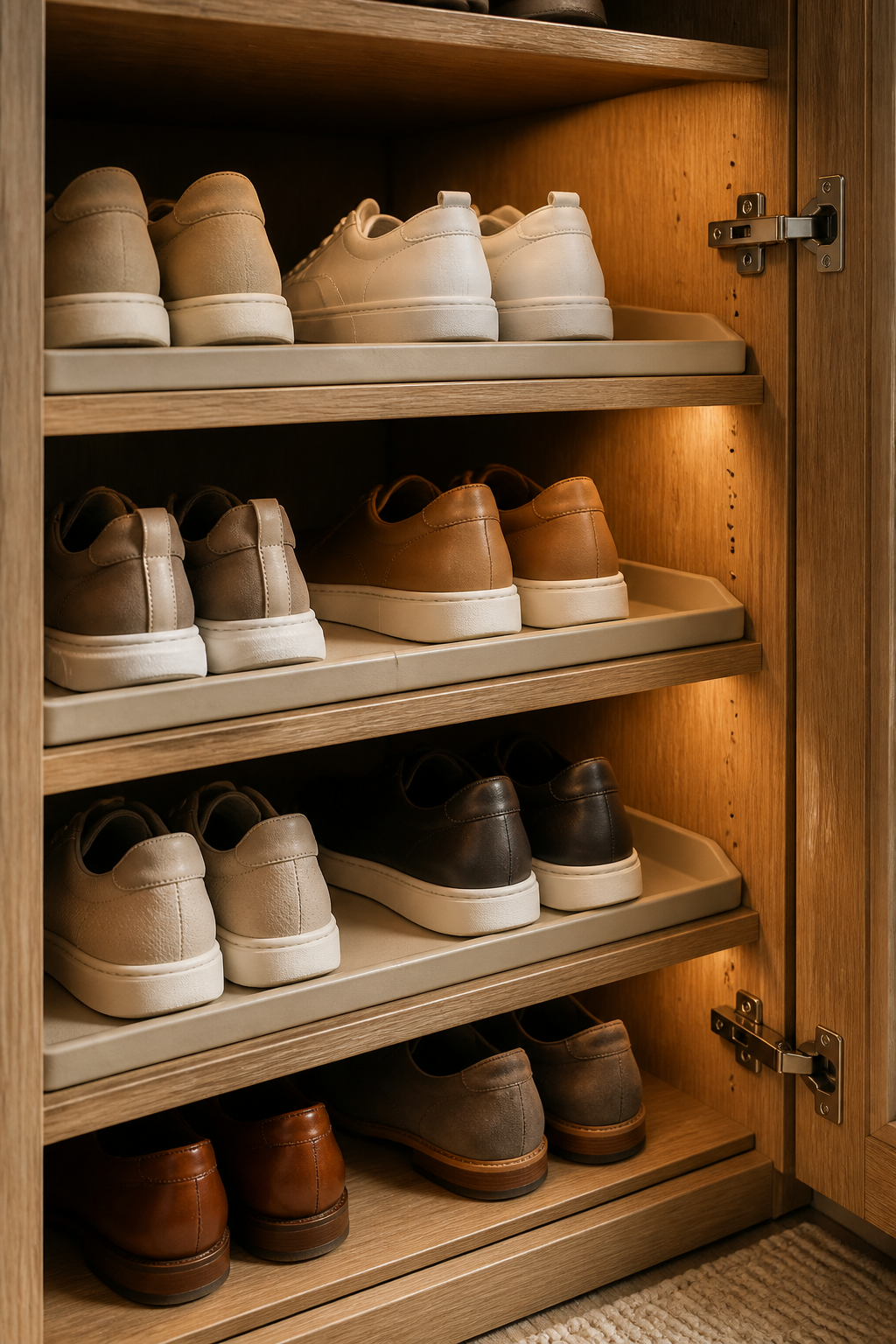
Sneakers & Daily Shoes
Keep frequently worn shoes in easy-to-reach areas with adjustable shelving. Removable trays can also help contain dirt and make routine cleaning easier.
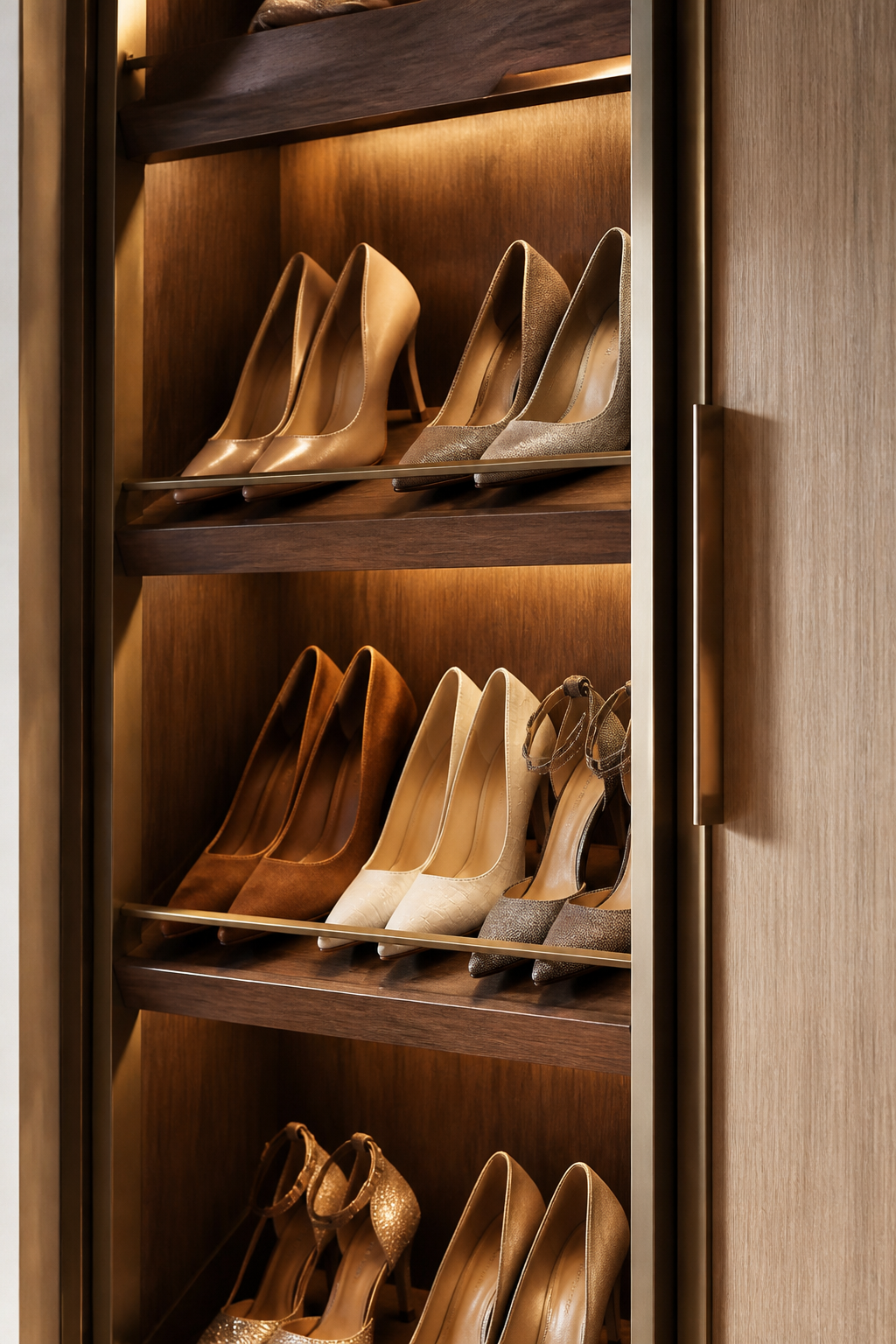
Heels
Allow extra clearance based on heel height. Angled shelves or supportive storage can also help keep higher heels stable and easy to see.
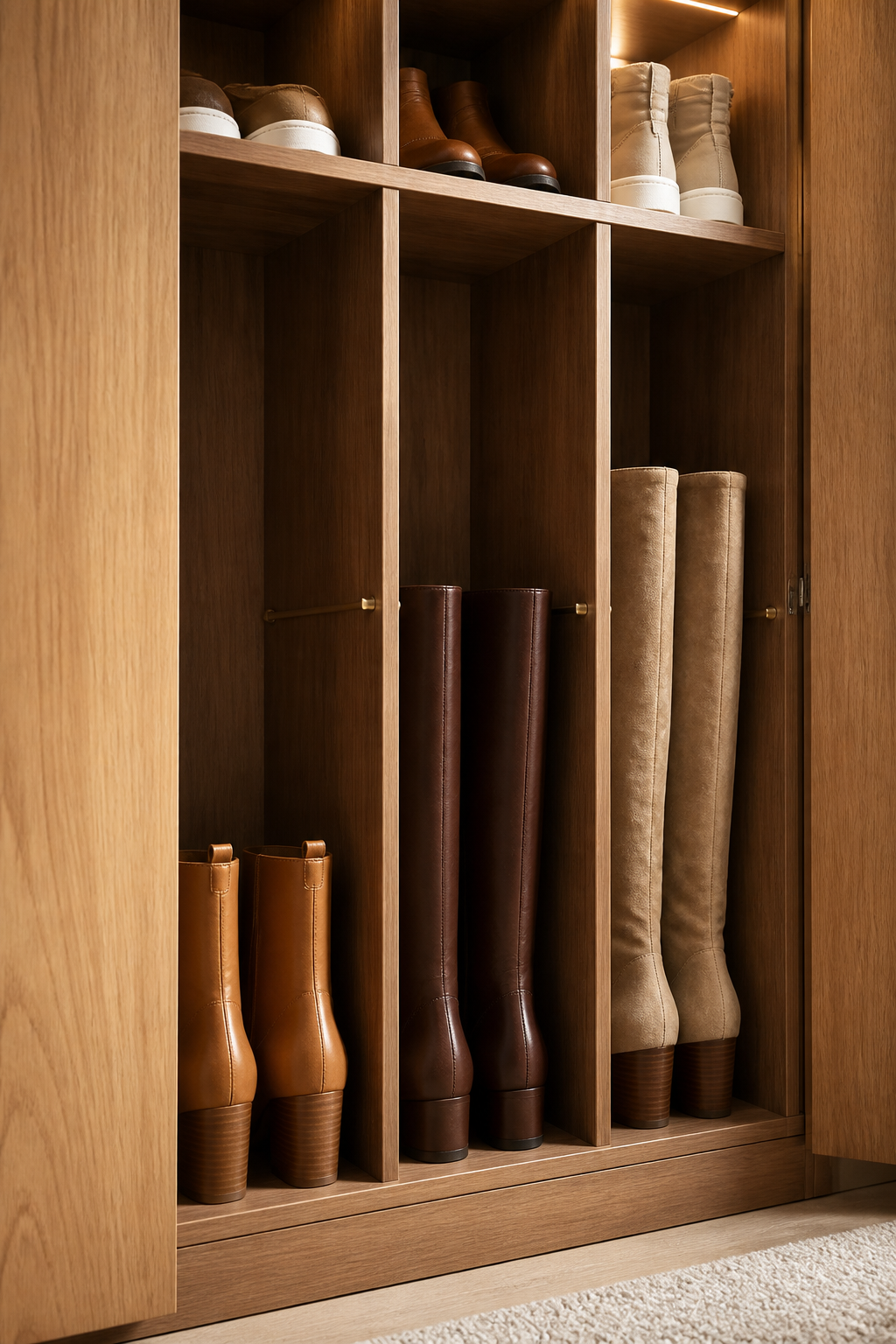
Boots & High-Tops
Reserve taller compartments for boots and high-top shoes so they can be stored naturally instead of being compressed between standard shelves.
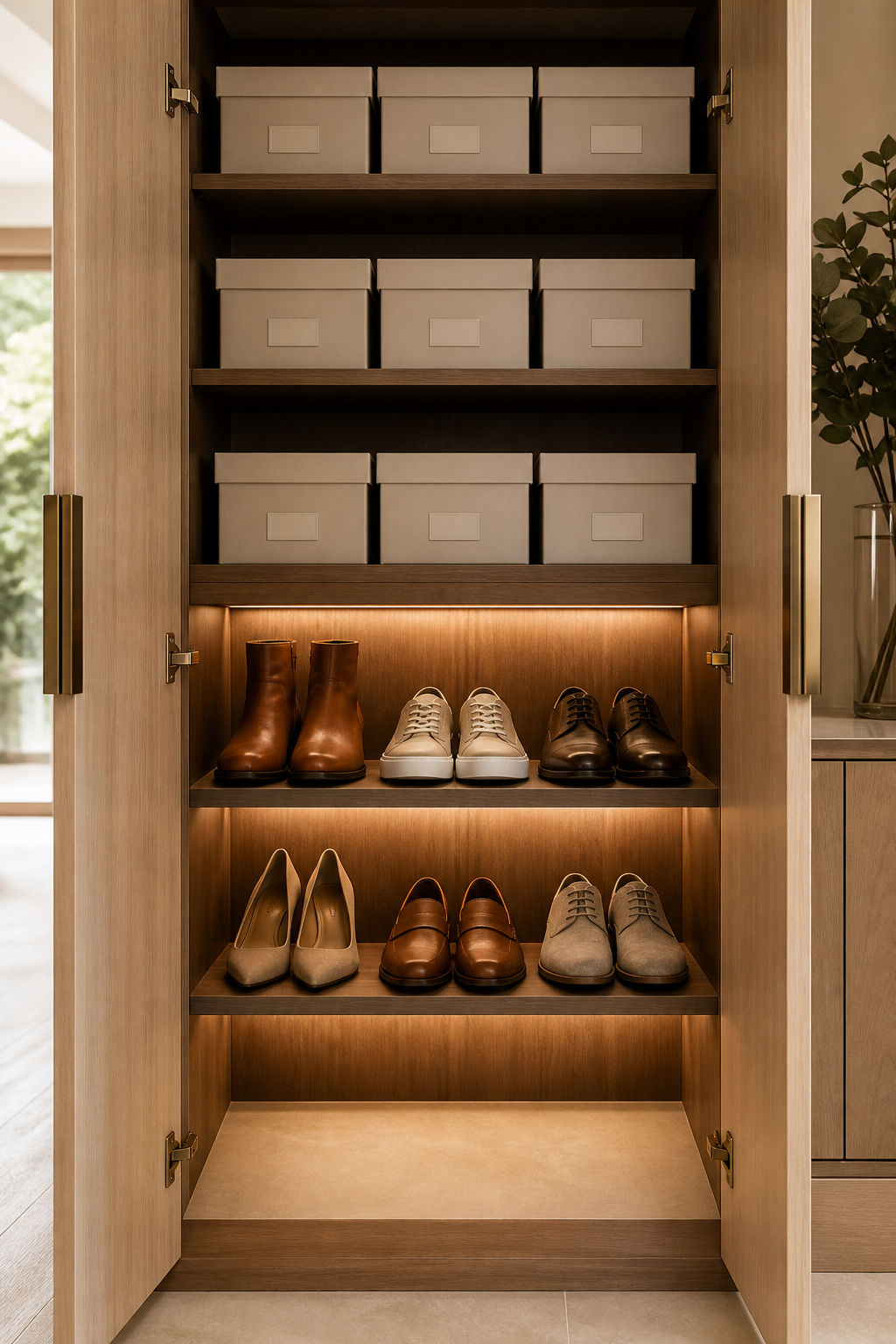
Seasonal & Occasional Pairs
Less frequently worn footwear can be stored in upper or lower sections, leaving the most convenient areas available for everyday shoes.

Better Airflow and Easier Cleaning
Closed shoe storage can trap moisture and odors, especially when shoes are stored soon after wear. Thoughtful ventilation and easy-clean details can make the cabinet more practical for everyday use.
Keep Air Moving
Ventilation gaps, perforated panels, louvered sections, or open daily-use compartments can improve airflow inside the cabinet.
Reduce Odors at the Source
Airflow can help, but damp shoes should still be allowed to dry before long-term storage. A dedicated area for deodorizing products can also make routine maintenance easier.
Make Cleaning Easier
Removable shelves, washable shoe trays, sealed edges, and accessible lower sections make it easier to deal with dirt and dust over time.
Features You Can Add to a Custom Shoe Cabinet
A shoe cabinet can do more than store footwear. Choose the features that make your entryway easier to use every day.
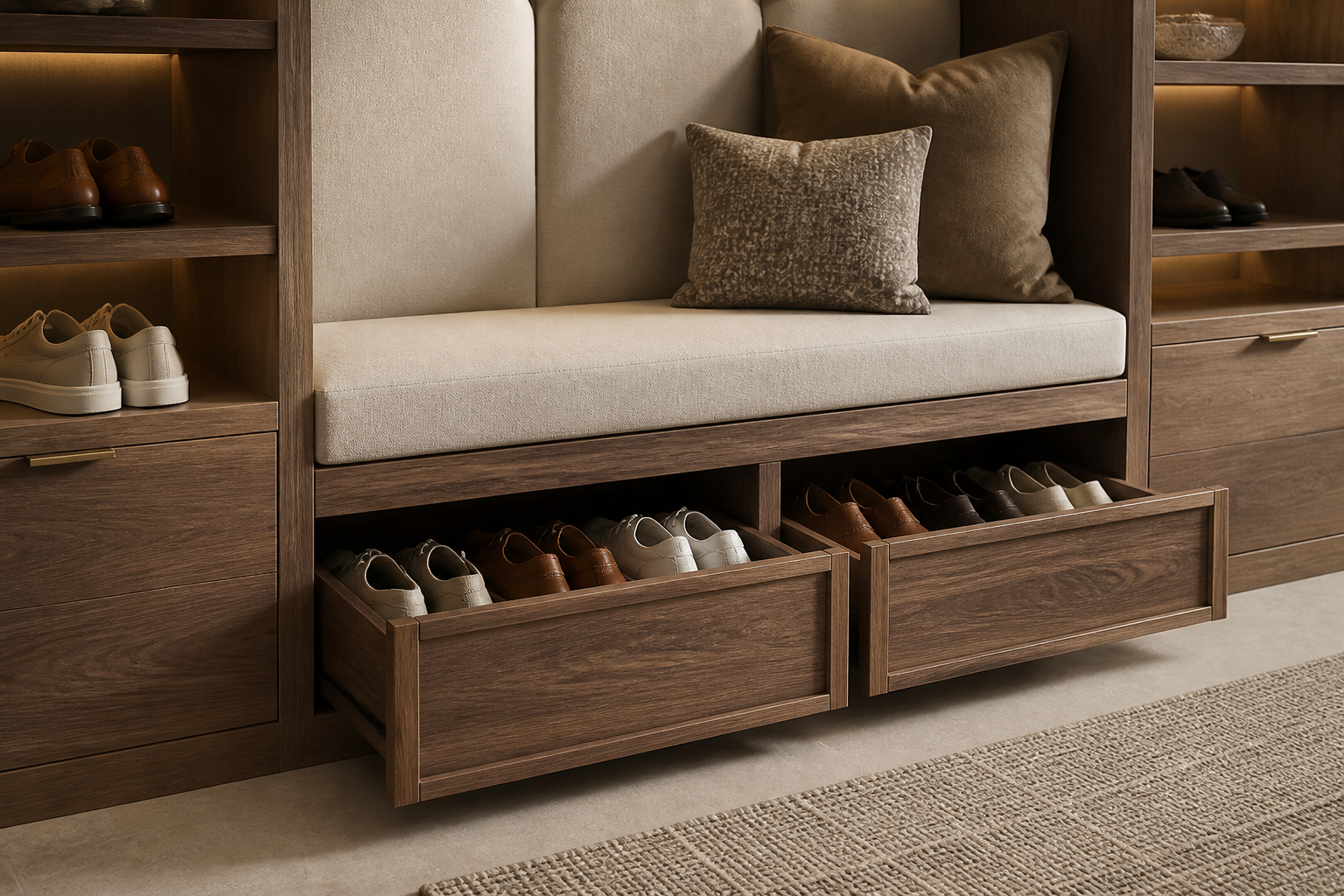
Integrated Bench
Add a comfortable place to sit while changing shoes. Storage can continue below the seat or in cabinets beside it.
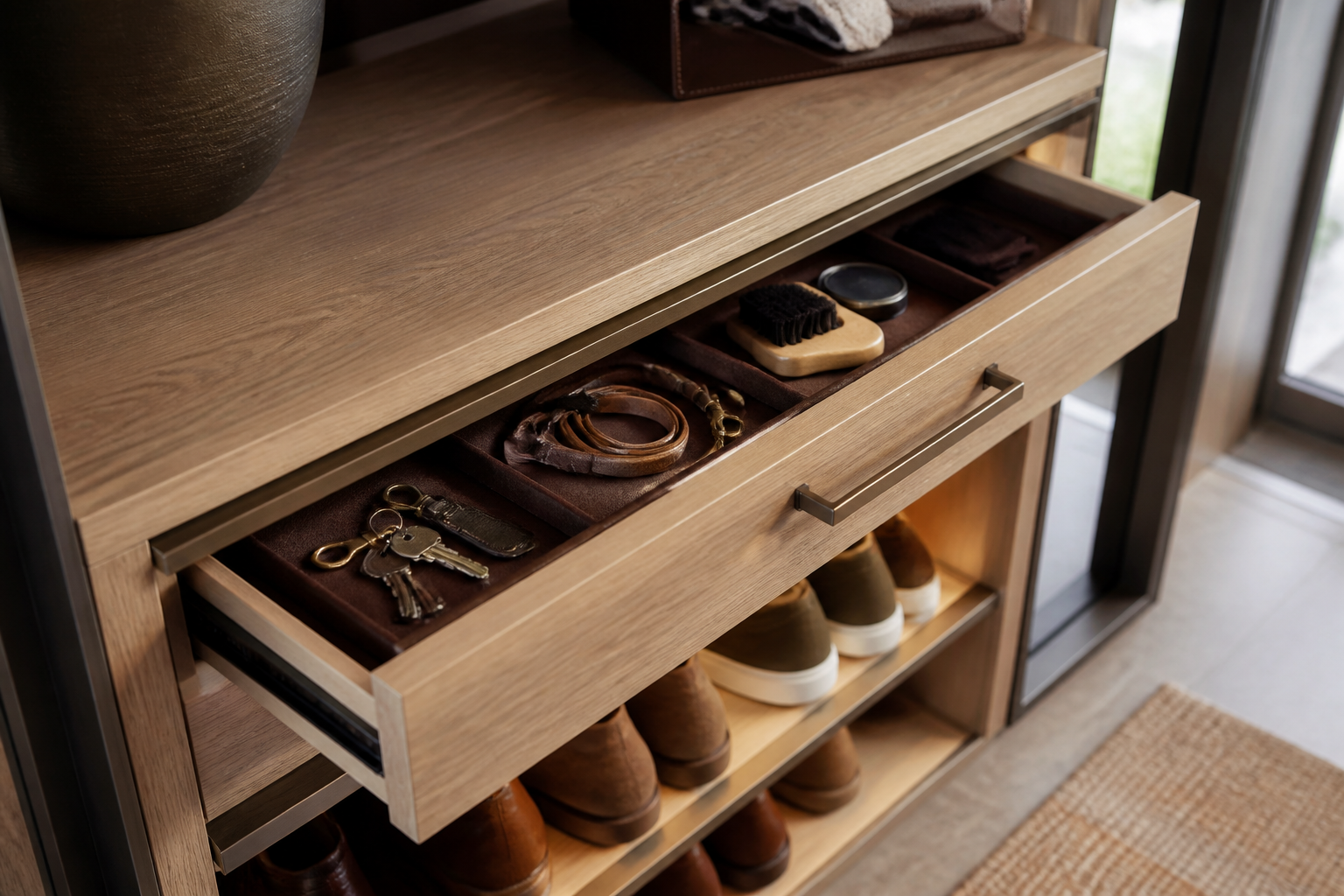
Drop-Zone Drawers
Shallow drawers provide a convenient place for keys, shoe-care products, socks, pet leashes, and other small everyday items.
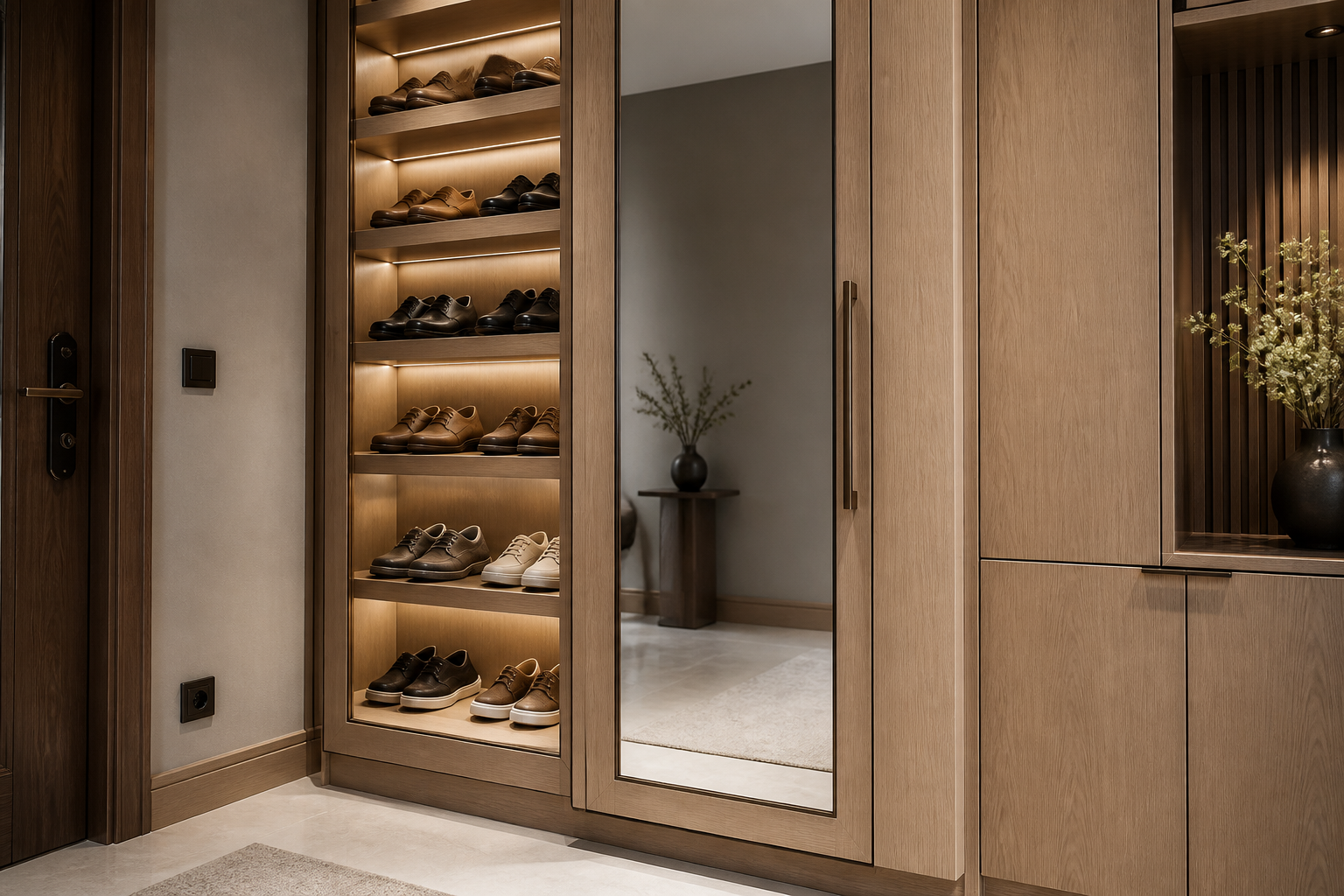
Full-Length Mirror
A mirror can be integrated into a cabinet door or adjacent panel, giving you a convenient final check before leaving home.
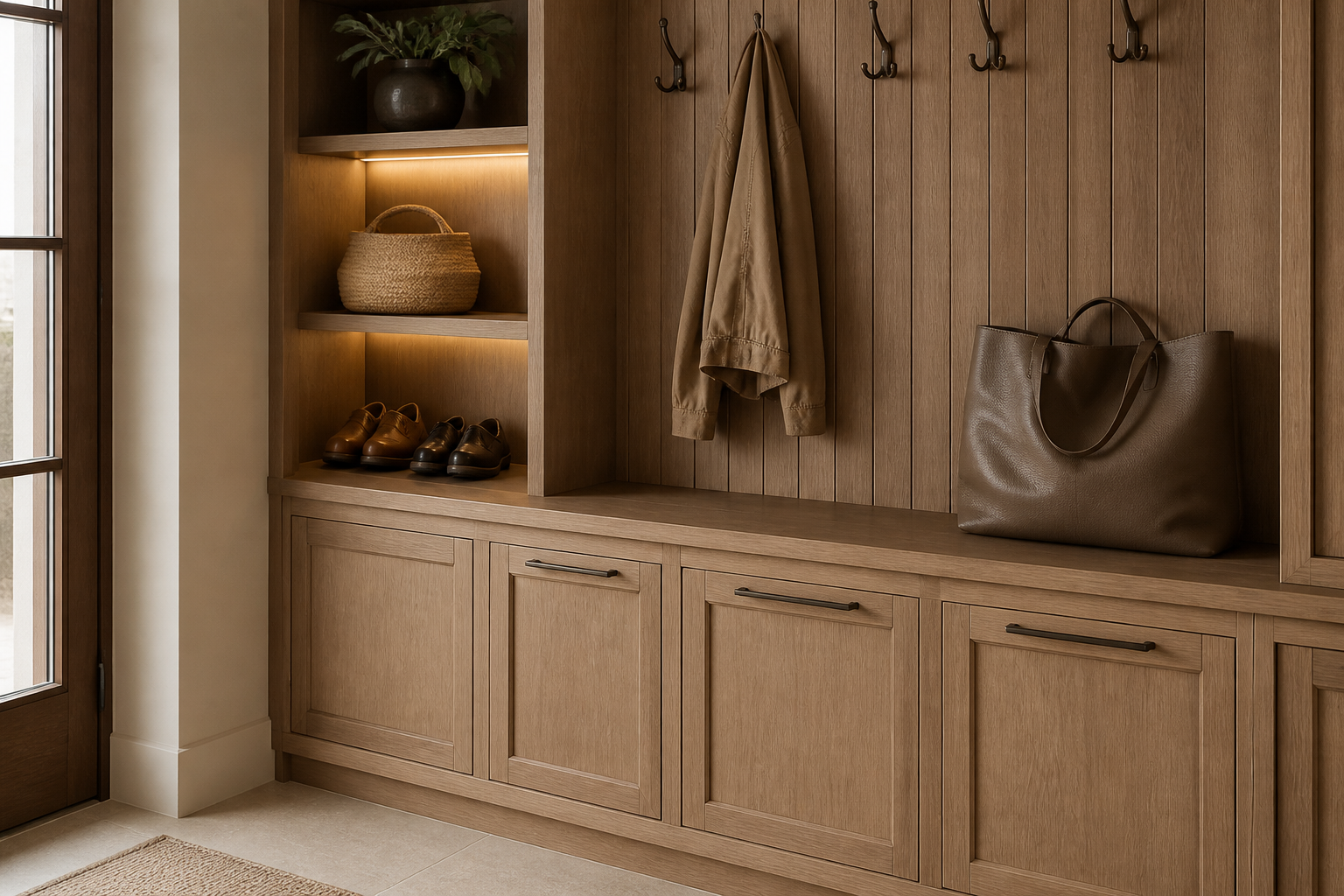
Hooks & Open Shelves
Open storage keeps bags, jackets, and frequently used items within reach while closed cabinets help keep the entryway visually organized.
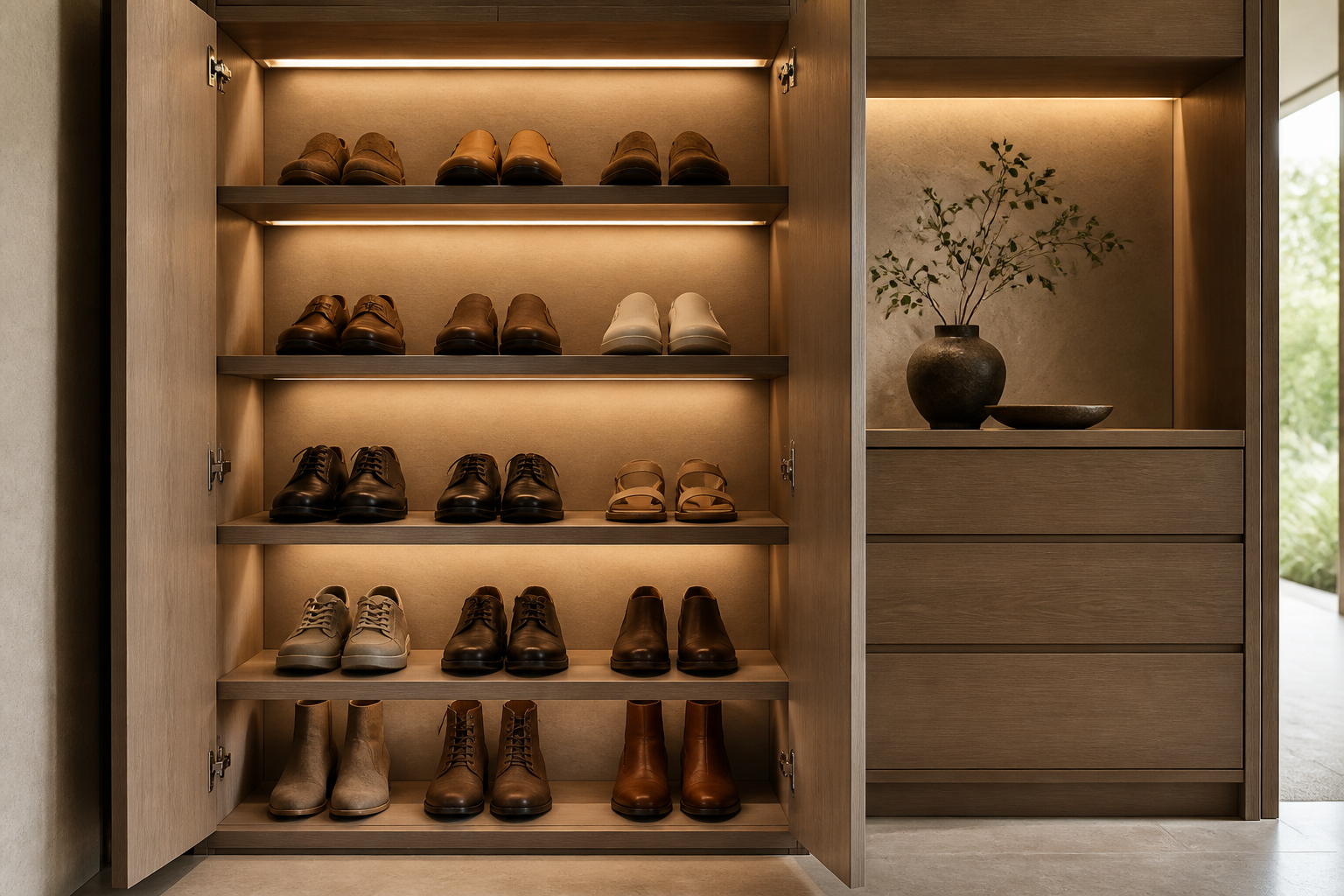
Integrated Lighting
Lighting can be added to open niches, mirrors, or cabinet interiors to make items easier to find and add a more finished look.
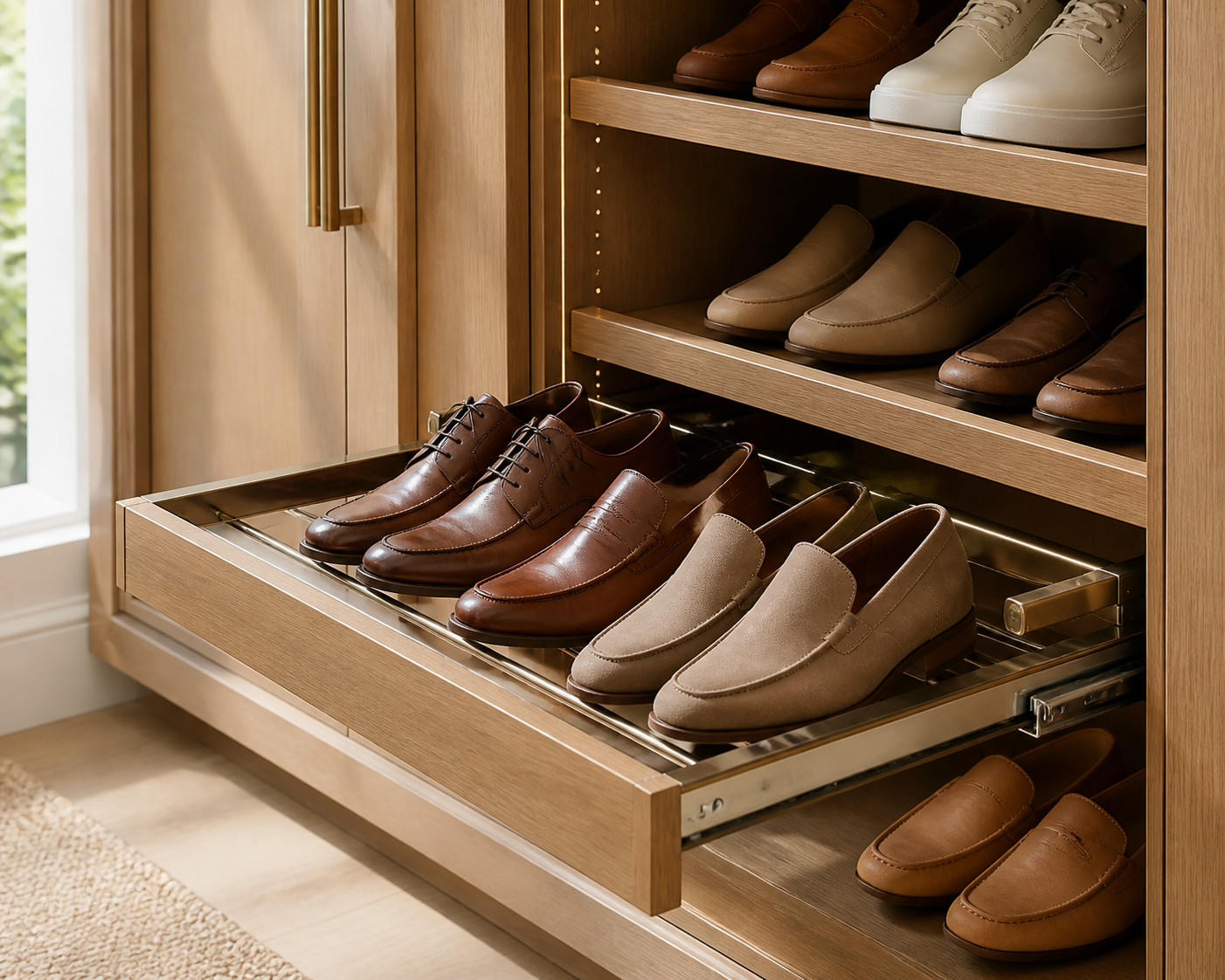
Adjustable & Pull-Out Storage
Adjustable shelves and pull-out fittings make it easier to adapt the cabinet as shoe sizes, footwear types, and household needs change.
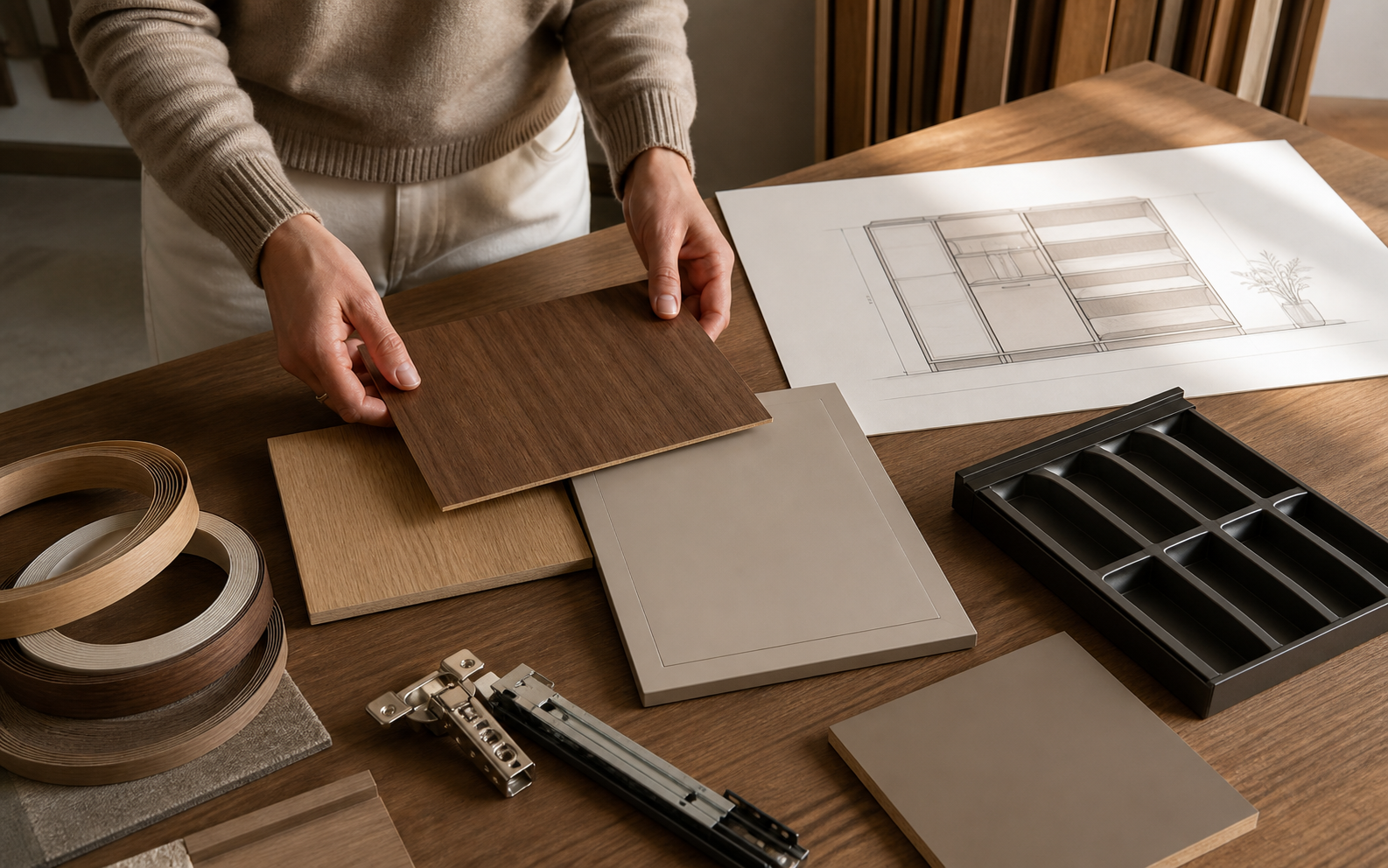
Materials Made for Everyday Entryway Use
Shoe cabinets deal with dust, dirt, moisture, and frequent opening and closing. Materials should not only look good but also suit regular cleaning and daily use.
From Entryway Measurements to Production and Delivery

Measure the Entryway
We review wall width, available depth, ceiling height, doors, baseboards, outlets, and circulation space.
Review Your Shoe Storage Needs
We look at household size, approximate shoe count, footwear types, and whether you want a bench, mirror, drawers, or other features.
Plan the Cabinet Layout
We determine cabinet width, height, depth, shelf spacing, open storage, ventilation, and door configuration.
Select Materials and Details
Choose cabinet finishes, hardware, colors, lighting, and internal storage features to coordinate with the surrounding entryway.
Production & Quality Check
Once the design is confirmed, the cabinet moves into production and key dimensions, finishes, hardware, and details are checked.
Packing & Delivery
Cabinet components are labeled and packed for transportation, with delivery planning based on the project destination.
What Do You Need for a Shoe Cabinet Quote?
You do not need a complete design to get started. Basic measurements, a few photos, and an estimate of your storage needs are usually enough for an initial discussion. The design and quote can then be refined as more details are confirmed.
Entryway Dimensions
Provide wall width, ceiling height, available depth, and the narrowest walkway area.
Site Photos
Photos of doors, corners, baseboards, outlets, and nearby furniture help us understand the existing conditions.
Shoe Count & Types
An approximate number of pairs plus the main footwear types—such as sneakers, heels, boots, and seasonal shoes—helps us plan storage capacity.
Preferred Features
Let us know if you want a bench, mirror, drawers, hooks, open shelves, lighting, umbrella storage, or other functions.
Style & Materials
Share preferred colors, door styles, materials, or inspiration images to help communicate the look you want.
Project Location & Quantity
Your city, country, and required quantity help us plan production, packing, shipping, and delivery.
Custom Shoe Cabinet Projects
See how different entryway sizes, shoe collections, and household routines can be translated into cabinet dimensions, internal storage, and practical features.
Publishing requirement: The existing website provides planning-scenario images rather than verified completed shoe cabinet projects. Replace the images and fields below with confirmed Avrelahome project photography, location, materials, and scope before presenting them as real projects.
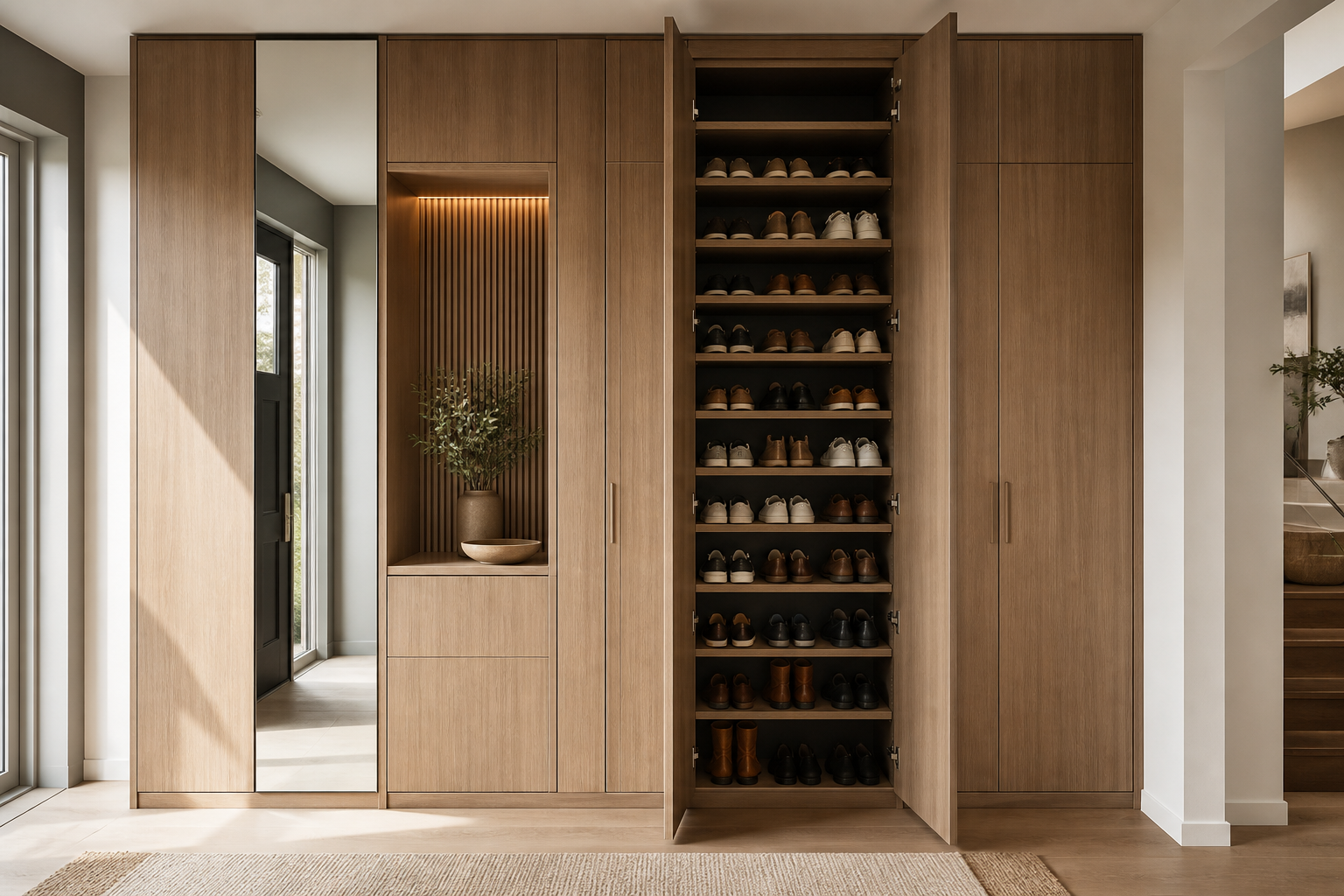
Full-Height Entryway Shoe Cabinet
Recommended gallery: Full cabinet elevation, interior shoe storage, and a close-up of the selected finish or hardware.
- Location: Actual project location
- Material: Actual material used
- Capacity: Actual shoe capacity
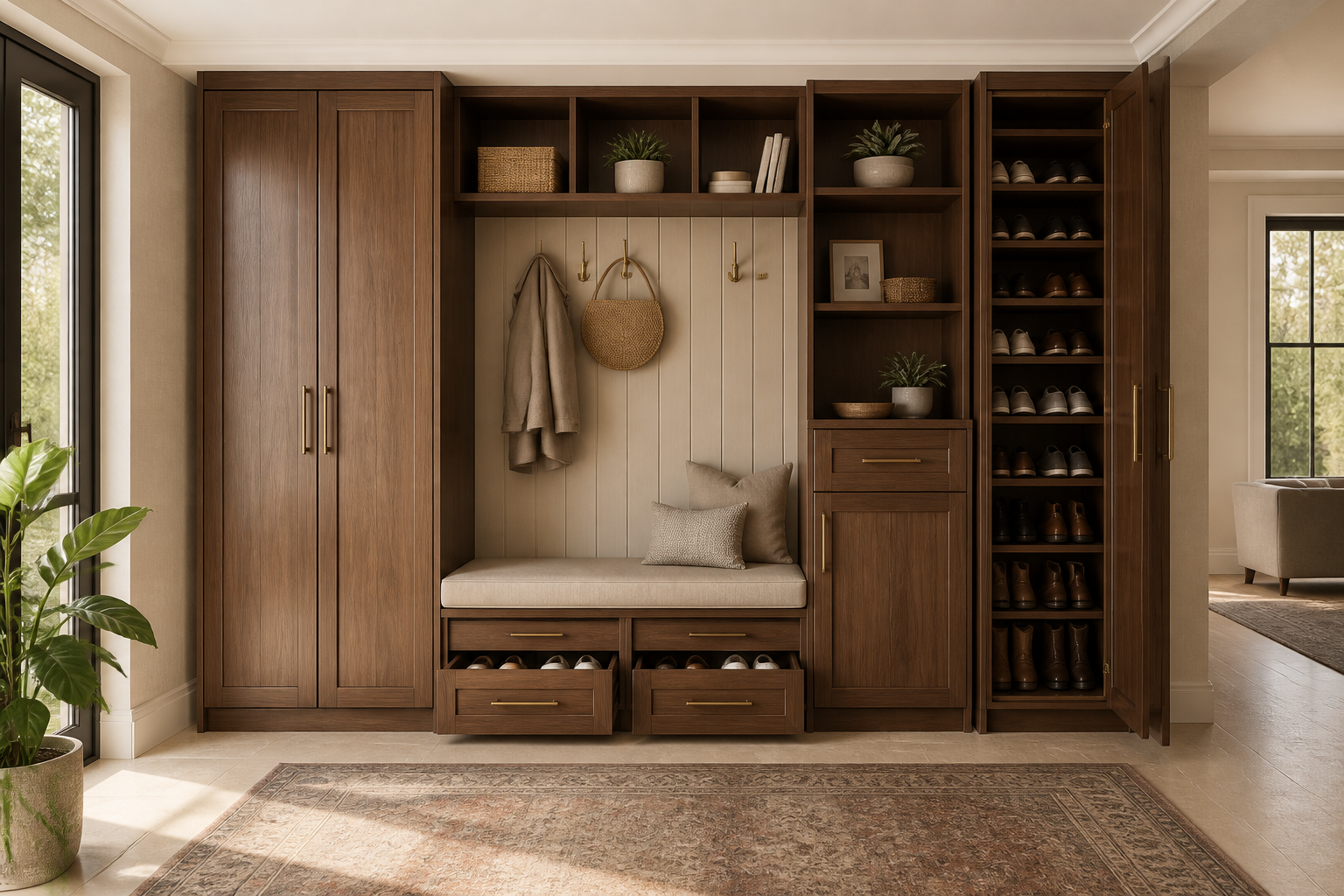
Family Shoe Storage With Built-In Bench
Recommended gallery: Full entryway view, bench and drawer details, open cabinet interior, and different footwear zones.
- Location: Actual project location
- Material: Actual material used
- Features: Actual project features
Questions to Answer Before Ordering
Practical answers about capacity, dimensions, ventilation, materials, customization, and overseas delivery.
How deep should a shoe cabinet be?
A standard flat-shelf shoe cabinet is often around 12–14 in / 300–350 mm deep. Narrower tilt-out cabinets may work in tighter entryways. Final depth should be based on shoe size, cabinet design, and available walkway space.
How many pairs of shoes can a custom cabinet hold?
There is no fixed number. Capacity depends on cabinet width and height, shelf spacing, and the types of shoes being stored. Sharing an approximate shoe count helps us plan the interior more accurately.
Do closed shoe cabinets need ventilation?
Ventilation is recommended. Airflow can be added through discreet gaps, ventilated panels, or open storage sections. Damp footwear should still be allowed to dry before being placed in long-term closed storage.
Can shelves be adjusted for boots and heels?
Yes. Adjustable shelves can be repositioned for sneakers, heels, ankle boots, and high-tops, and taller compartments can be included specifically for boots.
Can a shoe cabinet include a bench, mirror, and hooks?
Yes. Depending on the available space, shoe storage can be combined with a bench, mirror, drawers, hooks, lighting, and open shelves.
Which shoe cabinet materials are easiest to clean?
Smooth, wipeable surfaces are generally easier to maintain in high-contact areas. The best cabinet and door material depends on the entryway environment, desired finish, and budget.
What information do I need to start a custom shoe cabinet design?
Basic entryway dimensions, site photos, an approximate shoe count, main footwear types, and style preferences are usually enough to begin.
Can custom shoe cabinets be shipped overseas?
Yes. Avrelahome can ship custom shoe cabinets to the United States and Europe. Packaging and shipping are planned around the cabinet size, quantity, and final destination.

Plan a Shoe Cabinet Around Your Entryway
Send a few measurements, site photos, your approximate shoe count, and the functions you want. We can use that information to review the scope and identify what still needs to be confirmed before quotation.