
Choosing floor tiles is about more than selecting a color or pattern you like. The right tile needs to match how each room is used, from kitchen spills and bathroom moisture to everyday foot traffic in entryways and living spaces.
Different tile materials offer different levels of durability, water resistance, maintenance requirements, and visual appeal. A flooring option that works well in a bathroom may not be the best choice for a busy kitchen, while a decorative tile that looks beautiful in a living room may require more upkeep than some homeowners expect.
Before selecting floor tiles, it is important to understand the differences between common materials and consider how each space functions. This guide covers popular floor tile types, room-specific recommendations, design styles, tile sizes, and how flooring choices can work together with cabinetry and interior finishes in a custom home.
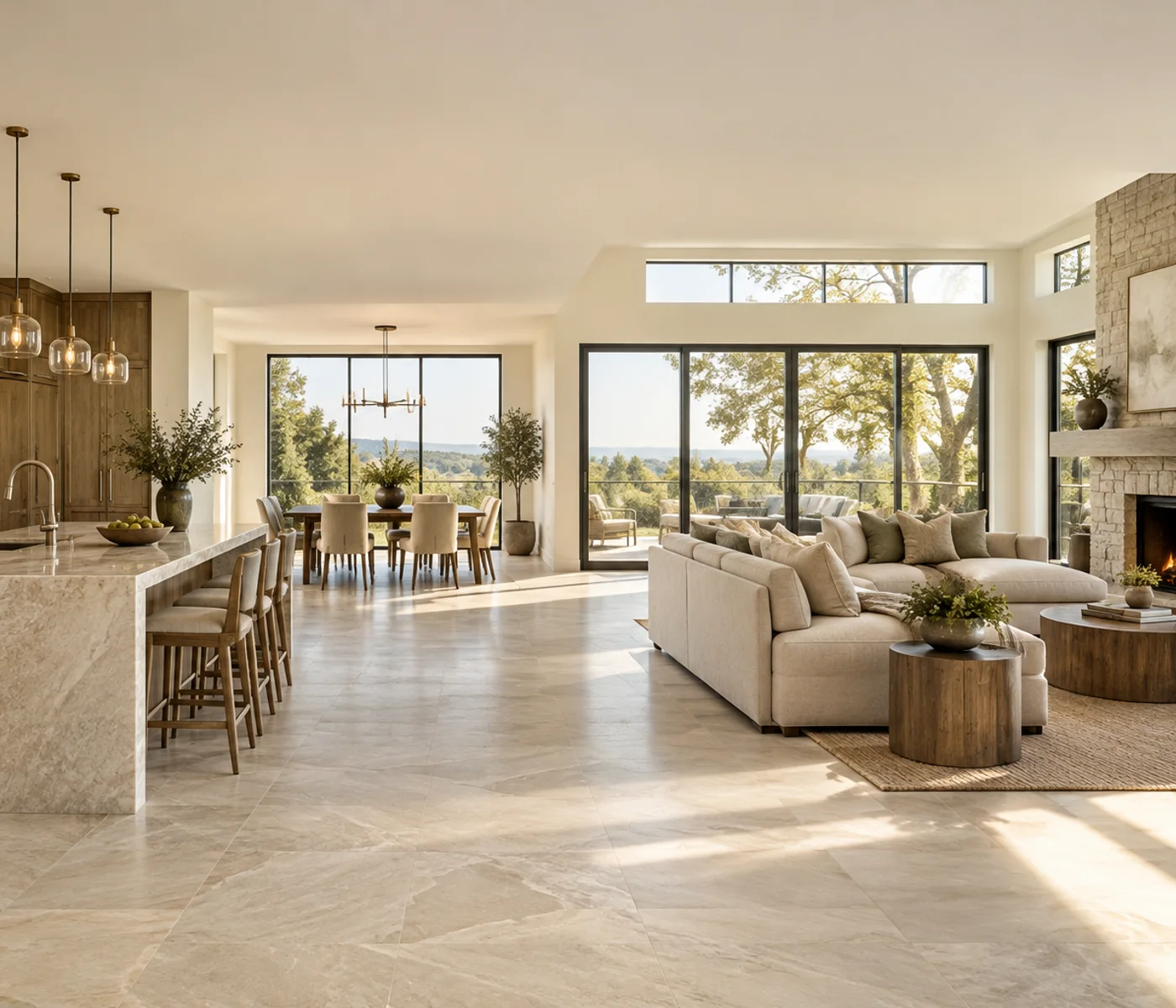
What Are the Different Types of Floor Tiles?
Material is one of the most important factors when choosing floor tiles. Different tile types vary in density, water absorption, durability, surface texture, and maintenance requirements.
Common floor tile options include Ceramic Tile, Porcelain Tile, natural stone tiles, Cement Tile, Mosaic Tile, and Terrazzo Tile. Porcelain is technically a type of ceramic tile, but in the U.S. flooring market, the two are usually discussed separately because they differ in density, water absorption, and typical applications.
The best choice depends on where the tile will be installed, how the room is used, and how much maintenance you prefer over time.
| Floor Tile Type | Main Characteristics | Advantages | Considerations |
|---|---|---|---|
| Ceramic Tile | A popular indoor flooring option available in many colors, patterns, and finishes | Wide design variety, easy cleaning, and flexible price options | Performance varies by product, so check durability and recommended applications |
| Porcelain Tile | A denser ceramic tile with lower water absorption and strong durability | Moisture-resistant, long-lasting, and available in wood, stone, and concrete looks | Harder to cut and install, often requiring specialized tools |
| Marble Tile | Natural stone with unique veining and an elegant appearance | Adds luxury and visual character to interiors | Requires sealing and careful maintenance |
| Slate Tile | Natural stone with textured surfaces and color variation | Creates an organic look for traditional and natural-style spaces | Surface consistency and maintenance requirements vary |
| Travertine Tile | Natural stone with warm tones and a softer appearance | Works well with traditional, Mediterranean, and natural interiors | Requires sealing because of its porous structure |
| Terracotta Tile | Warm red and orange tones with handcrafted character | Creates a rustic and welcoming atmosphere | Higher absorption requires proper protection |
| Cement Tile | Decorative tiles with bold colors and patterns | Ideal for customized designs and statement floors | Needs sealing to protect against stains |
| Mosaic Tile | Small-format tiles arranged in patterns or sheets | Useful for shower floors, curved areas, and detailed designs | More grout lines require additional cleaning |
| Terrazzo Tile | Stone chips combined with cement or resin to create unique patterns | Works well with modern and vintage-inspired interiors | Cost and maintenance depend on composition and finish |
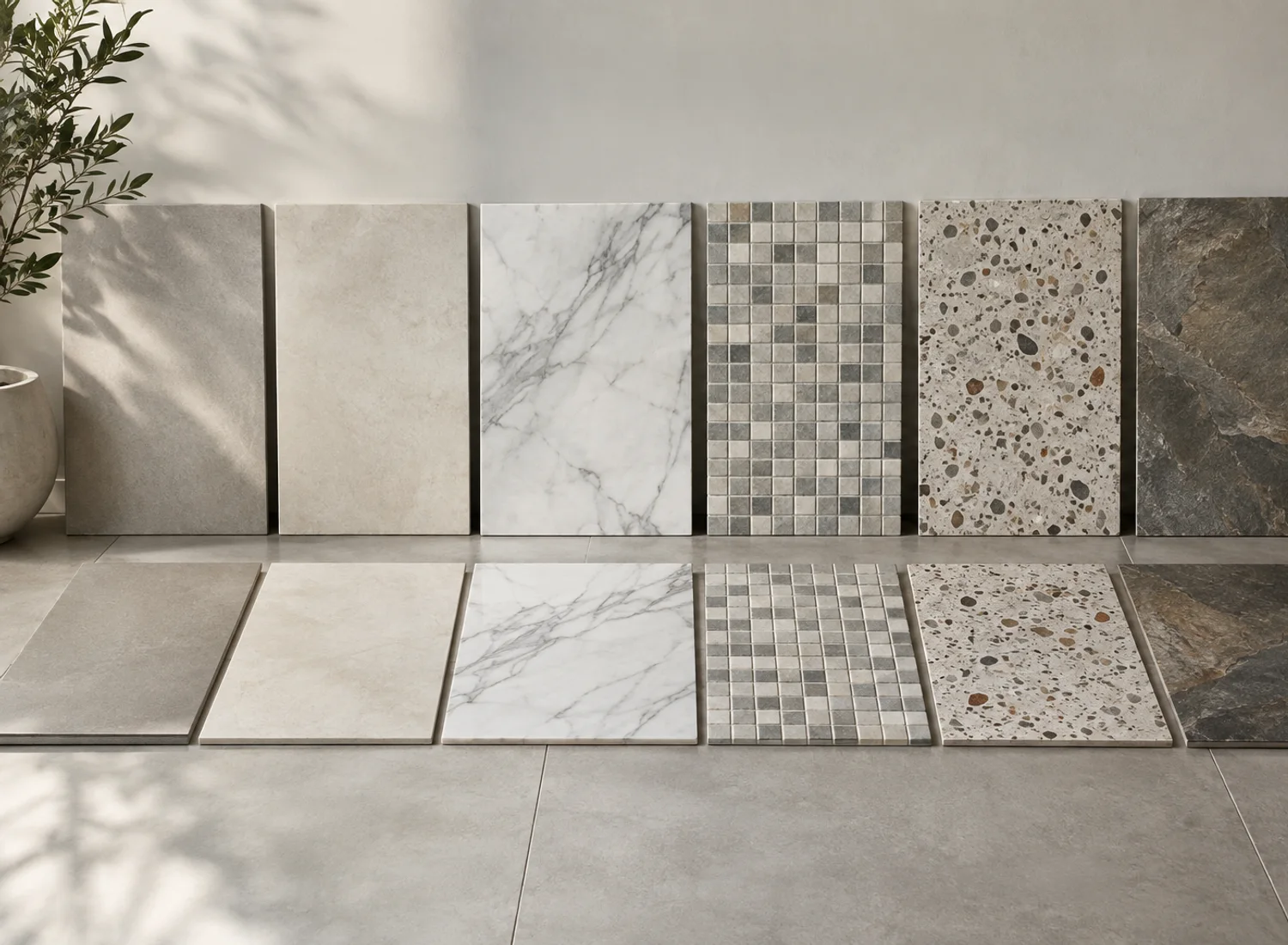
There is no single “best” floor tile for every home. The right material depends on the room, lifestyle, design goals, and long-term maintenance expectations.
Which Type of Floor Tile Is Best for Each Room?
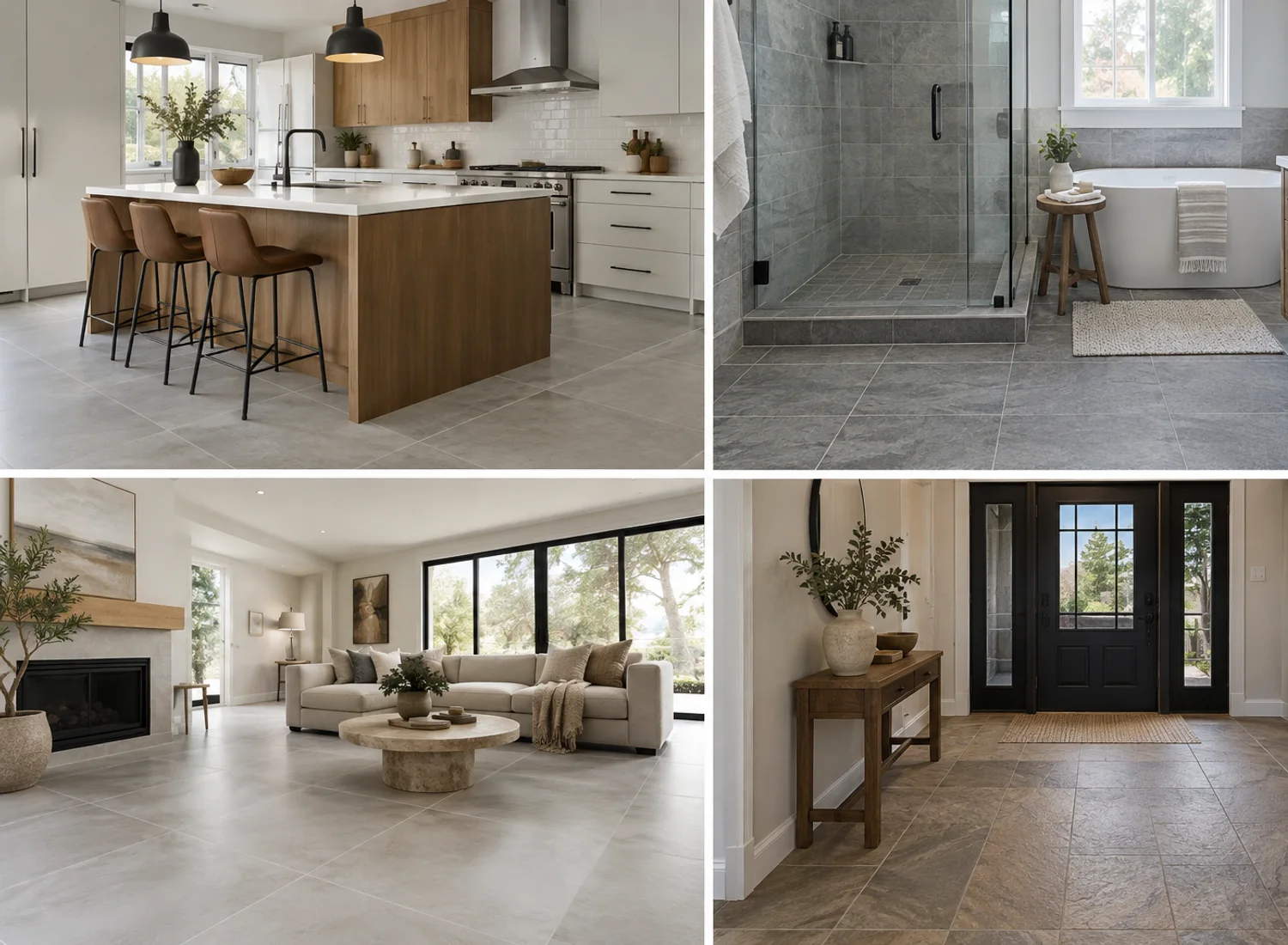
A tile that performs well in one room may not be ideal for another. Kitchens, bathrooms, living rooms, bedrooms, and entryways all have different requirements related to moisture, durability, cleaning, and appearance.
| Room | Recommended Floor Tiles | What to Consider |
|---|---|---|
| Kitchen | Porcelain Tile, suitable Ceramic Tile | Spills, stains, cleaning, durability, and cabinet coordination |
| Bathroom | Porcelain Tile, Mosaic Tile for certain areas | Moisture, slip resistance, drainage, and maintenance |
| Living Room | Porcelain Tile, Marble Tile, Terrazzo Tile | Durability, visual impact, furniture coordination, and room size |
| Bedroom | Wood-Look Porcelain Tile, Ceramic Tile | Comfort, atmosphere, climate, and personal preference |
| Entryway | Textured Porcelain Tile, suitable Slate Tile | Foot traffic, dirt, moisture, and cleaning |
| Laundry Room | Porcelain Tile, suitable Ceramic Tile | Water exposure, cleaning products, appliance weight, and maintenance |
Best Floor Tiles for Kitchens
Kitchen floors need to handle daily spills, food particles, moisture, and frequent cleaning. For this reason, durability and easy maintenance are usually more important than choosing a tile based only on appearance.
Porcelain Tile is one of the most common kitchen flooring choices because it offers good durability and moisture resistance. Some Ceramic Tile products can also work well for kitchens, but homeowners should always check the product specifications and recommended applications.
In open-concept homes, flooring should also work with the surrounding design. Kitchen floors are often seen together with cabinets, countertops, islands, and dining areas, so tile color and texture should complement the entire space.
For example, wood-look porcelain tile can pair well with natural wood cabinetry, while stone-look tile can create a cleaner appearance with modern painted cabinets.
When planning a kitchen renovation, flooring should be considered alongside other fixed elements, including custom kitchen cabinets, to create a more cohesive design.

Best Floor Tiles for Bathrooms
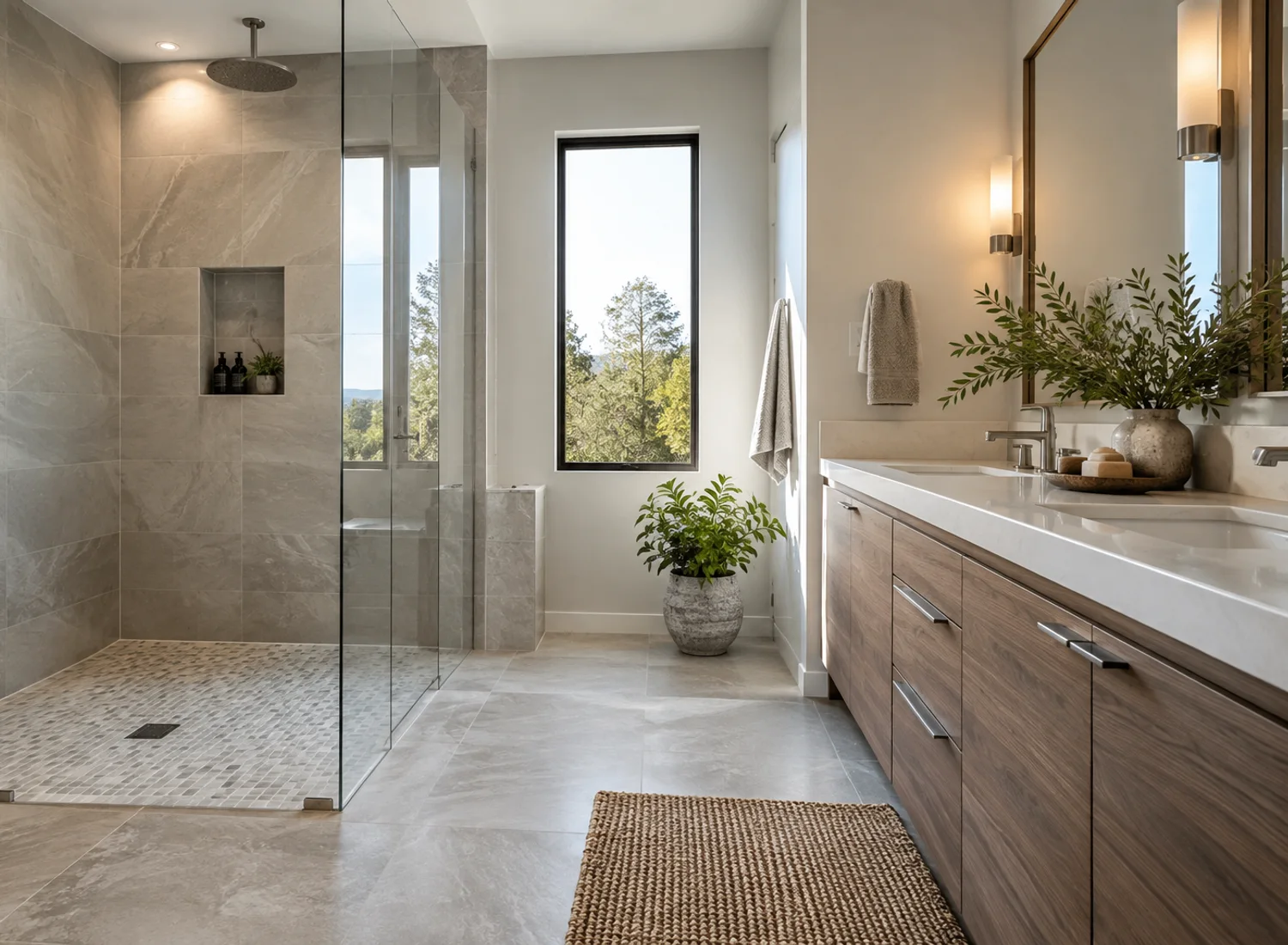
Bathroom floors need to perform well in a moisture-heavy environment. Beyond water resistance, homeowners should consider slip resistance, drainage, cleaning requirements, and everyday safety.
Porcelain Tile is a popular bathroom option because of its durability and low water absorption. However, not every porcelain tile is suitable for every bathroom area, especially shower floors.
For shower floors, smaller-format tiles such as Mosaic Tile are often easier to install because they can follow the slope toward the drain. More grout lines may also provide additional texture underfoot, although they require regular cleaning.
Bathrooms used by children, older adults, or family members with mobility concerns require extra attention to wet-area safety. Tile selection should be based on product performance information and the specific installation environment.
Flooring should also work with other bathroom elements, including cabinetry, countertops, and custom bathroom vanities.
Best Floor Tiles for Living Rooms
Living rooms offer more flexibility when choosing floor tiles because they usually face less moisture than kitchens and bathrooms. The decision often comes down to durability, visual impact, and how the flooring works with furniture and the overall interior style.
Porcelain Tile is a popular choice for homeowners who want a durable surface with a wide range of design options. Wood-look and stone-look porcelain can create different atmospheres while keeping maintenance relatively simple.
Marble Tile and Terrazzo Tile can add distinctive patterns and become a visual feature within the room. However, these materials should be considered alongside furniture placement, lighting conditions, and the overall color palette.
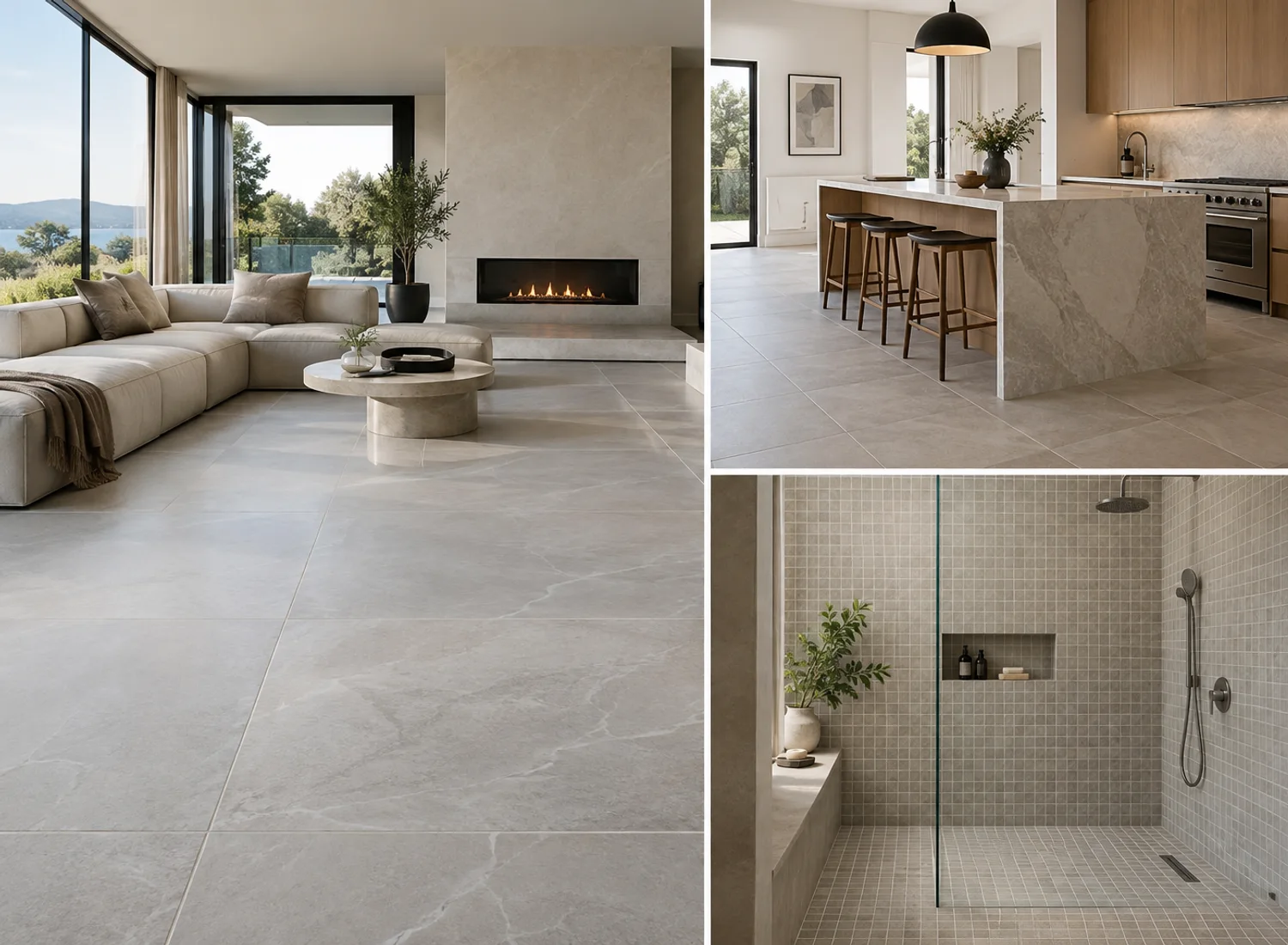
Large-format tiles are also increasingly popular in living spaces because fewer grout lines create a cleaner, more continuous appearance. Larger rooms can often benefit from bigger tile sizes, although installation conditions and room proportions should still be considered.
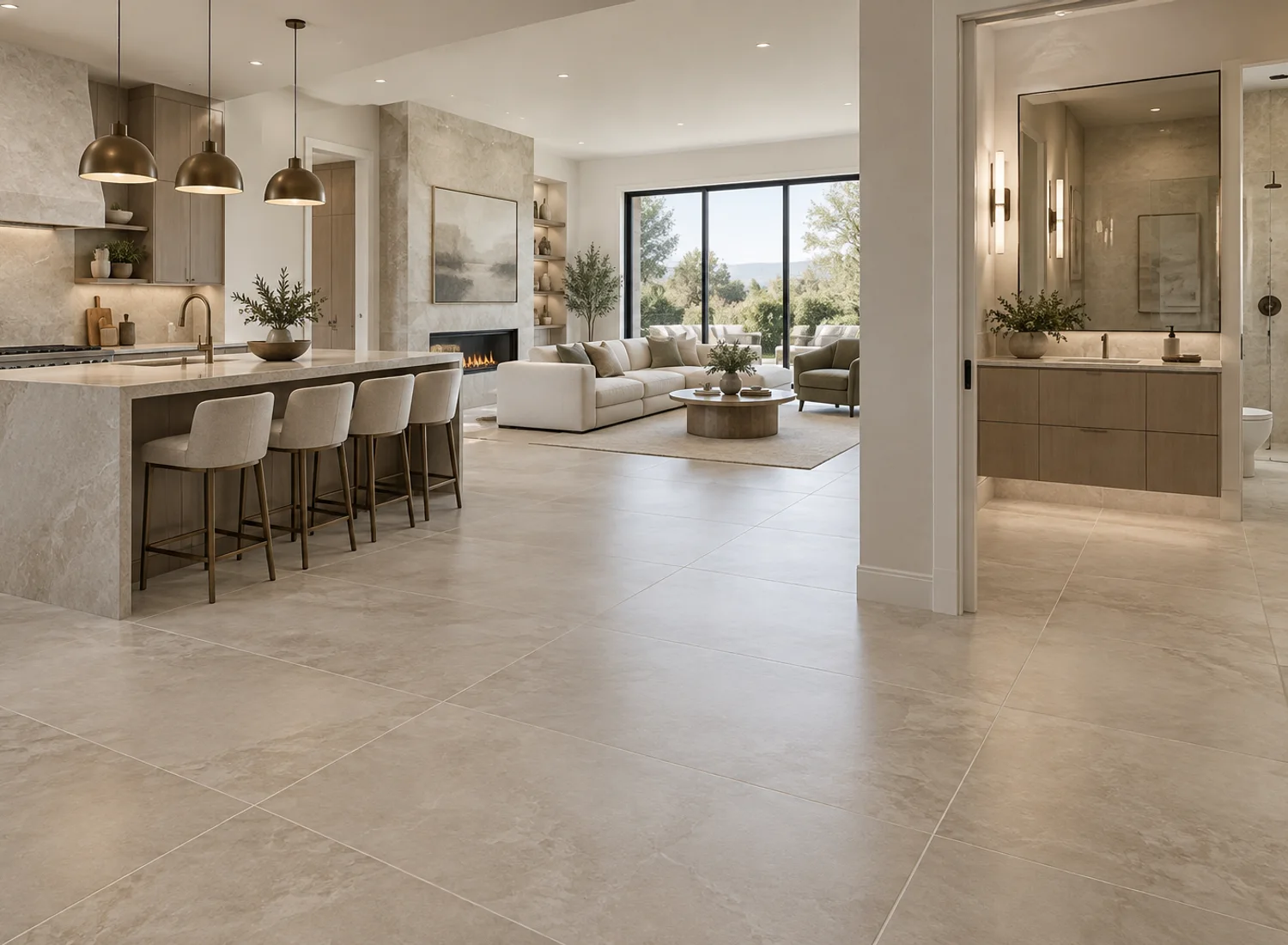
For open-concept homes, flooring should work together with kitchen cabinets, islands, and other built-in features. A consistent material palette can help different areas feel connected without making every room look identical.
Are Floor Tiles Suitable for Bedrooms?
Floor tiles are not the most traditional bedroom flooring choice in every U.S. home, where hardwood, carpet, and other softer materials are also common. However, tile can still be a practical option depending on climate, lifestyle, and personal preference.
Wood-look porcelain tile is one of the more popular bedroom options because it provides the appearance of natural wood while offering the durability and easy maintenance of tile.
Compared with real wood flooring, tile is harder and may feel cooler underfoot. Homeowners should consider factors such as climate, radiant heating systems, and personal comfort preferences before choosing tile for bedrooms.
For bedroom spaces, softer colors, natural textures, and subtle patterns often work better because they help create a calmer and more comfortable atmosphere.
Best Floor Tiles for Entryways and Hallways
Entryways and hallways are among the highest-traffic areas in a home. Floors in these spaces need to handle dirt, moisture, outdoor debris, and repeated foot traffic.
Textured Porcelain Tile and suitable Slate Tile can provide additional surface character while helping hide minor marks from everyday use.
However, a textured surface does not automatically mean better slip resistance. When choosing tile for entryways, homeowners should review manufacturer testing information and consider local weather conditions and household needs.
Homes in areas with frequent rain or snow should pay particular attention to wet shoes and moisture brought indoors. In warmer climates, stain resistance and easy cleaning may be the bigger priorities.
Best Floor Tiles for Laundry Rooms
Laundry rooms may be smaller spaces, but their floors still need to handle water exposure, cleaning products, heavy appliances, and potential spills.
Porcelain Tile is a common laundry room choice because it is durable, moisture-resistant, and relatively easy to maintain.
However, tile performance alone does not replace proper waterproofing and drainage planning. Before installation, consider:
- Washer and dryer placement
- Drain locations
- Water supply connections
- Floor level and stability
Planning these details in advance can reduce maintenance issues and improve long-term performance.
How to Choose the Right Floor Tile Size?
After choosing the material and design direction, tile size becomes another important decision. The same tile can create a completely different look depending on its dimensions and installation pattern.
The right tile size depends on:
- Room dimensions
- Layout complexity
- Furniture placement
- Installation conditions
- Desired visual effect
Large-format tiles can create a more continuous appearance by reducing grout lines, while smaller tiles are often better suited for areas with complex layouts or drainage requirements.
Common floor tile sizes in U.S. homes include:
| Tile Size | Common Applications | Considerations |
|---|---|---|
| 2×2 inches | Mosaic floors and shower areas | More grout lines require additional maintenance |
| 12×12 inches | Kitchens, bathrooms, and general indoor spaces | A classic size with flexible installation options |
| 12×24 inches | Kitchens, bathrooms, and living areas | Creates a clean look but requires a flat installation surface |
| 24×24 inches | Living rooms and open spaces | Fewer grout lines create a more seamless appearance |
| 24×48 inches | Large residential spaces and modern interiors | Requires more precise handling and installation |
| 48×48 inches and larger | High-end homes and large areas | Requires specialized installation skills |
| 6×24 / 8×48 inches | Wood-look tile and plank-style layouts | Requires attention to alignment and tile flatness |
Tile Size and Room Proportion
Room size is an important factor, but it should not be the only consideration.
Many homeowners assume small rooms require small tiles. In reality, larger tiles can make compact spaces feel cleaner and more open because fewer grout lines create less visual interruption.
However, large tiles may require more cutting in smaller rooms, especially around corners, doors, and fixtures. A layout plan should be considered before selecting the final size.
For larger living rooms and open spaces, large-format tiles can help create a more spacious and continuous appearance.
Tile Size and Installation Requirements
Larger tiles usually require more precise installation conditions.
They often need:
- A flatter subfloor
- More accurate cutting
- Proper handling equipment
- Experienced installation
Oversized tiles can also increase labor costs because they are more difficult to transport, position, and adjust during installation.
The best tile size balances the desired appearance with the practical requirements of the project.
Tile Size for Special Areas
Some spaces cannot be planned based only on visual preference.
For example, shower floors need to accommodate drainage slopes, and smaller tiles are often easier to adapt around drains and changes in elevation.
Laundry rooms, entryways, and other high-use areas should also consider cleaning, safety, and long-term maintenance before choosing a tile size.
How to Choose Floor Tiles for a Custom Home Design?
In a custom home project, flooring is more than just a surface material. The right floor tile should work together with kitchens, bathrooms, cabinetry, and the overall interior design.
Many homeowners select cabinets, vanities, or their preferred design style first, only to find that standard tile options do not fully match the look they want. They may need a specific color, texture, or material effect to create a more consistent design throughout the home.
For these projects, flooring should be considered as part of the entire space rather than as a standalone choice. Coordinating floor tiles with cabinetry, countertops, wall finishes, and furniture can create a more balanced and connected interior.
Avrelahome can help homeowners plan kitchen, bathroom, and other residential spaces based on room dimensions, design references, and overall style preferences, ensuring that flooring choices work naturally with custom cabinetry and the rest of the home design.
FAQ
What Is the Difference Between Ceramic and Porcelain Floor Tiles?
Ceramic and porcelain tiles are both ceramic-based materials, but porcelain is denser and has lower water absorption. Ceramic tile offers more design flexibility, while porcelain is often preferred for high-moisture or high-traffic areas.
Are Porcelain Tiles Better Than Natural Stone Tiles?
Neither option is always better. Porcelain is easier to maintain and can replicate natural materials, while stone offers unique textures and natural variation. The right choice depends on your design preferences and maintenance needs.
Can You Use the Same Floor Tiles Throughout the House?
Yes, but each room has different requirements. A consistent tile style can create a cohesive look, while bathrooms and laundry rooms may need materials with specific moisture and safety performance.
Are Large Floor Tiles Suitable for Small Bathrooms?
Yes. Large-format tiles can make small bathrooms feel more open by reducing grout lines. However, the layout, drainage requirements, and installation conditions should be considered before choosing the size.
How Can You Tell If a Floor Tile Is Slip-Resistant?
Check the manufacturer’s slip-resistance testing information rather than judging only by surface texture. Wet areas such as bathrooms and entryways require tiles selected for the specific environment.
Conclusion
Choosing the right floor tiles requires more than selecting a color or pattern. Material performance, room function, design style, and long-term maintenance all influence the final decision.
Kitchens, bathrooms, living rooms, bedrooms, and entryways each have different flooring requirements. After selecting the right material, homeowners should also consider tile size, layout, and how the flooring works with cabinetry and other interior elements.
For standard projects, choosing an appropriate tile option may be enough. For custom homes or larger renovations, coordinating flooring with cabinets, furniture, and the overall design plan can create a more balanced and cohesive space.
Avrelahome can help homeowners evaluate their space, design goals, and custom cabinetry needs to create interiors where every element works together.