

Custom Entryway Cabinets & Storage
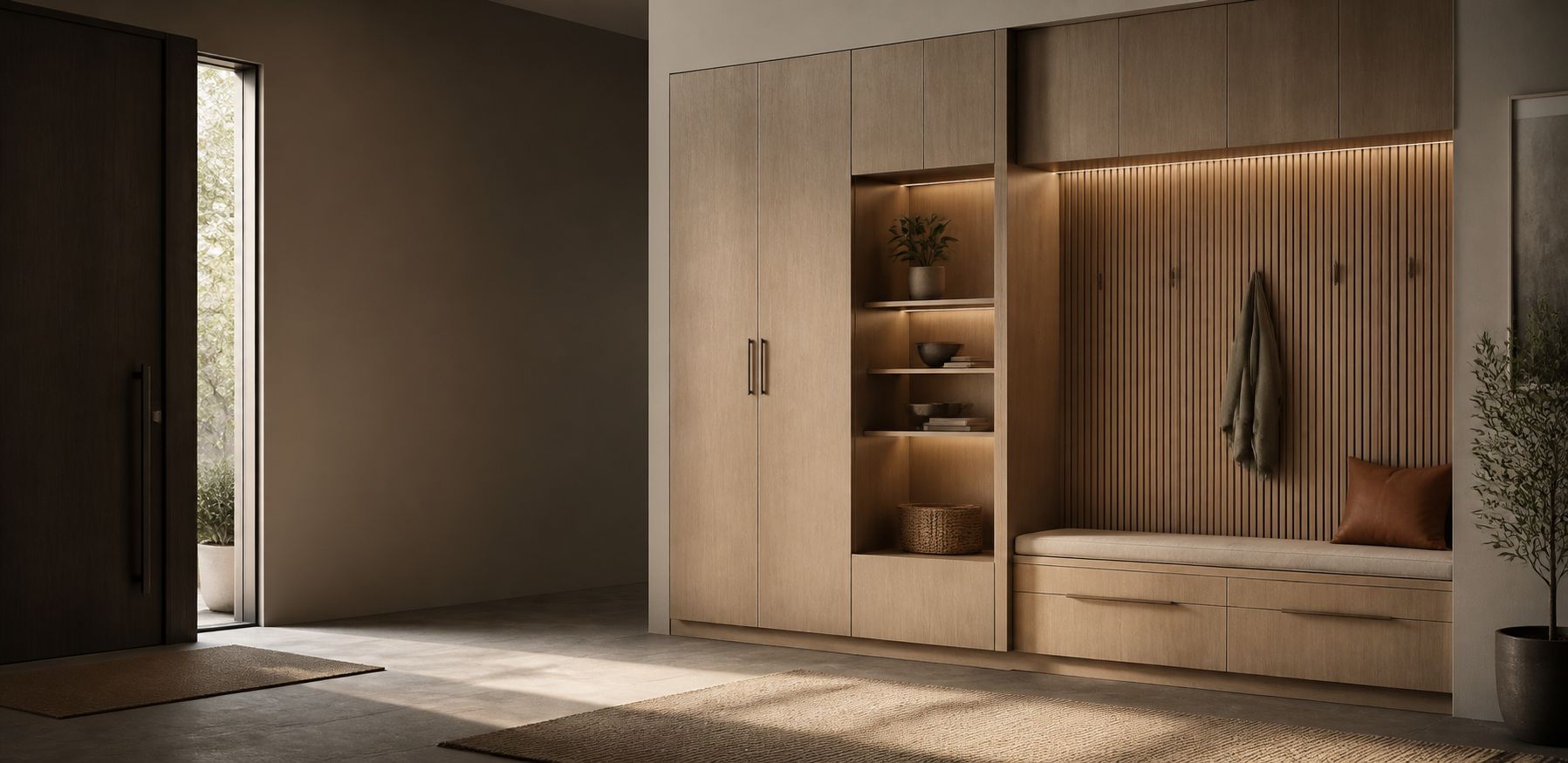
Plan your entryway around the way your household actually uses it. Custom cabinetry can combine shoe storage, coat storage, benches, drawers, and open compartments to keep everyday essentials organized without crowding the space.
- Designed around your entryway dimensions and walkway
- Storage for shoes, coats, bags, and everyday essentials
- Materials and finishes coordinated with the rest of your home
Entryway Storage for Different Spaces
Start with the shape and scale of the entrance. Each space needs a different balance between added storage and comfortable circulation.
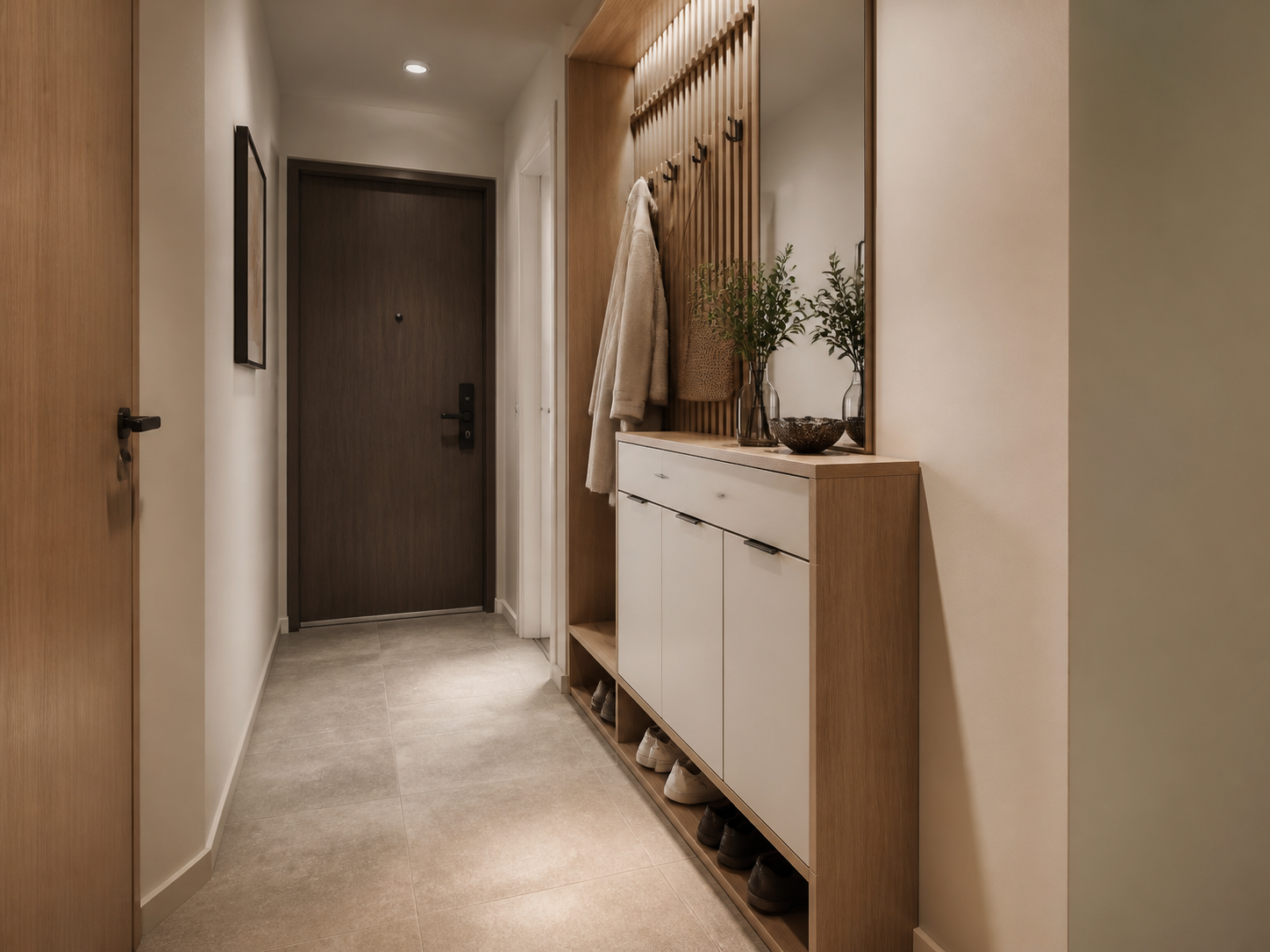
Narrow Entryway
Keep the cabinet shallow and the visual weight light so new storage does not compress the walking path or interfere with the door.
Recommended configuration
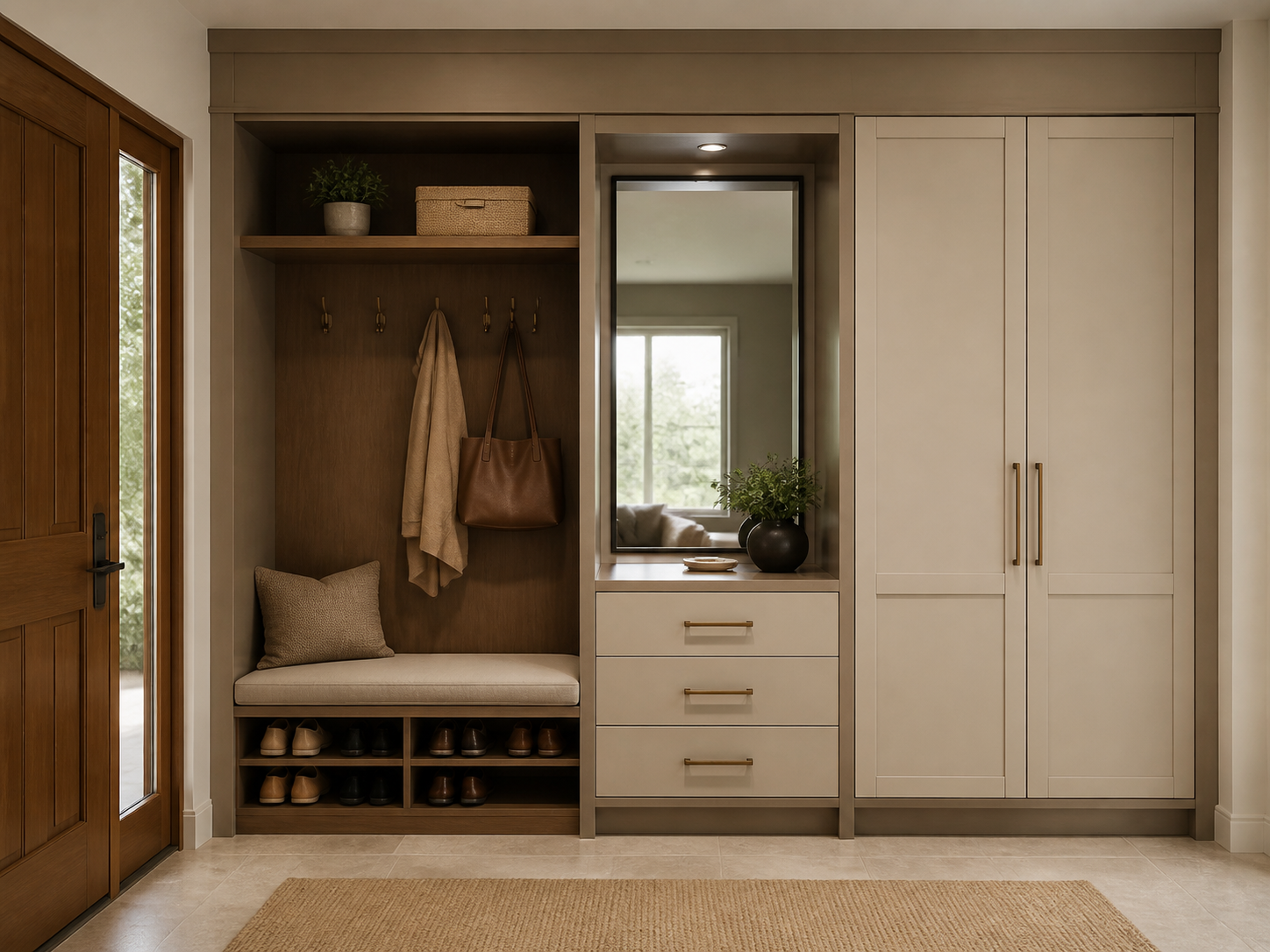
Standard Entryway
A complete wall can combine shoes, bags, small items, and a modest place to sit without making the entrance feel overbuilt.
Recommended configuration
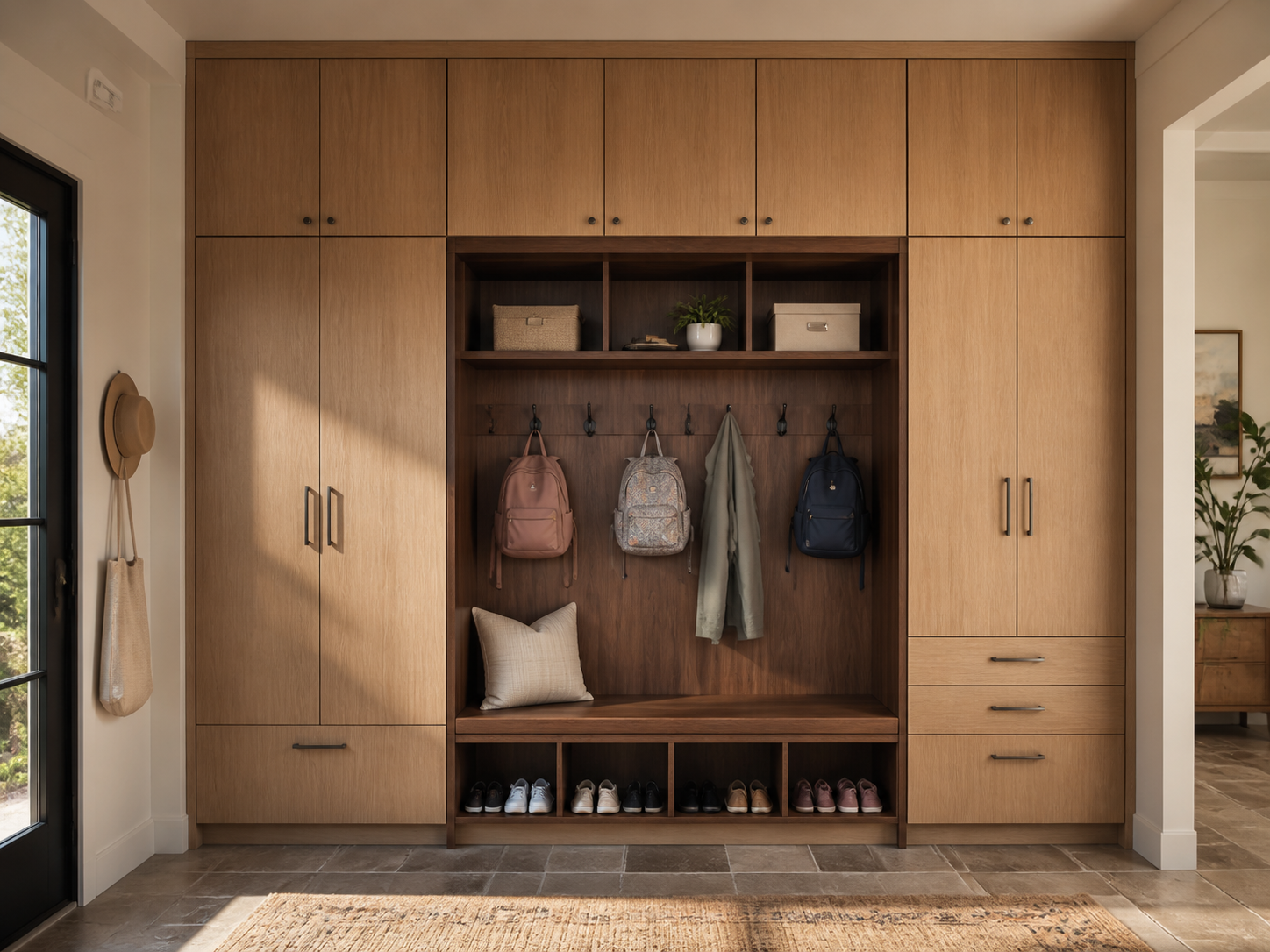
Family Entryway
Separate zones help several people share the entrance while keeping frequently used and seasonal items from competing for the same shelves.
Recommended configuration
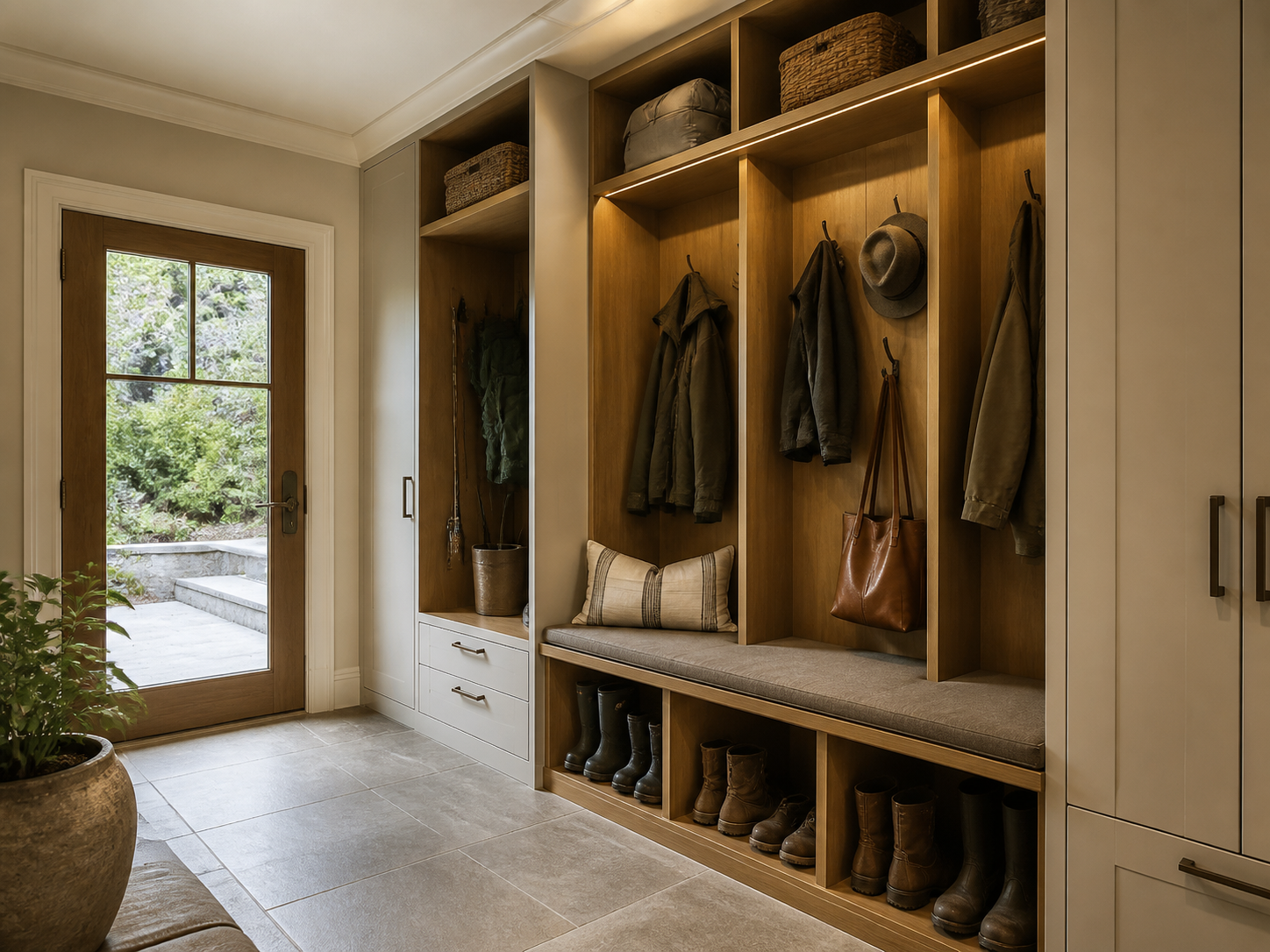
Mudroom
A larger entrance can support heavier footwear, coats, outdoor gear, and family drop zones through a mix of open access and concealed storage.
Recommended configuration
What Do You Need to Store in Your Entryway?
Start with the things your household brings in and out every day rather than simply deciding how many cabinets to add. Shoes, coats, bags, and smaller items all work better when they have dedicated storage zones.
Shoes
Everyday shoes, sneakers, heels, boots, and seasonal footwear can be stored in different areas. Keep frequently worn pairs within easy reach and reserve upper or lower storage for less-used shoes.
Coats & Jackets
Long coats need enough hanging height, while shorter jackets can work with hooks or shorter hanging sections. A dedicated coat area keeps outerwear from collecting on chairs or benches.
Bags
Handbags, backpacks, totes, and shopping bags can be stored in open cubbies, on hooks, or inside dedicated cabinet sections instead of piling up near the door.
Keys & Small Essentials
Keys, wallets, sunglasses, mail, and other grab-and-go items can be kept in shallow drawers, open drop zones, or small countertop areas.
Seasonal Items
Hats, scarves, umbrellas, sports gear, and travel bags can be stored in upper cabinets or other less frequently accessed areas.
Kids’ Items
Lower hooks, shoe storage, and open compartments can make it easier for children to put away their own shoes, backpacks, and jackets.
Choose the Right Entryway Cabinet Size
Entryway cabinet depth and height should be based on what you need to store. Shoe cabinets, general storage, coat cabinets, and built-in benches all require different dimensions, while still leaving enough room to move comfortably through the entry.
Slim Shoe Cabinet
12–16 in300–400 mm deep
A good option when the main goal is shoe and small-item storage without taking up too much walkway space.
Best for:
- Shoes
- Keys
- Small everyday items
Standard Entryway Storage
16–20 in400–500 mm deep
Provides more flexibility for shoes, bags, drawers, and open storage without requiring the depth of a full coat cabinet.
Best for:
- Shoes and bags
- Drawers
- Open cubbies
Full-Depth Coat Storage
20–24 in500–600 mm deep
Provides the depth needed for hanging jackets, coats, bags, and larger everyday items.
Best for:
- Coats and jackets
- Bags
- Hanging rails
Entryway Cabinet With a Bench
16–20 in400–500 mm seat depth
A seat height of approximately 17–19 in / 430–480 mm is a useful starting point for comfortable shoe changes for both adults and children.
Best for:
- Everyday shoe changes
- Families with children
- Multi-person households
Choose the Cabinet Height
Features You Can Add to Entryway Cabinets
Not every entryway needs every feature. Choosing the functions your household will actually use is usually more valuable than simply adding more cabinetry.
Built-In Bench
Creates a comfortable place to sit while putting on or taking off shoes, especially useful for children, older family members, or busy households.
Drawers
Keep keys, wallets, gloves, and other small everyday items organized and off the countertop.
Hooks
Provide quick-access storage for coats, hats, bags, and other frequently used items without opening cabinet doors.
Mirror
A full-length or integrated mirror makes it easy to check your outfit before leaving and can also help a smaller entryway feel brighter and more open.
Integrated Lighting
Lighting can be added inside cabinets, open niches, or around the bench area to improve visibility and add a more finished look.
Open Cubbies
Useful for frequently worn shoes, everyday bags, or decorative objects that you want to keep easy to reach.
Ventilated Shoe Storage
Ventilation gaps, open compartments, or breathable door panels can improve airflow in shoe-storage areas and make closed cabinetry more practical for everyday use.
What Materials Can You Choose for Entryway Cabinets?
Entryway cabinetry can be customized with different cabinet materials, door finishes, hardware, and bench materials based on budget, maintenance needs, and the overall style of the home. Wood tones, solid colors, matte surfaces, and high-gloss finishes can all be mixed and matched.
Cabinet Materials
Cabinet materials affect structural stability, durability, and overall cost.
Plywood
A strong, stable option with good screw-holding performance. Well suited to floor-to-ceiling cabinetry, larger units, and projects where long-term durability is a priority.
MDF
Provides a smooth, even surface and works well with lacquer, PET, and other modern finishes.
Particle Board
A practical choice for standard residential cabinetry when budget and straightforward construction are priorities.
Melamine-Faced Panels
Easy to wipe clean and available in a wide range of colors and wood looks, making them useful for cabinet interiors and high-use storage areas.
Door Materials & Finishes
Door finishes have the greatest visual impact and can be coordinated with flooring, wall colors, nearby furniture, and other cabinetry.
Wood Veneer
Offers the look and texture of real wood grain and works well in natural, contemporary, and higher-end interiors.
PET Finish
Smooth, clean, and easy to maintain, making it a strong choice for modern and minimalist entryways.
Lacquer
Available in matte or glossy finishes with a wider range of color options.
Melamine
Offers a broad selection of wood grains and solid colors and works well for everyday residential cabinetry.
Solid Wood
A premium option for homeowners who want natural wood character, though it generally comes with a higher cost and more maintenance.
Hardware & Storage Fittings
Hardware can be selected based on how each part of the entryway will be used.
Available options may include:
- Soft-close hinges
- Drawer slides
- Push-to-open hardware
- Pull-out shoe storage
- Hooks
- Hanging rails
- Handles or recessed pulls
- Adjustable shelves
Different fittings can be used for shoe storage, coat storage, drawers, and open sections instead of using the same hardware throughout.
Bench Materials
If your entryway includes a built-in bench, the seat can also be customized around comfort, maintenance, and style.
Wood Seat
Simple, durable, and well suited to modern or natural interiors.
Fabric Upholstery
Adds softness and comfort with a wide range of color and texture options.
Leather or Faux Leather
Easy to wipe clean and practical for frequently used seating areas.
Removable Cushion
Easy to clean or replace and gives you more flexibility over time.
How Do You Choose the Right Materials?
For a Natural Wood Look
Consider: Plywood + Wood Veneer or Solid Wood
A good fit for warm modern, contemporary, and natural interiors.
For a Clean, Modern Look
Consider: MDF + PET or Lacquer
These combinations work well for flat, smooth, solid-color cabinet fronts.
For Easier Everyday Maintenance
Consider: Melamine, PET, and Removable Shoe Trays
Especially useful in lower storage areas that are more likely to come into contact with dirt and footwear.
For Better Budget Control
Consider: Particle Board or MDF + Melamine
Then invest more of the budget in visible door finishes, hardware, or other details that have a greater impact on the final look.
Coordinate Your Entryway With the Rest of Your Home
The entryway is the first interior space you see when you come home. Coordinating colors, finishes, and cabinet details with nearby rooms can create a more connected look without making every cabinet in the home exactly the same.
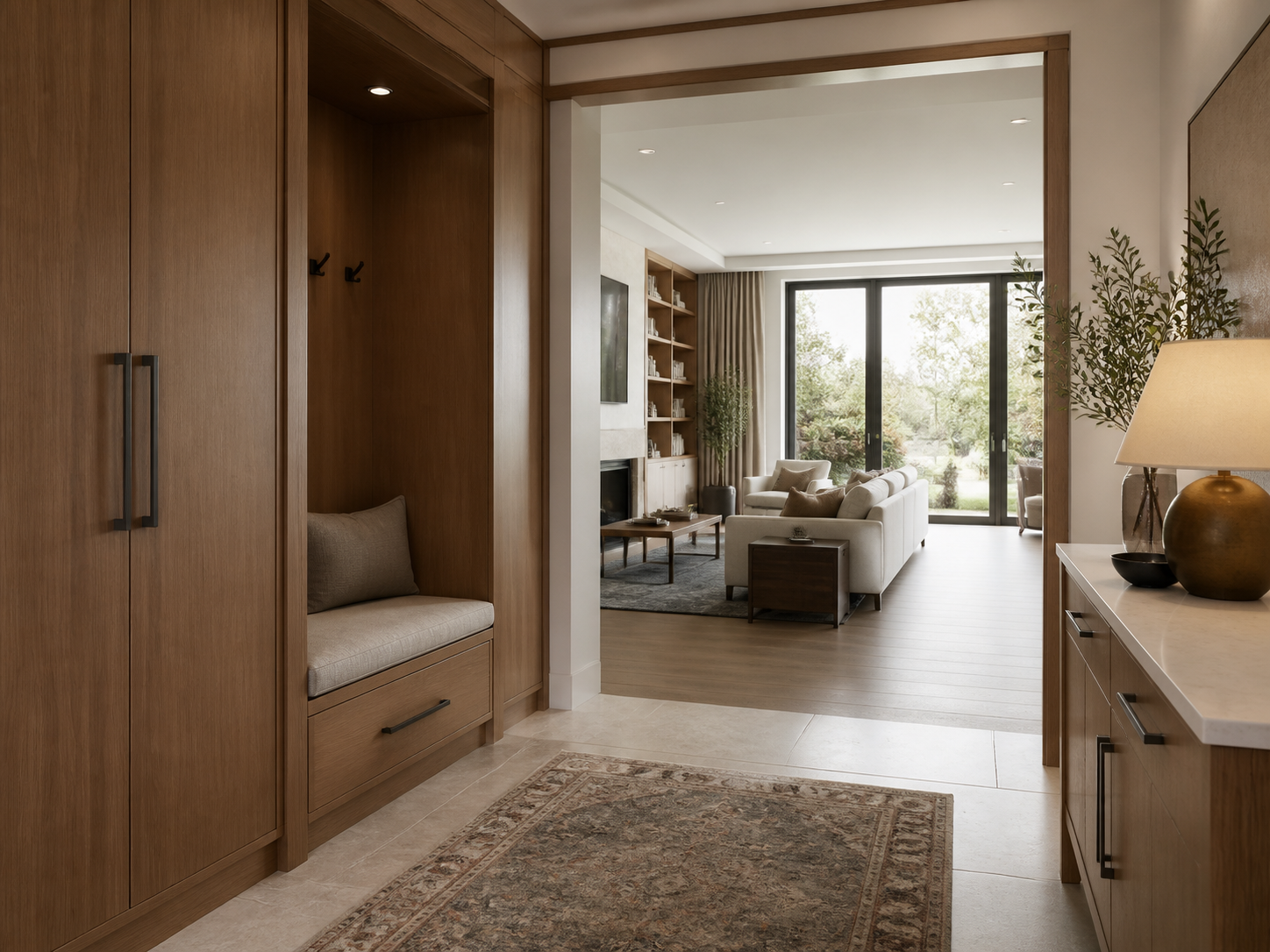
Entryway + Living Room
Repeat wood tones, cabinet colors, or selected details to create a smoother transition from the entry into the main living area.
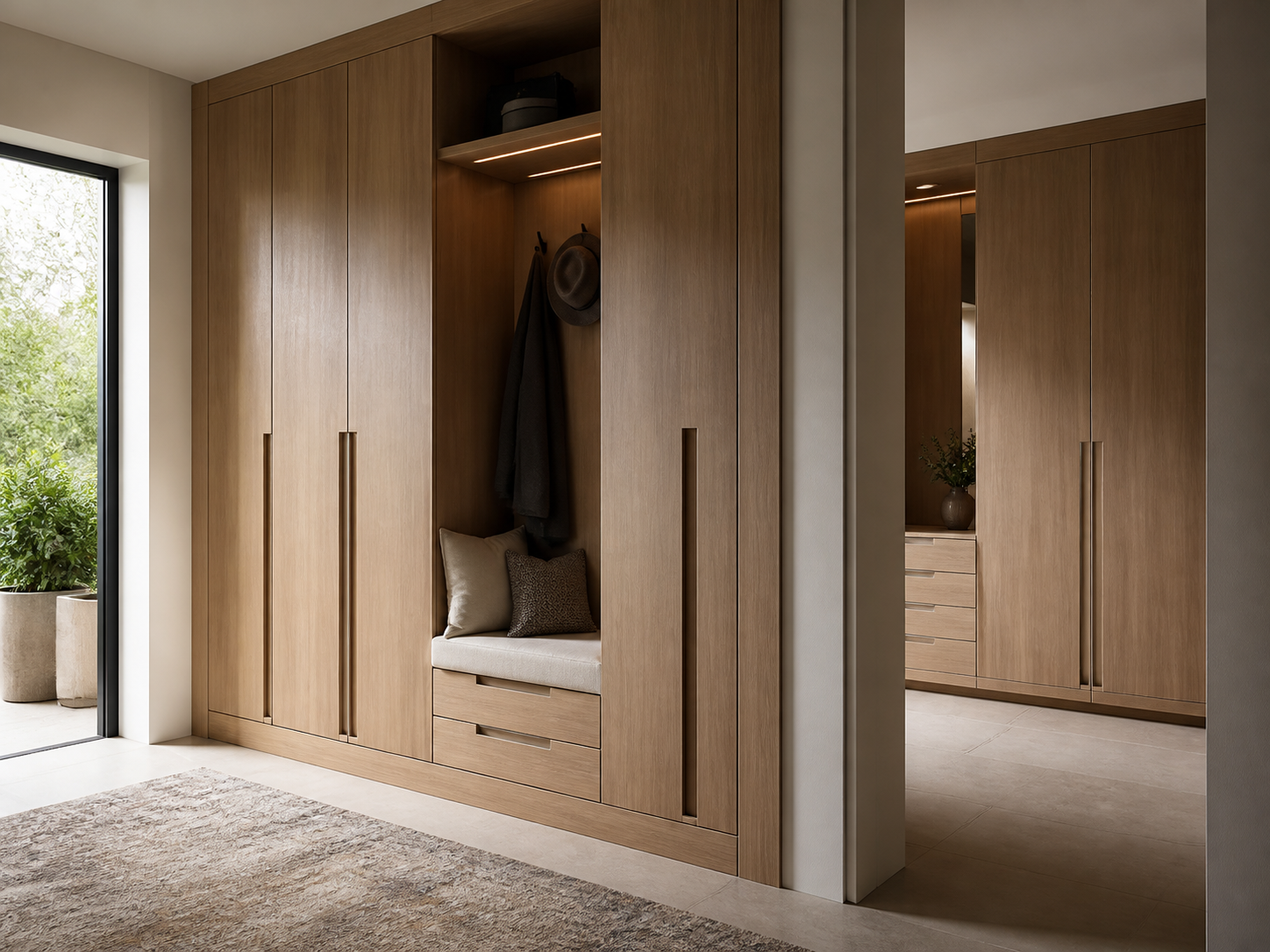
Entryway + Wardrobes
Door profiles, hardware, and finishes can be coordinated with bedroom wardrobes or hallway storage for a more consistent design language.
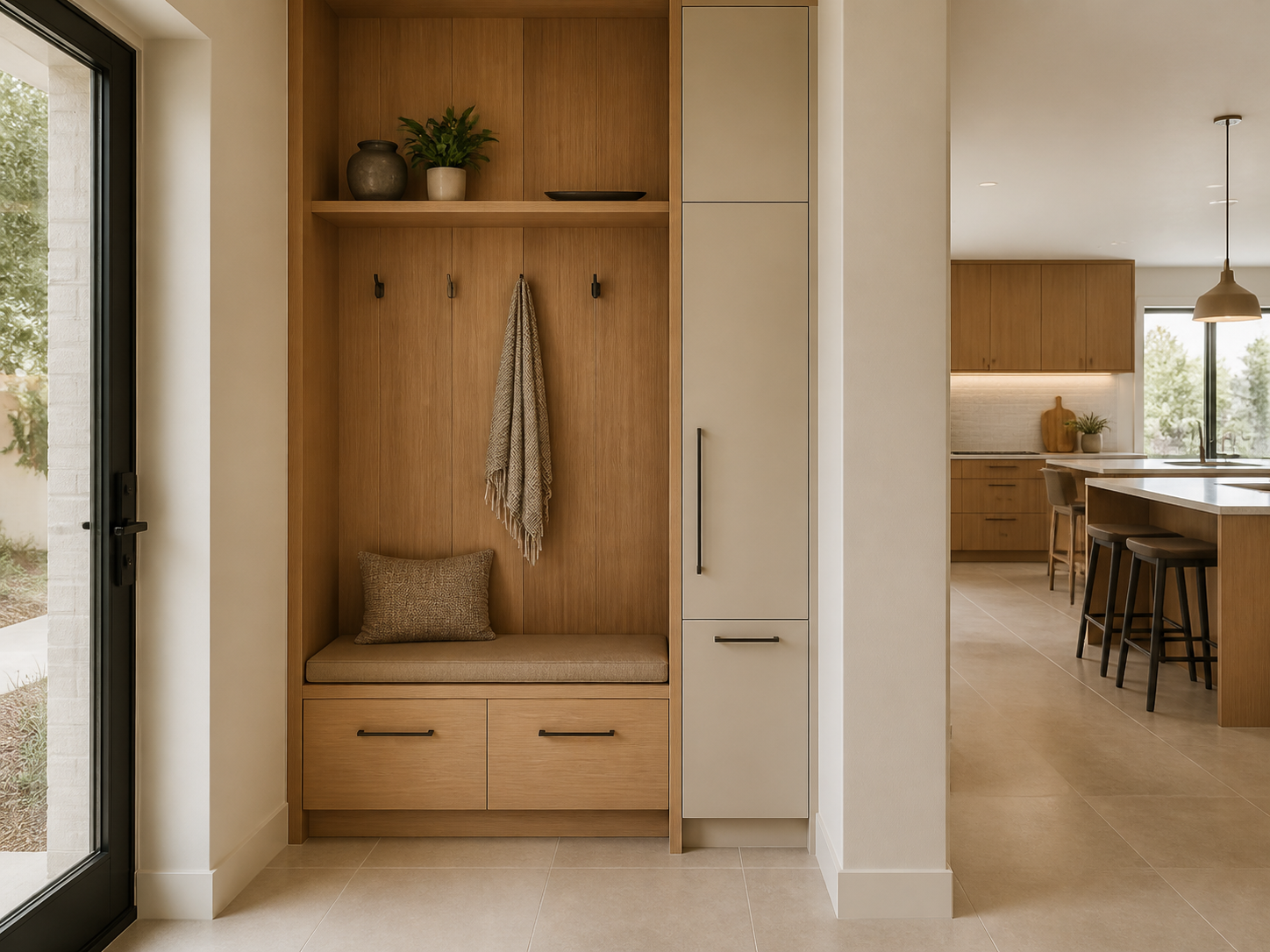
Entryway + Kitchen
Similar wood tones, finishes, or hardware can connect the two spaces while still allowing each room to serve its own function.
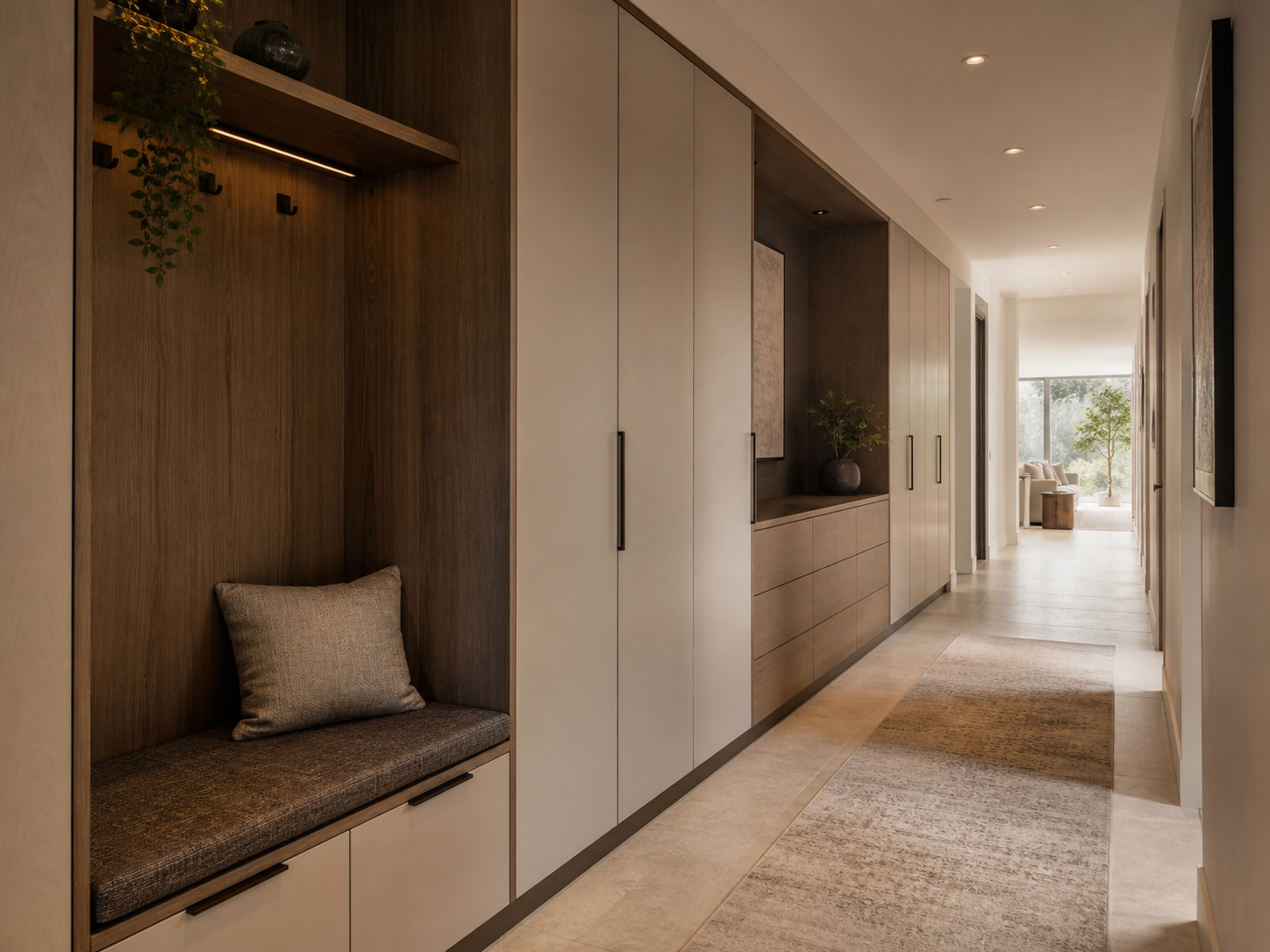
Entryway + Hallway Storage
Aligning cabinet heights, colors, and architectural lines can help the entryway flow naturally into adjoining hallway storage.
Our Entryway Customization Process
The process starts with the actual entryway, then moves through storage needs, cabinet dimensions, materials, and final production so the finished cabinetry works for everyday life.
Understand the Entryway
We review the walls, entry door, ceiling height, corners, outlets, and available circulation space.
Define Your Storage Needs
We look at household size and what you need to store, including shoes, coats, bags, small items, and seasonal gear.
Determine Cabinet Dimensions
Cabinet width, height, depth, and the balance between open and closed storage are planned around the available space.
Select Materials and Details
Choose colors, finishes, hardware, handles, lighting, bench materials, and other details.
Finalize the Design
The overall cabinet layout, storage functions, and material selections are reviewed before production.
Production & Delivery
Once the design is confirmed, the cabinetry moves into production, quality inspection, packing, and delivery based on the project location.
What Do You Need for an Entryway Quote?
You do not need a complete interior design package to get started. Basic measurements, photos, and storage requirements are usually enough for an initial conversation. The design and quote can be refined as more details are confirmed.
Space Dimensions
Provide wall width, ceiling height, available depth, door locations, and the narrowest part of the walkway.
Entryway Photos
Photos of the front door, surrounding walls, corners, outlets, baseboards, and nearby furniture help us understand the existing space.
Floor Plan
If you already have a floor plan, you can send it. A clear hand-drawn measurement sketch can also work for early planning.
Storage Needs
Let us know what you want to store, such as shoes, coats, bags, keys, kids’ items, and seasonal gear.
Style Preferences
Share preferred colors, materials, finishes, or inspiration images to help communicate the overall look you want.
Project Location
Your city and country, along with the approximate quantity of cabinetry, help us plan packing, shipping, and delivery.
Custom Entryway FAQs
Answers to common questions about entryway cabinet dimensions, narrow hallways, combined storage, benches, ventilation, whole-home coordination, quotes, and international shipping.
How deep should entryway cabinets be?
Entryway cabinets can range from about 12–24 in / 300–600 mm deep, depending on what they need to store. Shoe storage can be shallower, while hanging coats typically require more depth.
What size entryway cabinet do I need?
It depends on the size of the entryway, household size, and what you need to store. If you have a larger shoe collection or need coat and seasonal storage, using more vertical space can increase capacity without taking up additional floor space.
Can entryway cabinets work in a narrow hallway?
Yes. Shallow cabinets, tilt-out shoe storage, wall hooks, and slim drawers can add storage while preserving as much walkway space as possible.
Can shoes and coats be stored in the same entryway cabinet?
Yes. Shoe storage can be placed lower in the cabinet, with hanging space above or beside it. Drawers and open cubbies can also be included for bags and smaller items.
Can an entryway cabinet include a built-in bench?
Yes. A bench can be integrated with shoe storage, drawers, or tall cabinetry if the available space allows.
Can the shoe-storage section include ventilation?
Yes. Ventilation gaps, breathable panels, or open shoe compartments can be added to improve airflow. Damp footwear should still be allowed to dry before being stored in an enclosed cabinet for long periods.
Can entryway cabinets match cabinetry in other rooms?
Yes. Wood tones, door finishes, hardware, and other details can be coordinated with wardrobes, kitchen cabinets, living-room storage, or other custom cabinetry throughout the home.
What do I need to provide for a custom entryway quote?
Basic dimensions, site photos, storage needs, style preferences, and the project location are usually enough to get started. A complete set of design drawings is not required for the initial conversation.
Can Avrelahome ship custom entryway cabinets to the United States and Europe?
Yes. Avrelahome supports custom cabinet shipping to the United States and European markets. Packing and shipping are planned based on cabinet size, quantity, and the final destination.
Start Planning Your Entryway
Whether you currently have only a few photos and basic measurements or a complete floor plan and design direction, you can start with the information you already have. We can then develop the cabinetry around your entryway, household storage needs, and overall interior style.