
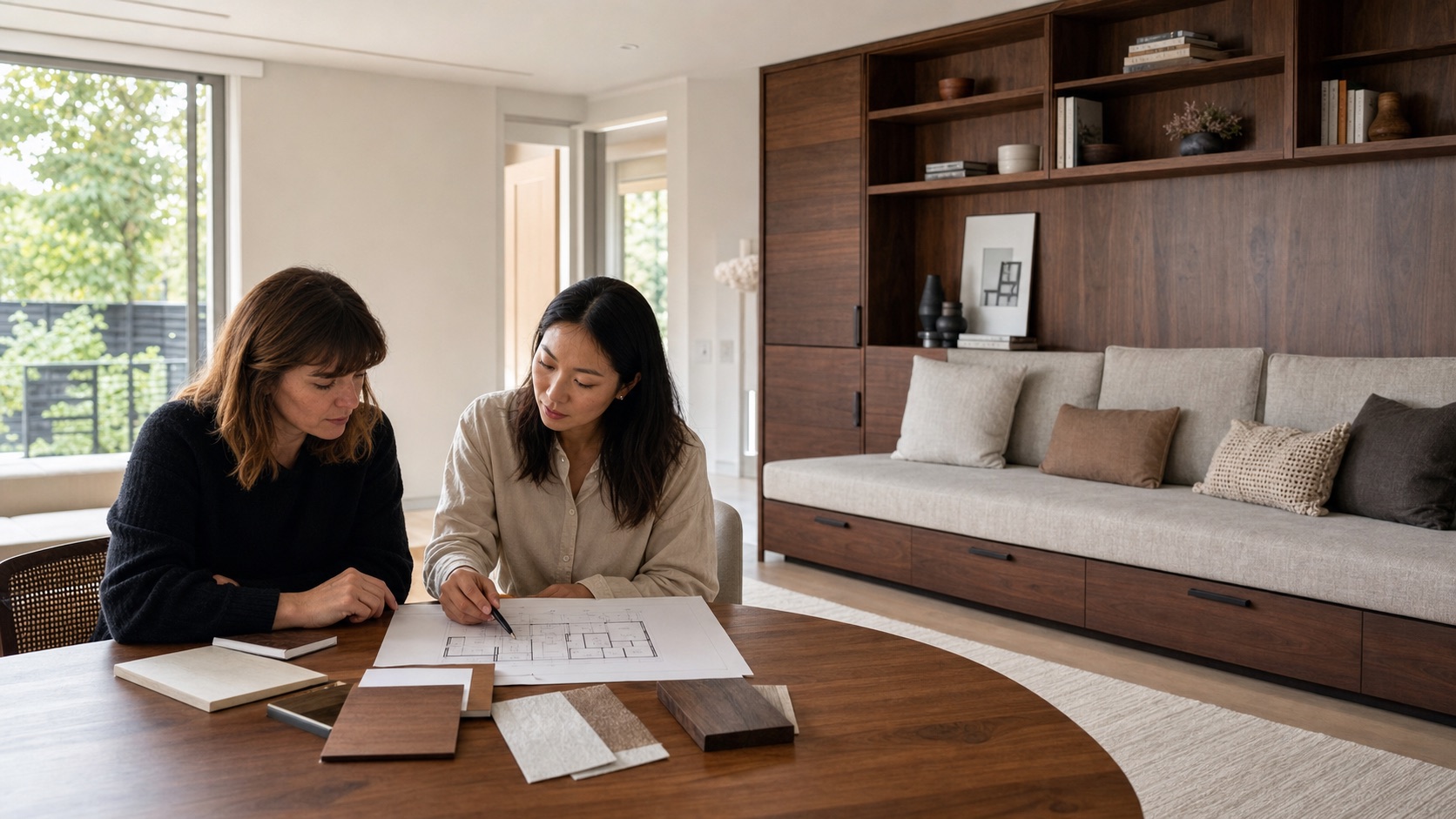
Finding furniture that looks good is usually easy. Finding a piece that fits the room, supports your daily routine, and works with the rest of the interior can be much harder.
A sofa may be too deep for a small living room. A standard wardrobe might leave valuable space unused near the ceiling. Even a dining table with the right dimensions can feel out of place if its finish clashes with the surrounding materials.
Custom furniture is designed to address these problems. Rather than asking homeowners to adapt their rooms to fixed products, it allows the furniture to be shaped around the space, the people using it, and the way they live.
Customization may involve dimensions, layout, materials, finishes, hardware, storage, or special features. The result can be anything from a made-to-fit dining table to a coordinated furniture plan for an entire home.
This guide explains what custom furniture means, the types available, which features can be personalized, and who is most likely to benefit from it.
What Is Custom Furniture?
Custom furniture is designed or modified according to a specific space, purpose, or set of customer preferences. Unlike ready-made furniture produced in standard sizes, a custom piece may be adjusted in terms of dimensions, construction, materials, colors, storage, and functionality.
Consider a standard wardrobe. Its width, height, shelf spacing, and hanging areas have already been determined by the manufacturer. A custom wardrobe takes a different approach. The design can reflect the wall dimensions, ceiling height, amount of clothing, and the owner's storage habits.
The same principle applies to other products. A custom dining table may be sized for a narrow dining room, while a sectional can be configured around a window, doorway, or open-plan layout.
Custom furniture may refer to one individual item, a built-in storage system, or a coordinated collection created for several rooms.
Custom Furniture vs. Ready-Made Furniture
The main difference lies in how the furniture relates to the space.
Ready-made furniture is produced first and then placed in a suitable room. Custom furniture starts with the room and the user's requirements before the final product is made.
| Comparison | Custom Furniture | Ready-Made Furniture |
|---|---|---|
| Dimensions | Made or adjusted for the space | Produced in standard sizes |
| Design | Personalized around specific needs | Based on an existing design |
| Materials | Often offers broader material choices | Selected in advance by the manufacturer |
| Availability | Requires design and production time | Often available for immediate purchase |
| Space fit | Well suited to unusual layouts | Works best in conventional rooms |
| Price | Generally involves a higher upfront cost | Available across a wider price range |
| Portability | Built-ins may be difficult to relocate | Usually easier to move and rearrange |
Ready-made furniture often makes sense for buyers who need something quickly, have a limited budget, or expect to move in the near future.
Custom furniture tends to suit homeowners who care more about precise dimensions, efficient storage, coordinated design, and long-term use.
Custom, Bespoke, and Made-to-Order Furniture
The terms “custom,” “bespoke,” and “made-to-order” are sometimes used interchangeably. Their exact meanings vary by company, but they generally describe different levels of personalization.
Custom furniture usually allows changes to dimensions, materials, colors, layout, or features. The product may be adapted from an existing design or developed for a particular space.
Bespoke furniture typically involves a higher level of personalization. The concept, structure, proportions, and details are created specifically for one client rather than selected from a preset range.
Made-to-order furniture is produced after the customer places an order. Buyers commonly choose from predefined sizes, fabrics, finishes, or configurations while the underlying design remains largely unchanged.
Since companies may define these terms differently, the label alone does not reveal how much control the buyer receives. Before ordering, confirm which elements can be changed and which are limited to preset options.
What Types of Custom Furniture Are Available?
Nearly every category of residential or commercial furniture can be customized, from made-to-order sofas and beds to the tables and storage included in Avrelahome’s custom furniture. The right type depends on the room, the available space, and the problem the furniture needs to solve.
Custom Storage Furniture
Storage is one of the most common reasons homeowners choose custom furniture.
Popular examples include:
- Built-in cabinets
- Wardrobes and closets
- Bookcases
- Media units
- Entryway cabinets
- Display cabinets
- Under-stair storage
Instead of forcing different belongings into identical compartments, the interior can be organized around specific items.
An entryway unit, for example, may combine shoe storage, hooks, a bench, drawers, and an open shelf for keys or bags. Inside a wardrobe, long-hang sections, short-hang sections, drawers, shelves, and luggage storage can be positioned according to the owner's clothing collection.
Rooms with niches, corners, sloped ceilings, or structural columns often benefit most from this type of furniture.
Custom Seating Furniture
Custom seating includes sofas, sectionals, dining chairs, benches, lounge chairs, and window seats.
In a compact living room, even a few extra inches of sofa depth can restrict movement. A made-to-fit design allows the overall length, seat depth, arm width, and sectional direction to match the layout more closely.
Larger rooms present the opposite challenge. Standard seating may look undersized or leave the space feeling disconnected. A modular sectional can provide the right visual scale while creating enough seating for family members and guests.
Fabric, leather, cushion firmness, leg style, arm shape, and seat height may also be adjustable, depending on the manufacturer.
Custom Tables and Work Surfaces
Dining tables, coffee tables, desks, conference tables, side tables, and kitchen islands can all be made to suit a particular use.
The ideal dining table depends on more than the number of seats. Room width, circulation space, entertaining habits, and chair dimensions also matter.
A custom desk may need to accommodate several monitors, computer equipment, paperwork, or creative tools. Cable openings, drawers, built-in outlets, and equipment storage can be incorporated into the design rather than added later.
Table height, edge profile, leg placement, tabletop shape, and base construction may also be modified.
Custom Bedroom Furniture
Common bedroom pieces include beds, headboards, nightstands, dressers, vanities, wardrobes, and storage benches, all of which can be coordinated through a custom bedroom furniture solution.
Smaller bedrooms often require furniture to perform more than one function. Drawers beneath the bed, wall-mounted nightstands, or storage built into a headboard can add useful capacity without taking up additional floor space.
In a larger primary bedroom, custom pieces can create a more cohesive setting. The bed, wardrobes, vanity, and wall paneling may share related materials, finishes, and proportions without appearing overly matched.
Whole-Home Custom Furniture
Whole-home customization coordinates furniture across several rooms, such as the entryway, living room, kitchen, bedrooms, dining area, home office, and walk-in closet.
The goal extends beyond fitting individual pieces into separate spaces. Materials, finishes, proportions, and design details are planned together so the rooms feel visually connected.
This approach is commonly considered for new construction, full-home renovations, large residences, villas, and properties with unusual architectural conditions.
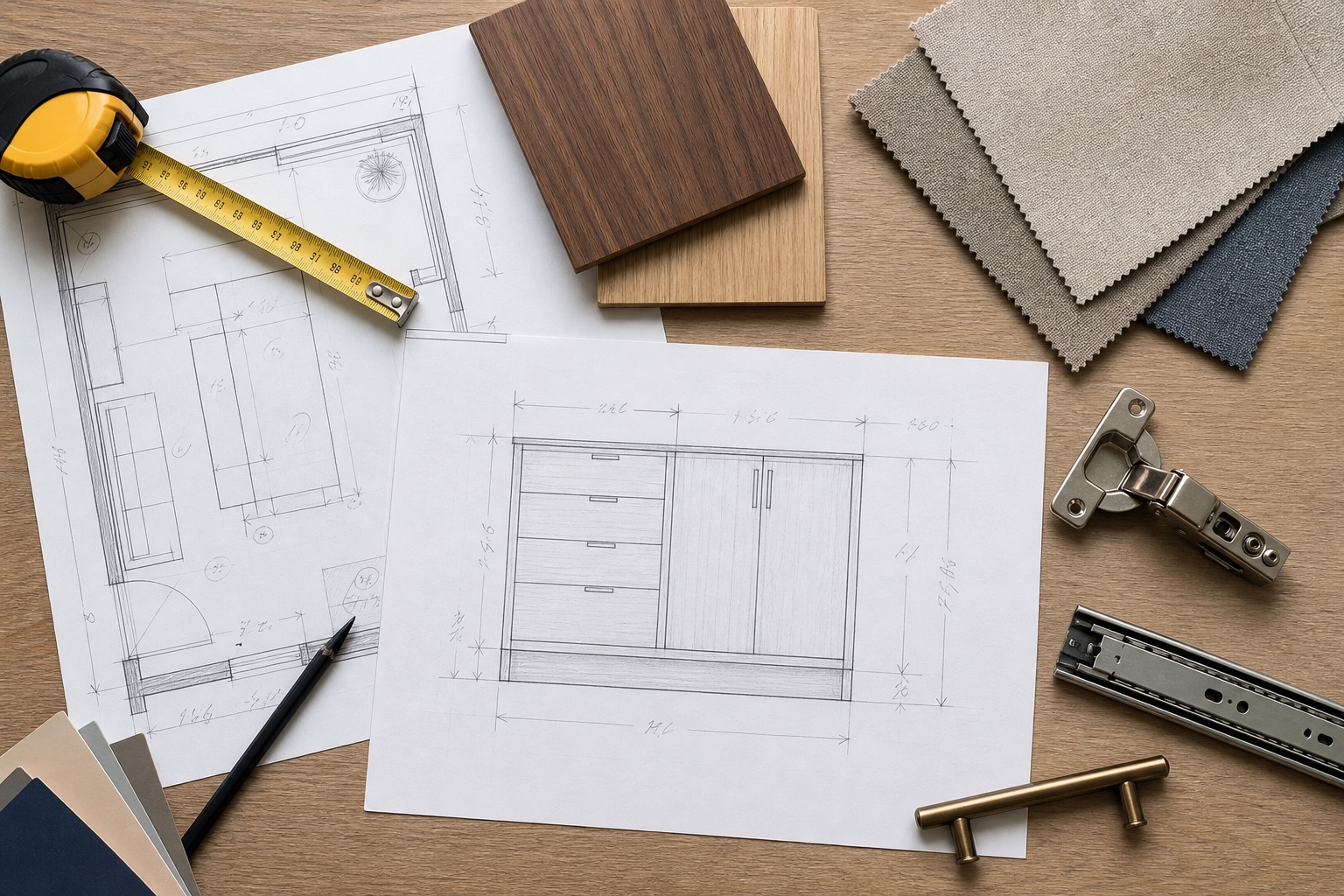
What Parts of Furniture Can Be Customized?
The available options depend on the furniture maker. Some companies provide only a limited menu of colors and sizes, while others allow the piece to be developed around the project from the beginning.
Size and Dimensions
Dimensions are usually the starting point.
Width, height, and depth may be adjusted to fit the available wall, preserve a walkway, clear a window, or reach the ceiling. Doors, outlets, vents, plumbing, baseboards, and architectural features also need to be taken into account.
In rooms with sloped ceilings, narrow walls, deep alcoves, or uneven corners, accurate sizing often matters more than the decorative style.
A visually appealing cabinet still fails its purpose if it blocks an outlet, interferes with a door, or leaves an unusable gap beside the wall.
Layout and Interior Configuration
Correct exterior dimensions do not automatically make furniture practical. Storage furniture is often only as useful as its internal layout.
Depending on the product, buyers may be able to select:
- Drawers
- Adjustable shelves
- Hanging rods
- Open compartments
- Pull-out baskets
- Hidden storage
- Appliance spaces
- Accessory organizers
A kitchen requires particularly careful planning. Cabinet placement should reflect appliance dimensions, preparation areas, cooking habits, and the location of frequently used items.
More compartments are not always better. A successful layout gives the right amount of space to the items used most often.
Materials
Common custom furniture materials include:
- Solid wood
- Plywood
- Medium-density fiberboard
- Particleboard
- Metal
- Glass
- Stone
- Veneer
- Fabric
- Leather
Each material affects appearance, price, weight, durability, and maintenance differently.
Moisture resistance deserves more attention in kitchens, laundry areas, and other humid spaces. Desks and dining tables, meanwhile, may require surfaces that stand up to frequent contact, spills, scratches, and cleaning.
Material names alone do not indicate overall quality. Construction methods, board thickness, surface treatment, hardware, and edge finishing also contribute to the final performance.
Colors and Finishes
Paint colors, wood stains, veneers, laminates, matte finishes, and high-gloss surfaces are among the most common visual options.
A furniture finish should be evaluated in relation to the entire room. Flooring, walls, doors, lighting, and nearby furnishings all influence how the final color appears.
The same sample may look warm in natural daylight and noticeably cooler under artificial lighting. For that reason, physical material samples are usually more reliable than digital renderings alone.
Hardware and Functional Features
Hardware affects how the furniture opens, closes, supports weight, and performs over time.
Common options include hinges, drawer slides, pulls, handles, lift mechanisms, and support systems. Additional features may include:
- Soft-close doors and drawers
- Integrated lighting
- Hidden outlets
- Cable management
- Adjustable shelves
- Rotating organizers
- Pull-out storage
- Built-in charging areas
- Space for integrated appliances
Useful features should solve an actual daily problem. Adding every available upgrade can increase the cost without making the furniture noticeably more practical.
What Are the Main Benefits of Custom Furniture?
It Makes Better Use of the Available Space
Standard furniture is designed around common room sizes, not one specific home. As a result, it may leave empty gaps, stop below the ceiling, or take up more floor space than necessary.
A custom piece can work around corners, alcoves, narrow walls, sloped ceilings, and other architectural conditions. Vertical space can also be used more effectively.
This advantage is especially valuable in smaller homes, where every section of the room needs to serve a clear purpose.
The Design Reflects How You Actually Live
Two households may own similar-sized homes but use them in completely different ways.
One family may need more hanging space for clothing. Another may prefer drawers and open shelves. A home office could require equipment storage, while a living room may need hidden space for toys, media devices, or hobby supplies.
Custom furniture allows these routines to shape the design. Instead of adapting daily habits to a fixed cabinet or desk, the furniture supports the way the household already functions.
Materials and Style Are Easier to Coordinate
Furniture purchased from several stores can be difficult to match. Wood tones may look similar online but noticeably different in the room. Hardware finishes, proportions, and design details can also compete with one another.
Customization provides greater control over these elements. Several rooms may share related materials or finishes while still having furniture designed for their individual functions.
The outcome usually feels more coordinated without requiring every piece to look identical.
Unusual Rooms Become More Functional
Attics, under-stair areas, narrow hallways, bay windows, and rooms with structural columns rarely suit standard furniture perfectly.
A custom design can respond to these conditions rather than treating them as unusable space. An awkward corner may become a built-in desk, while the area under a staircase can provide enclosed storage.
The value comes from solving a difficult layout problem, not simply creating a unique appearance.
What Are the Limitations of Custom Furniture?
The Upfront Cost Is Usually Higher
Custom furniture often costs more because the price may include consultation, site measurement, design, specialized production, transportation, and installation.
Material choice, construction complexity, special finishes, and premium hardware can raise the total further.
When comparing quotes, review what each price includes and refer to a detailed custom furniture cost guide to understand how size, materials, construction, labor, delivery, and installation affect the total. A lower figure may exclude delivery, installation, hardware upgrades, or site adjustments.
Production Takes Longer
Ready-made furniture may be available the same day. A custom project usually moves through several stages before it reaches the home.
These stages may include:
- Initial consultation
- Site measurement
- Design development
- Material selection
- Drawing approval
- Production
- Delivery
- Installation
Revisions or material delays can extend the timeline. Buyers working toward a move-in date should allow room for design changes and installation adjustments.
More Decisions Are Required
Additional flexibility also means more choices.
Dimensions, finishes, materials, hardware, interior layouts, and functional details may all require approval. Without clear priorities, the process can become overwhelming or lead to repeated revisions.
Before meeting with a designer, it helps to identify the main problem, the approximate budget, and the features that matter most.
Some Pieces Are Difficult to Relocate
Built-in furniture is created for a particular wall or room. Moving it to another home may not be practical, even if the unit can be disassembled.
Freestanding custom furniture offers more flexibility, but unusual dimensions may still make it difficult to use in a different space.
Renters and homeowners who expect to move soon should consider portability before investing in highly site-specific pieces.
Who Is Custom Furniture For?
Custom furniture is not necessary for every home. It offers the most value when a buyer has a clear space, storage, functional, or design need that standard furniture cannot address.
Homeowners With Small or Unusual Rooms
Standard furniture may not work well in rooms with alcoves, sloped ceilings, corners, low windows, structural columns, or narrow walkways.
A design based on the actual room can improve storage without interfering with movement, doors, or natural light.
Small spaces may benefit just as much as large ones. In many cases, precise dimensions matter more when floor space is limited.
People With Specific Storage Needs
A general-purpose cabinet may not provide the right storage for a large wardrobe, sports equipment, books, collections, kitchen supplies, or children's belongings.
Customization allows compartments to reflect the size and frequency of use of those items.
Frequently used objects can remain easy to reach, while seasonal or less-used belongings are placed higher or deeper in the unit.
Buyers With a Clear Interior Design Direction
Some homeowners know exactly how they want the room to look but cannot find the right size, material, or finish in stores.
Custom furniture offers more control over proportions, lines, textures, and visual details. It can also help connect the furniture with flooring, wall treatments, doors, and architectural features.
This option is especially useful when the design depends on consistency across several rooms.
Families Planning to Stay Long Term
Because custom furniture requires more time and a larger initial investment, it generally makes more sense in a home the family expects to use for years.
Long-term planning can account for current routines as well as likely future needs. Adjustable shelving, flexible storage, and durable materials may help the furniture continue to work as the household changes.
Commercial and Professional Spaces
Custom furniture is also widely used in commercial and project-based interiors, while Avrelahome supports both private residences and larger projects with coordinated cabinetry, furniture, and finishes.
Offices
Hotels
Restaurants
Retail stores
Studios
Reception areas
Conference rooms
Commercial interiors often need to support branding, equipment, customer flow, staff routines, and building requirements at the same time.
Standard products may meet one of those needs but rarely address all of them.
Who May Not Need Custom Furniture?
Ready-made furniture may be the more practical choice when standard dimensions already fit the space.
It may also suit:
- Short-term renters
- Buyers who need furniture immediately
- People with limited budgets
- Households that move frequently
- Anyone still deciding how a room will be used
Modular furniture can provide a useful middle ground. It offers more flexibility than a fixed ready-made piece without requiring a fully custom project.
How Does the Custom Furniture Process Work?
The exact process varies by manufacturer, but most projects follow the stages covered in this whole-house customization process, from initial planning and design through production, delivery, installation, and final inspection.
Step 1: Define the Main Requirements
A successful project starts with a clear purpose.
Consider which room the furniture will serve, what needs to be stored, who will use it, and which problems the current setup does not solve.
Style references, budget expectations, and the intended length of use should also be discussed early. The clearer these priorities are, the easier it becomes to evaluate design choices later.
Step 2: Measure the Space
Room measurements should include more than wall length and ceiling height.
Doors, windows, outlets, vents, plumbing, baseboards, trim, columns, and existing appliances may all affect the design.
Built-in furniture usually requires professional site measurement, although a practical room measurement guide can help you document walls, openings, access routes, and fixed features before the site visit. Floors and walls are not always perfectly level, and small discrepancies can create significant problems during installation.
Step 3: Review the Design
The proposed design may include floor plans, elevations, internal layouts, material specifications, and renderings.
Renderings help communicate the general appearance. Technical drawings, however, are more useful for checking dimensions, clearances, door swings, shelf spacing, and construction details.
At this stage, confirm that the furniture will not interfere with walkways, natural light, outlets, doors, or equipment.
Step 4: Approve the Specifications and Quote
A complete quote should identify the materials, finishes, hardware, quantities, delivery, installation, and any other included services.
Before signing the order, review:
- Payment terms
- Production timeline
- Revision limits
- Delivery arrangements
- Installation responsibilities
- Warranty coverage
- After-sales support
Every important material and dimension should appear in writing rather than relying only on verbal discussions.
Step 5: Production and Installation
Once the design and specifications have been approved, production begins.
The completed furniture is then delivered and either assembled or installed on-site. Built-in units may require leveling, fastening, trim work, and final adjustments.
After installation, check the surfaces, alignment, door gaps, drawer movement, hardware operation, stability, and overall fit. Any damage or inconsistency should be documented and reported promptly.
How Do You Know Whether Custom Furniture Is Right for You?
Before placing an order, consider the following questions:
Before placing an order, consider the following questions:
Does standard furniture fit the available space?
Is there a specific storage or functional problem to solve?
How long do you expect to stay in the home?
Can the project timeline accommodate design and production?
Does the budget include delivery and installation?
Are you comfortable reviewing materials, layouts, and specifications?
Would the furniture still be useful if the room changed later?
Custom furniture becomes easier to justify when ready-made products repeatedly fail to fit, the space has unusual conditions, or the furniture must perform a clearly defined function.
A fully custom solution may be unnecessary when the goal is simply to furnish a temporary space, move in quickly, or keep the initial cost as low as possible.
Frequently Asked Questions About Custom Furniture
Is custom furniture always designed from scratch?
No. Some custom furniture begins with an existing design that can be modified in size, material, color, or configuration. Fully bespoke pieces are more likely to be developed from the ground up.
Is custom furniture always more expensive than ready-made furniture?
Custom furniture generally has a higher upfront cost, but the final price depends on the size, material, construction, hardware, finish, and level of personalization. A simple made-to-fit table and a whole-home custom project fall into very different price ranges.
How long does custom furniture take to make?
Timelines vary according to design complexity, material availability, production capacity, shipping distance, and installation requirements. The supplier should provide an estimated schedule before the order is finalized.
Is custom furniture suitable for small spaces?
Yes. Small rooms often benefit from precise dimensions, vertical storage, built-in features, and furniture designed around walkways or architectural obstacles.
Can an existing furniture design be customized?
Many companies allow customers to modify an existing model, although the available changes may be limited. Dimensions, finishes, fabrics, and hardware are commonly adjustable, while major structural alterations may require a fully custom design.
What measurements are needed for custom furniture?
Measurements may include wall length, ceiling height, available depth, door and window positions, baseboard dimensions, outlet locations, vents, plumbing, columns, and nearby appliances. Built-in projects should generally be verified through an on-site measurement.
Is custom furniture a good choice for a rental property?
It depends on the lease term and the type of furniture. Freestanding desks, tables, and seating may still be practical, but fitted cabinets and permanently installed units are less suitable for short-term renters.
Conclusion
Custom furniture is made or adjusted around a particular space, purpose, and set of preferences. It may be a single dining table, a built-in wardrobe, or a coordinated furniture package for an entire home.
Its real value lies in solving problems that standard furniture cannot. Poorly used corners can become storage, awkward rooms can gain practical layouts, and everyday routines can be supported through more thoughtful dimensions and features.
For homeowners with unusual spaces, specific storage needs, a defined design direction, or long-term plans for the property, custom furniture can provide better functionality and a more cohesive interior.
Ready-made furniture remains the more practical option when speed, portability, or a lower initial cost matters most.
Before making a decision, identify the problem the furniture needs to solve. Then compare the available customization, materials, construction details, pricing, timeline, and after-sales service. A successful custom piece should do more than look distinctive—it should make the room work better.
Discuss Your Furniture Project
Send the room dimensions, product list, destination and any drawings or finish references you already have. We can identify the information needed before quotation.