
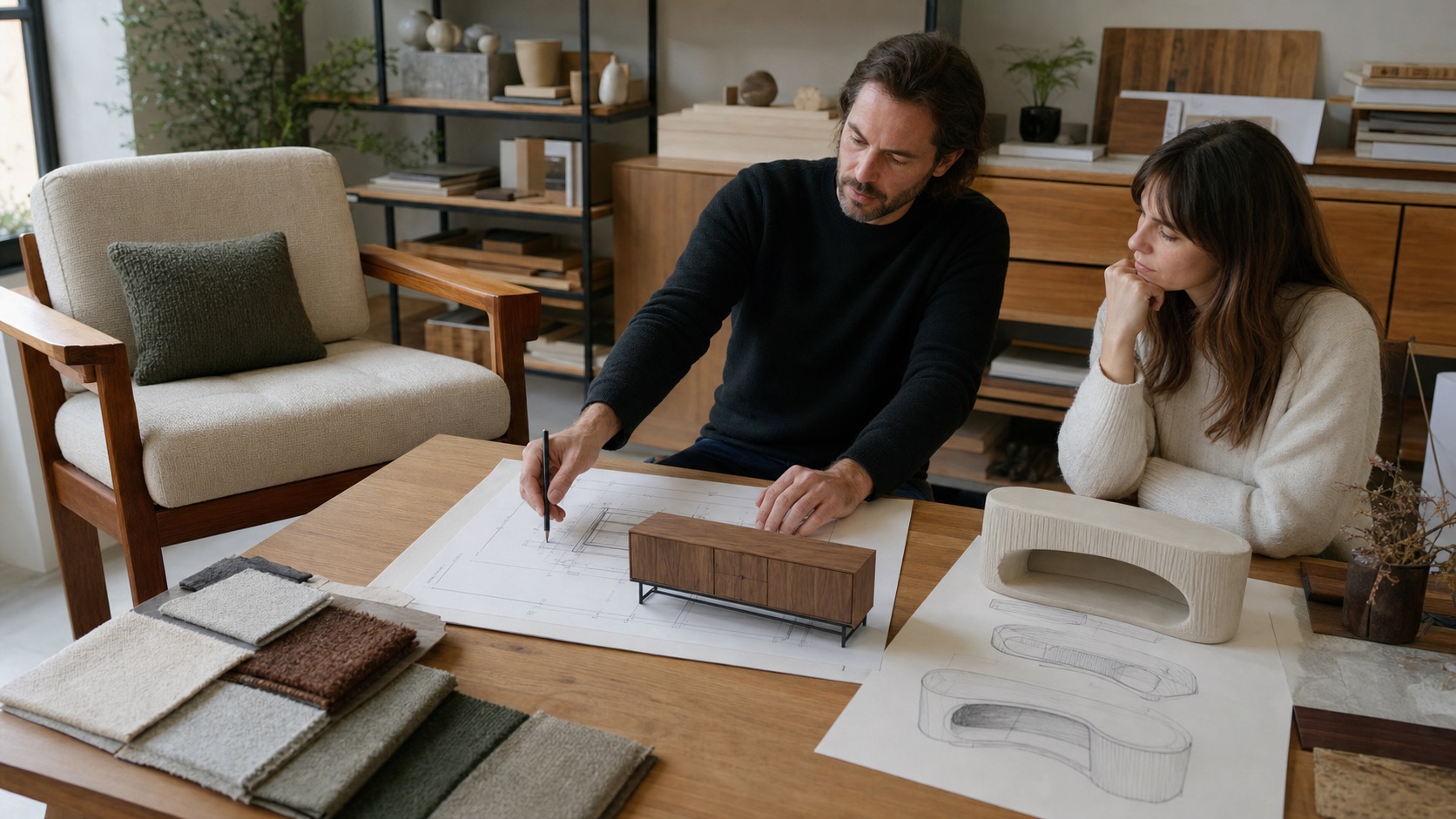
When shopping for personalized furniture, you will often come across three terms: custom, bespoke, and made-to-order. Some furniture companies use them almost interchangeably, while others use “bespoke” to position a product as more exclusive or luxurious.
In practice, however, these terms do not always describe the same service.
Made-to-order furniture usually starts with an existing design. The customer chooses from a set of available options, and production begins after the order is placed. Custom furniture allows broader changes based on the room, dimensions, storage needs, or intended use. Bespoke furniture typically begins with an original concept developed for one client or project.
There is no universal industry standard governing these labels. One company may call a sofa custom simply because customers can choose the fabric. Another may use the same term for a service that includes site measurements, structural changes, technical drawings, production, and installation.
For that reason, the name alone tells you very little. A better comparison looks at where the design begins, what can actually be changed, what the quote includes, and who takes responsibility for the finished result.
What Is Made-to-Order Furniture?
Made-to-order furniture is produced after a customer confirms the order and selects the available configuration. Unlike in-stock furniture, it is not manufactured in advance and stored in a warehouse.
That does not mean the piece is designed from scratch.
Most made-to-order products begin with an existing model. The underlying frame, proportions, construction method, and general appearance have already been established. Customers personalize the piece by choosing from options provided by the manufacturer.
Common choices may include:
- Fabric or leather
- Color
- Wood finish
- Standard size
- Leg style
- Preset modules or configurations
Suppose you find a sofa you like. The company may offer ten upholstery colors, several leg finishes, and two- or three-seat versions. A sectional configuration might also be available. Even with those choices, the frame, seat depth, arm design, and overall construction usually remain unchanged.
Made-to-order furniture works well for buyers who already like the original product and only want to adjust its appearance or standard configuration. Because the design and production process have already been established, pricing and lead times are generally easier to predict than with fully custom work.
The value lies in controlled personalization, not unlimited design freedom.
What Is Custom Furniture?
Custom furniture is modified or developed around a particular room, function, or set of customer requirements, which is why Avrelahome’s custom furniture solutions begin with the project brief rather than a fixed product configuration. A project may begin with an existing product, or the design may be adapted around the space from the outset.
Compared with made-to-order furniture, the available changes are usually more substantial. Beyond color and upholstery, customers may be able to adjust dimensions, storage layouts, hardware, materials, and certain structural features.
Common custom options include:
- Overall width, height, and depth
- Drawer, shelf, and hanging-space layouts
- Sofa length, seat depth, and sectional direction
- Materials, colors, and surface finishes
- Hardware, integrated lighting, and cable management
- Openings for appliances or equipment
- Selected structural or proportional changes
A custom wardrobe, for example, can be sized around the exact width and ceiling height of a room. Inside, the storage may be divided according to the owner’s long clothing, folded items, shoes, luggage, and accessories.
The result does not have to be an entirely original artistic design. Its defining value is that the furniture responds to the room and the way it will be used.
Custom furniture is especially useful when:
- Standard furniture does not fit the available space
- The room includes alcoves, corners, sloped ceilings, or columns
- Storage requirements are highly specific
- Equipment must be built into the furniture
- Several rooms need coordinated materials and finishes
Its purpose is not simply to make furniture look different. The more practical goal is to reduce wasted space and support everyday routines more effectively.
When an existing design already provides a suitable starting point but the dimensions, layout, or functions need to change, custom furniture is often more practical than a fully bespoke commission.
What Is Bespoke Furniture?
Bespoke furniture is typically developed for one client, room, or project from the beginning.
Rather than relying directly on a mass-produced model, the designer may establish the furniture’s form, proportions, structure, materials, and details from an original concept.
A complete bespoke project may involve:
- Detailed client consultations
- Concept development
- Sketches and renderings
- Technical drawings
- Structural development
- Special material sourcing
- Samples or prototypes
- Specialized production and hand-finishing
Bespoke furniture is often used in high-end homes, luxury residences, hotels, retail environments, and spaces with unusual architectural conditions.
Consider a reception desk designed for a curved lobby. The proportions, internal supports, power access, material joints, and installation method may all need to be developed specifically for that location. Modifying a standard desk would not adequately solve the problem, so a bespoke approach makes more sense.
This type of furniture is well suited to clients who place a high value on originality, material selection, craftsmanship, and the relationship between the furniture and the surrounding architecture. It is also appropriate when conventional customization cannot address the structural or visual requirements of the project.
Still, bespoke does not automatically mean more durable, nor is it always more suitable than custom furniture. Greater design freedom usually comes with more communication, a longer development process, and a higher cost.
A more extensive level of customization is not automatically the better choice. The right level is the one that solves the actual problem without adding unnecessary complexity.
Custom vs. Bespoke vs. Made-to-Order Furniture
The clearest way to compare these options is to look at their starting points and the amount of change each one allows.
| Comparison | Made-to-Order | Custom | Bespoke |
|---|---|---|---|
| Starting point | Existing product | Existing design or project requirements | Original concept |
| Design freedom | Limited | Moderate to high | Highest |
| Size changes | Preset sizes or limited adjustments | Usually available | Developed specifically for the project |
| Material choices | Preset catalog | Broader supplier selection | Selected or sourced for the project |
| Structural changes | Usually unavailable | Sometimes possible | Can be developed from scratch |
| Customer involvement | Low | Moderate | High |
| Lead time | Usually shortest | Moderate to long | Usually longest |
| Typical cost | Generally lowest | Moderate to high | Generally highest |
| Final result | Personalized version of a standard design | Adapted to a specific space or function | One-of-a-kind project design |
A sofa provides a simple example.
Choosing a different fabric and color on an existing sofa is generally made-to-order. Changing the overall length, seat depth, sectional direction, and arm width moves the product closer to custom furniture. Developing the frame, proportions, comfort profile, and overall appearance from the ground up would fall into the bespoke category.
These are not three fixed levels of quality. They describe three different scopes of design and production.
A well-made made-to-order sofa can be better constructed than a poorly developed bespoke piece. Likewise, a custom cabinet may deliver more practical value than an original design that does not suit the household’s daily needs.
The label should never replace an evaluation of materials, construction, usability, and service.
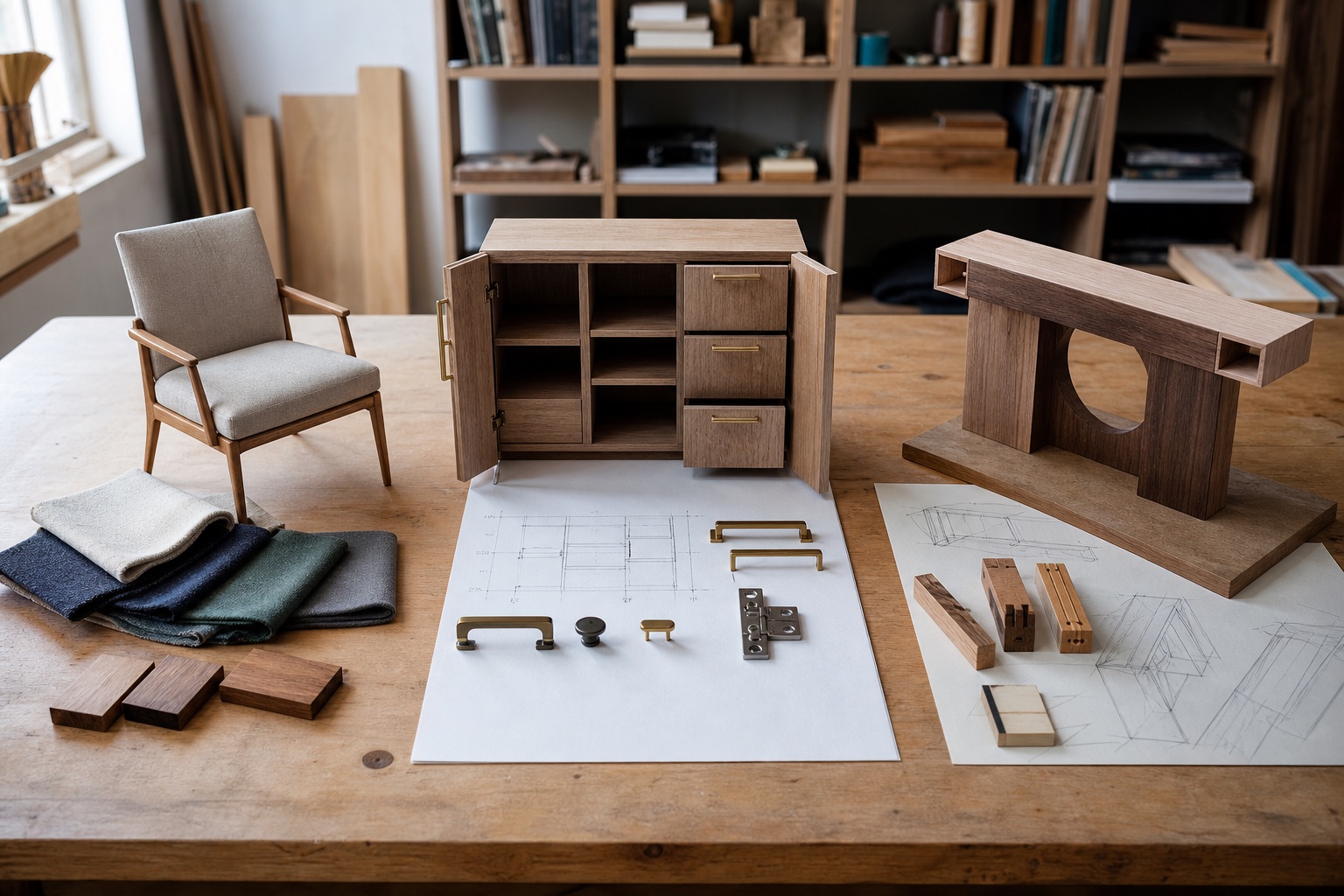
Why Do Prices and Lead Times Differ?
Made-to-order furniture relies on a structure and production process that have already been tested. The manufacturer does not need to redesign or reengineer the product for each customer, which helps control development costs.
Price differences usually come from upholstery, leather grade, finishes, size upgrades, optional modules, and shipping. Production still takes time, but the lead time is generally shorter than it would be for custom or bespoke work.
Custom furniture may involve additional services such as site measurement, design revisions, technical drawings, nonstandard production, delivery, and installation. A simple change in finish or width may remain relatively straightforward. Changes to the internal layout, frame, hardware, or installation method add more cost and production time.
With bespoke furniture, the price may include original design work, structural development, special material sourcing, samples, prototypes, and skilled hand-finishing. Multiple design rounds can also increase the time and labor required.
For this reason, two quotes should not be compared by their final totals alone; a detailed custom furniture cost guide can help you separate material, design, labor, delivery, and installation costs before comparing suppliers. A lower price may reflect a much narrower scope of service.
Before evaluating a quote, confirm whether it includes:
- Site measurement
- Design fees
- Technical drawings
- Materials and hardware
- Samples
- Delivery
- Installation
- On-site adjustments
- After-sales service
- Warranty coverage
A fair comparison requires similar material standards, responsibilities, and deliverables.
Buyers should not pay a premium simply because a term sounds more exclusive. The real value lies in meaningful design control, transparent material specifications, and clear responsibility for the finished project.
How Can You Tell What a Furniture Company Is Actually Offering?
The terminology used on a product page is less important than the service behind it. A piece marketed as bespoke may still be limited to a few standard sizes and fabric options.
Several questions can reveal the true level of customization.
Start With the Original Design
Ask whether the furniture is based on an existing model or whether new drawings will be developed for the project; Avrelahome’s OEM and ODM furniture service shows why these two starting points require different levels of design input, technical review, and approval.
A product selected from a brand’s existing catalog is generally closer to made-to-order. When a designer adapts the piece to the dimensions and functions of a specific room, the service moves into custom territory. Bespoke work usually begins with the concept, proportions, and structure rather than a finished product model.
The distinction matters because each starting point requires a different amount of design work.
Find Out What Can Actually Change
Color is only one part of customization. Dimensions, internal organization, proportions, and construction often matter more.
Useful questions include:
Useful questions include:
Can the width, height, and depth be changed?
Can the interior cabinet layout be rearranged?
Can the proportions of the sofa or table be modified?
Can the frame or supporting structure be changed?
Are materials available outside the standard catalog?
The deeper the permitted changes go, the more extensive the service is likely to be.
A long list of fabric colors does not necessarily make a product custom. On the other hand, a design with only a few finish options may still qualify as custom if the dimensions and structure are developed for the room.
Review the Design Documents
Renderings can communicate the intended appearance, but they do not replace technical drawings.
Before production begins, the documents should identify dimensions, materials, hardware, internal layouts, clearances, and installation details, while a clear room measurement guide can help confirm that walls, openings, access routes, and fixed features have been recorded correctly. A visually impressive rendering cannot confirm whether cabinet doors will clear a nearby wall or whether the furniture will fit around an outlet.
Accurate, buildable drawings matter more than presentation images when the furniture must fit a specific space.
Clarify the Quote and Responsibility
The quote should also explain who is responsible for measurement errors, transportation damage, installation problems, and warranty repairs.
One of the main advantages of a complete custom service is that the provider assumes responsibility for turning measurements and drawings into a usable finished product, with the major approval points outlined more clearly in a structured whole-house customization process.
When the customer carries every dimensional and installation risk, the service may be less complete than the “custom” label suggests.
Which Type of Furniture Should You Choose?
The decision should not come down to which option sounds more prestigious. A better question is: Which approach solves the problem without adding cost or complexity that you do not need?
Choose Made-to-Order Furniture When:
- You already like the original product
- Only the fabric, color, finish, or standard size needs to change
- The basic structure already meets your needs
- Budget and lead time are major priorities
- A simple ordering process matters more than extensive design control
Made-to-order is often sufficient when appearance is the main concern and the standard product fits the room.
Choose Custom Furniture When:
- Standard furniture does not fit the space
- Special dimensions or storage layouts are required
- The furniture must accommodate equipment or appliances
- Materials and finishes need to coordinate with the interior
- You want a balance between flexibility, budget, and lead time
For many residential projects, custom furniture offers the most practical middle ground. It provides enough flexibility to solve real space and function problems without requiring every component to be invented from scratch.
Choose Bespoke Furniture When:
- The furniture must have an entirely original design
- The architecture creates complex structural requirements
- Unusual materials or specialized craftsmanship are important
- The piece will serve as a major visual or brand element
- Originality and execution matter more than minimizing cost
Bespoke work makes the most sense when the design itself is part of the project’s value—not simply when a standard product needs to fit a difficult wall.
A simple decision rule can help:
A simple decision rule can help:
When you like the existing design and only want different options, choose made-to-order. When the dimensions or functions need to change, choose custom. When the furniture itself needs to be reimagined from the beginning, consider bespoke.
Not Sure Which Level of Customization Fits Your Project?
Furniture does not need to become complicated simply because it is customized. The better approach begins with the room, the functional requirements, and the available budget.
Avrelahome provides solutions ranging from individual custom furniture pieces to coordinated whole-home projects. Based on room dimensions, storage requirements, and the intended interior style, the design team can help determine whether your project needs a modified existing design, functional customization, or a more comprehensive development process.
Contact Avrelahome to discuss your furniture requirements and receive recommendations based on your actual project needs.
Questions to Ask Before Placing an Order
Before approving a furniture order, ask the supplier:
Before approving a furniture order, ask the supplier:
Is the furniture based on an existing model?
Which dimensions can be changed?
Can the internal layout be modified?
Are structural changes available?
Are materials limited to a standard catalog?
Will technical drawings be provided before production?
How many design revisions are included?
When does the production timeline officially begin?
Are delivery and installation included in the quote?
Who is responsible if the furniture does not fit?
What warranty coverage is included?
How are repairs and replacement parts handled?
These questions are more useful than simply asking whether a product is bespoke. They reveal what the customer will actually receive and what the supplier is prepared to stand behind.
Frequently Asked Questions
Is Bespoke Furniture Always Handmade?
No. Bespoke refers to furniture designed for a specific customer or project; it does not require every stage to be completed by hand. Modern bespoke production may combine CNC machining, other manufacturing technology, skilled assembly, and hand-finishing.
Is Made-to-Order Furniture Considered Custom?
In a broad sense, it can be considered personalized furniture. However, the available changes are usually limited to options selected by the manufacturer. It is not the same as a full custom or bespoke service.
Can Custom Furniture Be Based on an Existing Design?
Yes. Many custom projects begin with an existing model and then adjust its dimensions, materials, internal layout, or functions. This is one of the main distinctions between custom and fully bespoke furniture.
Is Bespoke Furniture Always Better Than Custom Furniture?
No. If the main goal is to fit a room or improve storage, custom furniture may already provide everything the project needs. Bespoke offers more creative freedom, but it also adds design costs, communication, and production time.
Which Option Is Best for Built-In Furniture?
Most built-in furniture must be produced according to site dimensions, so it generally falls under custom furniture. When its appearance, structure, and materials are also developed from scratch, the project may be considered bespoke.
Can Made-to-Order Furniture Be Returned?
Made-to-order products are often more difficult to return than in-stock furniture because they are produced according to the customer’s selected configuration. Return and cancellation rules vary by supplier, so they should be reviewed before the order is placed.
Conclusion
The key difference between made-to-order, custom, and bespoke furniture is not which term sounds the most exclusive. What matters is where the design starts and how much control the customer has over the result.
Made-to-order furniture begins with an existing product and a fixed set of choices. Custom furniture allows more substantial changes based on dimensions, space, and function. Bespoke furniture starts with an original concept developed for a specific project.
Do not pay more for a label alone. Instead, confirm whether the furniture solves the space problem, whether its materials and construction are clearly specified, whether the drawings are accurate, and whether the supplier accepts responsibility for delivery and installation.
Good customization does not make every detail different for the sake of being different. Every change should have a practical or design-related reason.
When standard furniture cannot work with your room—or when you are planning custom furniture for a bedroom, living room, kitchen, luxury residence, or entire home—Avrelahome can develop a solution around your dimensions, daily routines, and design direction. Its project team coordinates the process from design and material confirmation through production and installation.
Discuss Your Furniture Project
Send the room dimensions, product list, destination and any drawings or finish references you already have. We can identify the information needed before quotation.