


High-End Whole-House Customization from Foshan Download Catalog FAQs

How Much Do Custom Kitchen Cabinets Cost? A 2026 U.S. Budget Guide

Custom kitchen cabinets commonly cost about $500 to $1,200+ per linear foot installed in the United States. A complete cabinet package may range from roughly $15,000 to $50,000+, but kitchen size alone does not determine the final price. Cabinet quantity, construction, finish, hardware, installation and local labor conditions all matter.

Use these figures to test whether a custom kitchen is financially realistic—not as a substitute for a project quote. This guide explains what changes the price, what should appear in a quote and how to reduce cost without creating expensive corrections later.

Homeowners reviewing custom kitchen cabinet costs and budget plans with a kitchen designer
A useful cabinet budget starts with a defined scope, not one headline price.

How Much Do Custom Kitchen Cabinets Cost?

For early budgeting, most homeowners need two numbers: the estimated price of the cabinets and the complete installed cost. Confirm what the published range includes before using it. Some estimates cover the cabinet package only, while others include delivery and installation.

Cabinet category Typical installed cost per linear foot What the category usually means
Stock cabinets $100–$400 Fixed sizes, limited finishes and standard configurations
Semi-custom cabinets $150–$700 More sizes, finishes and selected modifications
Custom cabinets $500–$1,200+ Made for the room, appliance plan, storage needs and finish specification

These are broad U.S. planning ranges, not Avrelahome prices. Regional labor rates and project scope can move a quote below or above them. The current ranges are consistent with the 2026 cabinet-cost data published by HomeAdvisor.

What does “per linear foot” mean?

A linear foot measures the horizontal length of a cabinet run. It is useful for an early feasibility check, but suppliers do not always count it the same way. One estimate may combine base and wall cabinets; another may cover only base cabinets. Islands, tall pantry units, appliance towers and decorative panels may be separate.

Once the layout is available, replace the linear-foot allowance with a cabinet-by-cabinet quote. Twelve feet of door cabinets will not cost the same as twelve feet containing drawer banks, an appliance garage and a tall oven unit.

Define What the Cabinet Budget Includes

Cabinet cost is not the same as the cost of a complete kitchen renovation. A cabinet quote may include boxes, doors, drawers, shelves and standard hardware while excluding countertops, appliances, demolition, plumbing, electrical work, flooring, backsplash and painting.

Delivery and installation also need clear definitions. Check whether the price includes unloading, carrying the cabinets into the home, installation, fillers, trim, handle fitting, adjustments, cleanup and final punch-list work.

For a broader comparison outside the kitchen, see the assumptions used in our custom furniture cost guide.

What Factors Affect Custom Kitchen Cabinet Cost?

Kitchen size and cabinet quantity

More cabinets require more material, hardware, finishing and installation time. Count base, wall and tall cabinets separately. Treat the island as its own assembly, including finished backs, seating panels and service access.

A smaller kitchen is not automatically inexpensive. A compact layout containing several drawer stacks, a difficult corner, integrated appliances and custom panels can cost more per foot than a larger run of simple door cabinets.

Cabinet box construction

Box material, thickness, back construction, shelf specification, edge treatment and interior finish all affect price. Plywood, furniture board, MDF and moisture-resistant panels can each be appropriate when the grade and intended use are clearly specified.

Ask for the complete construction specification instead of relying on one material name. Frameless, face-frame and inset construction also require different manufacturing and installation tolerances.

Doors, drawer fronts and finishes

Slab doors generally require fewer operations than detailed frame-and-panel fronts, curved pieces, fluted surfaces or matched veneer. High-gloss finishes, specialty paint, natural wood matching and hand-applied details can add sampling and finishing work.

Natural wood varies in grain and color. Approve a representative range instead of expecting every door to look identical. For painted cabinetry, record the color reference, sheen and approved sample.

Drawers, hardware and accessories

A drawer bank often costs more than a two-door cabinet of the same width because it requires additional fronts, drawer boxes, slides and assembly. Hinges, full-extension slides, handles and soft-close systems should be identified by brand or performance level when comparing quotes.

Pullout pantries, corner systems, appliance garages, waste sorting, lift mechanisms, lighting channels and custom dividers add convenience, but they should be assigned to named cabinets. A general accessory allowance does not show what will actually arrive.

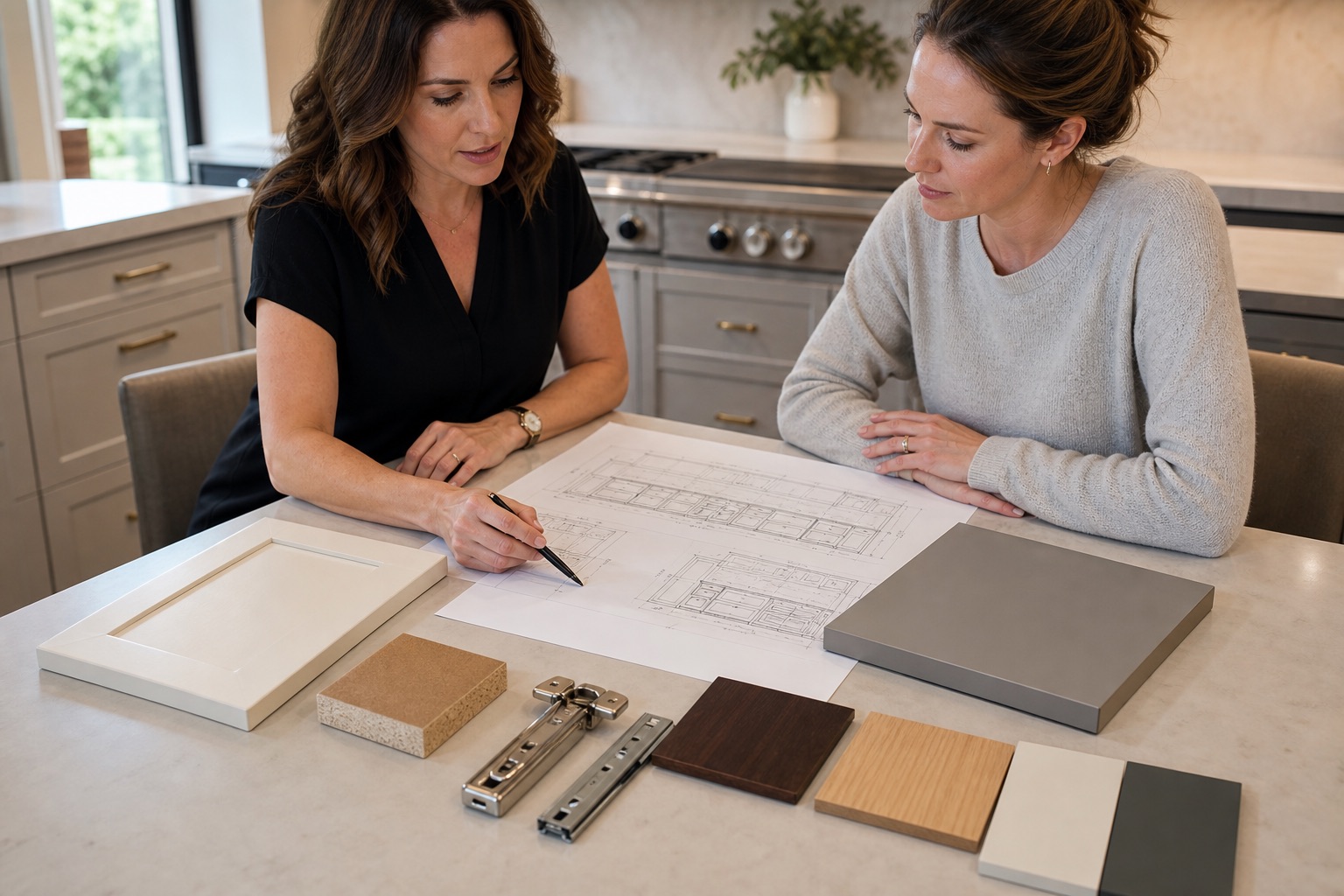
Custom kitchen cabinet drawings, door samples, hardware and finish options used to compare quotes
Samples, hardware schedules and drawings reveal what a headline cabinet allowance leaves out.

What Should Be Included in a Custom Cabinet Quote?

A useful quote should show enough detail for you to compare the same scope across suppliers. If one price includes appliance panels and installation while another excludes both, the totals are not directly comparable.

Quote item What to look for Possible exclusions or upgrades
Design and drawings Measurements, layout, elevations and production drawings Additional revisions, renderings or site measurement
Cabinet construction Boxes, doors, drawers, shelves, visible panels and trim Special sizes, curved work or upgraded materials
Hardware and accessories Hinges, slides, handles and named organizers Premium mechanisms, lighting and specialty storage
Finish Material, color, sheen, sample and exposed surfaces Matched veneer, specialty paint or hand finishing
Delivery Packing, freight, unloading and room delivery Storage, difficult access and final-mile charges
Installation Cabinet setting, fillers, trim, hardware and adjustments Demolition, wall repair, plumbing and electrical work

Anything shown in a rendering but missing from the written scope should be clarified before approval. The custom kitchen cabinet page can help you organize the cabinet types and functional elements that belong in the request.

Custom vs. Semi-Custom vs. Stock Cabinets

Decision Custom Semi-custom Stock
Dimensions Developed for the room and appliances Standard system with selected modifications Fixed sizes
Finish options Project-specific specification Manufacturer’s available range Limited range
Storage flexibility Interior planned by cabinet and user need Selected accessories and configurations Standard interiors
Best fit Unusual layouts, integrated appliances and specific design requirements Standard rooms needing additional choice Conventional layouts and cost-led projects

Choose custom cabinets when unusual dimensions, appliance integration, ceiling conditions, storage requirements or finish continuity justify the additional design and coordination. Semi-custom can be effective when the room fits the manufacturer’s system. Stock cabinetry is most appropriate when standard sizes work and minimizing product cost is the main priority.

How Installation and Site Conditions Change the Price

Installation cost depends on cabinet quantity, ceiling height, trim complexity, appliance panels, site access and the condition of the room. Floors and walls that are out of level or plumb require shimming, scribing, fillers and adjustment. Demolition, disposal and wall repairs may be separate.

Confirm who takes the final measurements and who carries responsibility if the site differs from the approved drawings. Even a small appliance-opening or ceiling-height error can require expensive field changes after delivery.

For imported cabinetry, compare the landed and installed cost:

Factory cabinet cost + packing and international logistics + local delivery and installation

Freight, duties, tariffs, brokerage and destination charges can change. Obtain current written estimates instead of applying an old percentage to the factory price.

How Can You Reduce Custom Kitchen Cabinet Costs?

Keep the existing layout when it works

Moving plumbing, electrical points, windows or major walls can add costs outside the cabinet package. Retaining a functional layout allows more of the budget to remain focused on cabinetry and storage.

Standardize hidden cabinet dimensions

Use special widths and shapes where they solve a real fit problem. Repeating practical cabinet sizes in less visible areas can reduce drawing, production and installation complexity.

Prioritize daily-use hardware

Reliable hinges, drawer slides and durable work surfaces usually provide more value than filling every cabinet with a specialty mechanism. Add organizers where the stored items and user reach genuinely justify them.

Limit finish complexity

A controlled material palette can reduce sampling and finishing work. Matched grain, multiple specialty colors, curved panels and hand-applied details should be concentrated where they materially change the design.

Lock critical decisions before production

Finalize appliance models, door swings, plumbing points, outlets, ventilation, lighting and finish samples before releasing the cabinets. Preventing a production change is often more valuable than downgrading a material later.

How to Compare Custom Cabinet Suppliers

A low opening price does not automatically represent better value. Give each supplier the same room dimensions, cabinet list, appliance models, material direction, hardware requirements, delivery location and installation scope.

Compare:

  • Cabinet and door construction
  • Materials, thicknesses and visible finishes
  • Hardware brands or performance levels
  • Included panels, fillers, trim and accessories
  • Sample and drawing approval stages
  • Packing, delivery and installation responsibilities
  • Change pricing, payment milestones and exclusions

The questions in our pre-order checklist also help expose differences that a total price alone cannot show.

Frequently Asked Questions

How much do custom kitchen cabinets cost per linear foot?

Custom kitchen cabinets commonly cost about $500 to $1,200+ per linear foot installed in the United States. The range varies with construction, finish, cabinet mix, accessories, location and installation scope.

Does a linear-foot price include upper and lower cabinets?

Not always. Some suppliers combine a basic base-and-wall configuration, while others price only one cabinet category. Ask for the counting method and an itemized cabinet schedule.

Is installation included in custom cabinet pricing?

Only when the proposal says so. Confirm unloading, room delivery, fastening, fillers, trim, handles, adjustments, cleanup and punch-list work instead of assuming “installation” includes every task.

Are countertops and appliances included?

Usually not. They should be treated as separate scope unless the written quote lists them. Plumbing, electrical work, backsplash, flooring and demolition are also commonly separate.

Are custom cabinets more expensive than semi-custom cabinets?

Usually, because they add project-specific dimensions, finishes, engineering and production coordination. However, the gap can narrow when a semi-custom order requires many modifications, fillers and upgraded accessories.

Are custom kitchen cabinets worth the cost?

They can be when the room has unusual dimensions, integrated appliances, specific storage requirements or a finish that standard cabinet systems cannot provide. In a conventional layout with modest design requirements, semi-custom may offer better value.

Can imported custom cabinets cost less?

They can, but factory price is only one part of the comparison. Add packing, freight, insurance, duties or tariffs, brokerage, local delivery and installation before comparing with a domestic installed quote.

What should I approve before cabinet production?

Approve the cabinet schedule, dimensioned drawings, appliance models, box and door construction, materials, finish samples, visible panels, trim, hardware, accessories, packing, delivery scope and installation responsibility.

Plan the Cabinet Package You Will Actually Buy

A national price range can tell you whether custom cabinetry belongs in the budget. It cannot tell you whether a supplier’s quote is complete. Build the comparison around the cabinet schedule, construction, finish, hardware, delivery, installation and exclusions.

You can begin with the information already available: a floor plan, approximate dimensions, appliance ideas, inspiration images, budget level and project location. For a broader kitchen scope, review Avrelahome’s custom kitchen planning service or send your project details.

Installer checking custom kitchen cabinet alignment, fillers and installation measurements
Final measurements and installation responsibilities should be confirmed before production.

How Much Does Custom Furniture Cost?

Custom furniture can range from a relatively simple made-to-order piece to a six-figure whole-home package. Published U.S. consumer cost guides often place individual projects in the low thousands, but a meaningful budget depends on the product, material, construction, delivery, and installation scope—not a single national average.

This guide explains what drives price, how to compare quotes on equal terms, and when local, overseas, or hybrid sourcing offers the better total value.

Custom Furniture Cost at a Glance

Use published price ranges only for early planning. The same label—such as “custom wardrobe” or “built-in shelving”—can describe products with very different dimensions, materials, hardware, and installation requirements.

Project type Broad planning range What must be clarified
Simple custom freestanding piece Hundreds to a few thousand dollars Material, finish, delivery, assembly
Custom sofa, bed, or dining table Usually low to several thousand dollars Size, upholstery or wood grade, construction
Built-in shelving or wardrobe Several thousand dollars and up Linear size, interiors, hardware, installation
Full-wall media or storage system Several thousand to tens of thousands Electrical work, panels, lighting, site finishing
Multiroom or whole-home package Tens of thousands and up Room scope, freight, installation, project management

These are deliberately broad categories. A compact engineered-board desk should not be compared with a handcrafted walnut table, and a cabinet product price should not be compared with a fully installed millwork contract.

What Determines the Cost of Custom Furniture?

Product Size and Construction

Larger products consume more board, wood, fabric, metal, glass, stone, hardware, packaging, and freight capacity. Construction matters just as much: a straight panel cabinet is generally easier to make than curved millwork, complex solid-wood work, a motorized mechanism, or an assembly requiring precise alignment across several materials.

Size can also change how the product is packed, carried, assembled, and installed. An oversized sofa or tabletop may require special crating or a modular design simply to reach the room.

Materials and Surface Finishes

“Wood” is not a usable price specification. A quote should identify whether the product uses particleboard, MDF, plywood, solid wood, or veneer, along with relevant thicknesses, grades, edge treatment, and surface finish.

Standard melamine or laminate is usually less expensive than matched natural veneer, multilayer lacquer, hand-applied stain, or specialty decorative finishes. Natural stone, large glass panels, custom metalwork, and exact color matching can add material cost, waste, sampling, and production time.

Hardware, Upholstery, and Accessories

Hinges, drawer slides, pocket-door systems, wardrobe accessories, lighting, recliners, and motorized mechanisms can represent a meaningful share of a quote. Ask for the brand and model where performance or replacement matters; “premium hardware” is not specific enough for comparison.

For upholstery, cost depends on fabric or leather grade, consumption, pattern matching, cushion construction, stitching, removable covers, and any project-specific performance requirement. A large repeat pattern can increase waste because adjacent panels must align.

Design Complexity and Revision Scope

Curves, unusual angles, fluting, hidden storage, mixed materials, integrated lighting, and custom mechanisms generally increase engineering and production work. Revisions can also become a cost item when they exceed the included number of drawing or sample rounds.

The least expensive design is not always the one with the fewest decorative details. A visually simple product may still require tight tolerances or concealed engineering.

Quantity and Standardization

A one-off item carries its own design, setup, sampling, and packaging costs. A multiroom order may achieve better production efficiency when products share materials, finishes, hardware, construction details, or repeated room types.

Volume alone does not guarantee a lower unit price. Ten unrelated custom products may be less efficient than ten variations built from one coordinated system.

Delivery and Installation

Freestanding furniture may need only delivery and basic assembly. Built-ins must be carried to the correct room, leveled, anchored, connected, adjusted, scribed, and finished against real site conditions.

Restricted elevators, long carries, occupied homes, uneven walls, stone tops, large glass panels, high ceilings, and coordination with electrical or plumbing trades can materially change the installed price.

Typical Cost Drivers by Furniture Type

Furniture type Major price drivers
Dining table Size, wood species, top thickness, stone, base design, extension mechanism
Sofa or sectional Frame, size, configuration, fabric or leather, cushion construction, curved or sleeper features
Bed and headboard External size, upholstery, storage, integrated nightstands, lighting, wall panels
Wardrobe or closet Width and height, door system, drawer count, interiors, lighting, accessories
Built-in shelving Linear size, lower cabinets, doors, lighting, outlets, wall conditions
Media wall Cabinets, panels, lighting, fireplace, ventilation, cable access, local electrical work
Kitchen cabinetry Layout, cabinet construction, hardware, appliances, countertops, utilities, installation

Use this table to identify what a supplier has priced—not to estimate from the product name alone.

What Should a Custom Furniture Quote Include?

Two totals are comparable only when they cover the same scope. Ask each supplier to itemize the following once:

Quote item What to look for Why it matters
Product and quantity Room, dimensions, unit count Prevents missing or duplicated items
Main construction Board or wood type, thickness, internal structure “Same style” may conceal different quality
Finish Code, sheen, veneer selection, approved sample Controls the final appearance
Hardware Brand, model, quantity, alternatives Affects use, durability, and replacement
Upholstery, stone, glass Grade, thickness, finish, allowance High-variation cost categories
Drawings and revisions Included deliverables and revision rounds Avoids later design charges
Samples or prototype Size, freight, approval terms Defines what becomes the reference standard
Quality inspection Who inspects and what evidence is provided Creates a pre-shipment checkpoint
Packing Local or export packing, crates, labels Changes damage risk and handling cost
Shipping term EXW, FOB, CIF, DDP, or other agreed term Determines where supplier cost ends
Customs responsibility Importer, broker, duties, taxes, fees Prevents an incomplete landed-cost comparison
Final delivery Port/warehouse to jobsite, unloading, room placement Often excluded from freight prices
Installation Assembly, anchoring, scribing, trade work Product price is not installed price
Spare and replacement parts Allowance, claim process, lead time responsibility Especially important for overseas orders

A one-line total may omit handles, drawers, lighting, countertops, packing, delivery, or installation. Separating essential items from optional upgrades also makes value engineering easier.

Factory Price vs. Final Project Cost

For an international order, use this model:

Factory cost + international logistics + local delivery and installation = landed-and-installed project cost

International logistics may include samples, export packing, inland transportation, freight, insurance, customs brokerage, duties, taxes, port or warehouse fees, and final-mile delivery. The exact items depend on the agreed shipping term and destination.

Compare a China landed-and-installed proposal with a U.S. delivered-and-installed proposal. Comparing a Chinese factory price with a U.S. retail or installed price creates an apparent saving that may disappear after logistics and site work are added.

Does Custom Furniture From China Cost Less?

It can, particularly when a multiroom residential or hospitality project combines cabinetry and furniture in one coordinated order. Established manufacturing regions can provide access to boards, solid wood, upholstery, hardware, metal, glass, stone, packaging, and export logistics within one supply network.

However, China sourcing is not automatically the lowest-cost choice.

Situation Often favors Reason
One small item with an urgent deadline Local or ready-made International logistics may outweigh factory savings
Several rooms with a coordinated finish system China or hybrid sourcing Better shipment utilization and production standardization
Tight built-ins in a changing renovation Local or hybrid Easier remeasurement and field adjustment
Repeated hotel room types Factory-direct sourcing Prototype and repeat production can improve consistency
Products requiring frequent local service Local or hybrid Replacement and on-site support are easier

A hybrid strategy can work well: source coordinated cabinetry and furniture from a factory while using local contractors for final measurement, receiving, installation, electrical, plumbing, stone templating, and site finishing.

Additional Costs Buyers Commonly Miss

Design, Drawings, and Samples

Clarify whether the price includes layouts, 3D renderings, shop drawings, installation drawings, samples, prototypes, and revisions. A rendering shows the intended look; it does not replace the drawings used to manufacture and install the product.

Export Packing and Logistics

Local cardboard protection is not the same as export packing. Glass, stone, finished panels, upholstery, and assembled cabinets may need different cartons, foam, corner protection, pallets, or crates.

For overseas projects, confirm volume, container strategy, shipping term, importer responsibility, customs brokerage, final-mile delivery, and receiving conditions before comparing totals.

Local Installation and Trade Work

Furniture installation may exclude demolition, wall repair, painting, electrical work, plumbing, appliance connections, countertop templating, permits, and disposal. Assign each handoff in writing before delivery.

Damage, Shortages, and Replacement Parts

The lowest quote may become expensive if the order lacks a component list, spare hardware, clear inspection period, damage-claim procedure, or replacement policy. For overseas projects, determine who pays for replacement parts and freight when responsibility is confirmed.

How to Reduce Cost Without Undermining the Project

Use premium finishes where they are most visible and simpler materials in secondary interiors.

Standardize a smaller number of board colors, hardware models, fabrics, and construction details across rooms.

Keep the main geometry straightforward when curves or custom mechanisms do not solve a functional problem.

Prioritize frequently used accessories instead of specifying every available organizer.

Lock dimensions, appliance models, finishes, and hardware before production.

For overseas projects, combine suitable products into a coordinated shipment when the added scope improves container use.

Do not reduce price by leaving specifications vague. An unclear material, hardware, or packing description makes quotes look similar while transferring quality and cost risk to the buyer.

Is Custom Furniture Worth the Cost?

Custom furniture is most valuable when it solves a fit, storage, coordination, durability, or functional problem that standard products cannot solve.

It is often a good fit when:

  • Standard sizes waste important space
  • The room has awkward dimensions or fixed obstacles
  • Several rooms need one material and finish direction
  • Storage must be planned around the household or operation
  • The project requires specific appliances, equipment, or functions
  • The product is expected to remain in place for many years

Ready-made furniture may be the better choice for temporary housing, flexible secondary rooms, tight deadlines, or spaces where standard dimensions already work. Many projects benefit from a hybrid approach: customize difficult or high-impact areas and use ready-made pieces where flexibility matters more.

Get a Project Quote From Avrelahome

You can start before every detail is final. Send a floor plan, room list, inspiration images, approximate dimensions, style or finish direction, budget level, U.S. destination, and target date.

Avrelahome can review the proposed scope and prepare a room-by-room factory estimate. The final proposal should confirm materials, hardware, drawings, samples, packing, shipping responsibilities, installation handoffs, and any exclusions before production.

Frequently Asked Questions

Can I request a quote without final site measurements?

Yes. Approximate dimensions can support an initial budget estimate. Built-ins should be repriced or reconfirmed after final dimensions and relevant site conditions are approved.

Are design and shop drawings included in the price?

Sometimes, but not universally. Ask which drawings are included, how many revisions are allowed, and whether design fees are credited after an order is placed.

Does the furniture price include delivery and installation?

Not unless the quote says so. Confirm the shipping term, final-delivery point, unloading, room placement, assembly, installation, and excluded local trade work.

What do EXW, FOB, CIF, and DDP mean for my budget?

They allocate different costs and responsibilities between buyer and seller. Do not choose by label alone; ask a freight forwarder or customs professional to map the quoted term to every cost between the factory and the jobsite.

Is custom furniture from China always cheaper?

No. It is often more practical for coordinated multiroom or repeated-product scopes. For a small order, urgent deadline, changing site, or product needing frequent local service, local or hybrid sourcing may offer better total value.

How should damaged or missing parts be handled?

The order should define inspection timing, documentation, responsibility, replacement production, and freight. Count packages against the packing list and retain labels and photos until installation is complete.

Whole House Customization in China Cost: 2026 Price Guide

Whole house customization in China can cost anywhere from $20,000 to more than $100,000, depending on the size of the property, the products included, material quality, hardware brands, design complexity, and shipping destination.

As a general reference, one Chinese whole-house supplier lists estimated material-package costs of $20,000–$30,000 for a 100 m² home, $30,000–$50,000 for 200 m², and $50,000–$100,000 for 300 m². A luxury villa package containing cabinets, doors, windows, tiles, bathroom products, and other building materials may cost around $120,000. (georgebuildings.com)

However, these figures should not be treated as fixed prices. “Whole house customization” can refer to anything from built-in cabinets only to a complete interior material and furniture package. Understanding what is included is therefore the first step toward comparing quotes correctly.

How Much Does Whole House Customization in China Cost?

The following ranges can be used as an initial planning reference.

  • Property Size
  • Estimated China Factory Budget
  • Typical Project Scope

80–120 m²

$15,000–$30,000

  • Kitchen, wardrobes, vanities and basic built-in storage

120–200 m²

$25,000–$50,000

  • Full built-in cabinetry with selected furniture and interior products

200–300 m²

$40,000–$100,000

  • Larger home or villa with upgraded finishes and more customized areas

300 m² and above

$60,000–$120,000+

  • Luxury villa package with premium materials, furniture and interior products

These are planning ranges rather than standard market prices. They are inferred from published whole-house project examples and current Chinese supplier listings. Final costs may rise significantly once branded hardware, stone countertops, loose furniture, export packaging, freight, duties and installation are added. (georgebuildings.com)

What Does Whole House Customization Include?

Before comparing prices, confirm the exact scope of the quotation. Chinese manufacturers generally offer one of three service levels.

  • Custom Cabinetry Only

This package normally covers fixed furniture manufactured according to the floor plan, such as:

  • Kitchen cabinets
  • Bedroom wardrobes
  • Walk-in closets
  • Bathroom vanities
  • Entryway cabinets
  • TV cabinets
  • Bookshelves
  • Laundry storage
  • Home office cabinets

Cabinetry-only packages are usually the most affordable because they exclude loose furniture, doors, sanitary ware, lighting and other interior materials.

  • Complete Fixed Furniture Package

A broader package may include kitchen cabinets, wardrobes, bathroom cabinets, wall panels, interior doors and other permanently installed products.

This option is suitable for homeowners who want the main rooms to share the same colors, finishes and design language without purchasing every interior product from one supplier.

  • One-Stop Whole House Package

The most comprehensive solution may combine:

  • Custom cabinets
  • Loose furniture
  • Interior doors
  • Wall panels
  • Windows
  • Bathroom products
  • Tiles and flooring
  • Stone countertops
  • Lighting
  • Curtains
  • Decorative materials

Because suppliers define “whole house” differently, two quotations for the same property may have completely different totals. A lower quote may simply contain fewer products.

  • Typical Custom Furniture Prices in China

Public supplier listings can provide a rough view of China factory pricing, but the advertised prices are usually starting prices for standard materials and larger orders.

  • Product
  • Indicative Supplier Listing Price
  • Custom kitchen cabinets

About $50–$185 per linear meter

  • Whole-house cabinets

About $80–$158 per m²

  • Custom wardrobes

About $80–$200 per m²

  • Bathroom vanities

About $95–$300 per set

  • Basic 3D interior design

About $5–$8 per m²

Current marketplace listings show custom kitchen cabinet prices ranging from approximately $50 to $185 per meter, while several whole-house cabinet products are advertised around $80 to $158 per square meter. (Made-in-China)

Custom wardrobe listings commonly fall between approximately $80 and $200 per square meter, depending on the material, quantity and configuration. (Aishiman Home Furnishings)

Bathroom vanity listings range from below $100 for basic wholesale models to around $300 for larger solid-wood designs. (Strive Bathrooms)

These online prices usually do not represent the final amount paid for an individual overseas project. Custom dimensions, premium hardware, samples, shop drawings, protective packaging and small-order production can all increase the unit price.

What Affects Whole House Customization Cost?

  • Property Size and Number of Customized Areas

A larger home does not always cost more in direct proportion to its floor area. The number of cabinets and customized rooms is often more important.

For example, a 200 m² open-plan home with three bedrooms may require less cabinetry than a 150 m² apartment containing multiple wardrobes, storage walls, a home office and a large kitchen.

For an accurate comparison, ask suppliers to quote according to the actual cabinet dimensions and bill of quantities rather than floor area alone.

Cabinet Materials

The cabinet carcass and door material have a major influence on the final quotation.

Common options include:

  • Particleboard
  • MDF
  • Plywood
  • Solid wood
  • Stainless steel
  • Aluminum

Particleboard and MDF are generally more economical. Plywood usually costs more but may provide better screw-holding strength and moisture resistance when the correct grade is selected.

Solid wood, stainless steel and specialty materials are usually positioned at the higher end of the market.

  • Door Finish

Even when the cabinet structure remains unchanged, the selected finish can create a considerable price difference.

Common finishes include:

  • Melamine
  • Laminate
  • PET
  • PVC membrane
  • Lacquer
  • Wood veneer
  • Solid wood
  • Glass or metal-framed doors

Standard melamine finishes normally cost less than lacquer, natural veneer, specialty glass or complex decorative doors.

  • Hardware

Hinges, drawer slides, lift-up systems and internal accessories may account for a meaningful part of the cabinetry budget.

Standard Chinese hardware can keep the initial cost lower. International brands and upgraded accessories increase the price but may provide smoother operation, better load performance and easier access to replacement parts in some markets.

The quotation should specify the hardware brand and model rather than simply stating “premium hardware.”

  • Countertops

Kitchen quotations may or may not include countertops. Common choices include:

  • Quartz
  • Sintered stone
  • Granite
  • Marble
  • Stainless steel
  • Solid-surface materials

Thickness, edge treatment, cutouts, backsplash design and the number of joints all affect pricing. Stone shipping also requires stronger packaging and can increase freight weight.

Design Complexity

Straight cabinet runs and standard-size modules are easier to produce. Curved doors, concealed handles, unusual angles, oversized panels and detailed moldings require additional engineering and production time.

Luxury villas often cost more because each room may need unique finishes, custom wall treatments and non-standard dimensions.

  • Order Quantity

Online supplier listings often show low unit prices because they are based on wholesale quantities or minimum order requirements.

A single-house project may still receive factory pricing, but setup, color matching, design development and packaging costs are spread across fewer units. The final price may therefore be higher than the lowest advertised rate.

Factory Price vs. Landed Cost

The factory quotation is only one part of the total budget.

A more useful calculation is:

Total landed cost = product cost + design upgrades + packaging + inland transport + international freight + insurance + duties and taxes + destination fees + installation

Export Packaging

Domestic packaging may not be strong enough for international sea freight. Overseas projects often require reinforced cartons, corner protection, foam, wooden crates or pallets.

Stone, glass, mirrors and painted panels may require separate protective packaging.

International Shipping

Shipping costs depend on:

  • Total volume and weight
  • Container type
  • Loading port
  • Destination port
  • Shipping season
  • Delivery method
  • Whether the order fills a complete container

Cabinets are bulky, so freight can have a significant effect on the landed cost even when the factory price appears attractive.

Import Duties and Local Taxes

Duties, VAT, GST, sales tax and customs charges vary by destination and product classification. Buyers should confirm the applicable rates with a local customs broker before approving the final order.

Do not assume that a quotation marked FOB, CIF or DDP includes the same services. The supplier should clearly state where its responsibility and pricing end.

Installation

Some Chinese suppliers provide installation drawings or online guidance but do not include local labor.

Professional installation may require:

  • Cabinet installers
  • Electricians
  • Plumbers
  • Stone installers
  • Carpenters
  • Local project supervision

Installation costs should therefore be budgeted separately unless the contract clearly includes an overseas installation team.

Example Budget for a 200 m² House

A mid-range 200 m² whole-house project may contain the following items:

  • Project Area
  • Possible Contents
  • Kitchen
  • Base cabinets, wall cabinets, tall units, island and countertops
  • Bedrooms
  • Three or four wardrobes
  • Entryway
  • Shoe cabinet and storage wall
  • Living room
  • TV cabinet, display cabinet and wall panels
  • Bathrooms
  • Two or three vanities
  • Laundry
  • Utility cabinets and countertop
  • Home office
  • Desk, shelving and storage
  • Additional items
  • Interior doors, loose furniture or decorative panels

A published Chinese supplier reference places a general 200 m² whole-house material package at approximately $30,000–$50,000. (georgebuildings.com)

A cabinetry-focused package may be lower, while a luxury project using natural veneer, imported hardware, stone, glass doors and custom loose furniture can exceed this range.

How to Get an Accurate Quote

The quality of the quotation depends heavily on the information supplied to the manufacturer.

Prepare the following documents before requesting prices:

  • Architectural floor plan with dimensions
  • Ceiling height and wall measurements
  • Door and window locations
  • Room-by-room product list
  • Preferred interior style
  • Reference images
  • Cabinet material requirements
  • Finish and color preferences
  • Hardware expectations
  • Countertop requirements
  • Delivery country and destination port
  • Expected project schedule

A reliable quotation should show quantities, unit prices, materials, finishes and product specifications. A single total without a detailed breakdown makes it difficult to identify omissions or compare suppliers.

How to Reduce the Cost Without Sacrificing Function

  • Keep the Main Cabinet Sizes Standard

Standard modules reduce engineering work and material waste. Customization can still be used where it adds value, such as awkward corners, tall storage or visually important areas.

  • Use Premium Materials Selectively

Not every cabinet requires the most expensive finish. Premium veneer, glass or lacquer can be reserved for kitchens, living rooms and feature areas, while simpler finishes are used inside wardrobes or utility rooms.

  • Limit Unnecessary Accessories

Pull-out baskets, motorized systems, rotating shelves and specialty organizers can increase the budget quickly. Select accessories according to daily use rather than adding them to every cabinet.

  • Finalize the Design Before Production

Changes made after shop drawings are approved may require new materials or remanufacturing. Confirm dimensions, appliance models, plumbing positions, finishes and handle details before production begins.

  • Combine Products Into One Shipment

Ordering cabinets, furniture and related interior products together may improve container utilization and reduce repeated freight, inspection and customs costs.

How to Compare Chinese Whole House Suppliers

Price should not be the only deciding factor. Before placing an order, evaluate:

  • Experience with overseas residential projects
  • Quality of shop drawings
  • Material and hardware specifications
  • Sample approval process
  • Factory production capability
  • Quality-control procedures
  • Export packaging
  • Delivery terms
  • Installation documentation
  • Warranty coverage
  • Replacement-part process
  • Communication and project management

Request photos or videos of completed projects that are similar in property type, style and budget. Factory photos alone do not show whether the supplier can manage measurements, design coordination, production and overseas delivery as one complete project.

Is Whole House Customization From China Worth It?

Whole house customization from China can offer strong value when the project contains multiple rooms, a large volume of cabinetry or a complete villa furniture package.

The main advantage is not simply a lower unit price. Working with one design and production team can also help coordinate materials, colors, cabinet dimensions and furniture styles throughout the property.

However, the savings should be evaluated using the landed and installed cost, not the factory price alone. An incomplete quotation, inaccurate measurements or poor installation planning can remove much of the initial price advantage.

The best results usually come from a clearly defined scope, detailed drawings, approved samples and a supplier experienced in international project delivery.

Frequently Asked Questions

Is whole house customization cheaper in China?

It can be more cost-effective for projects involving several rooms or a large quantity of custom furniture. However, buyers must include freight, duties, destination fees and local installation when comparing the final cost.

How is whole house customization priced in China?

Cabinets may be priced by linear meter, square meter, cabinet unit or complete set. Whole-house projects are normally quoted from detailed drawings and a room-by-room bill of quantities.

Does the quoted price include design?

Basic layout or 3D design may be included by some manufacturers, while detailed interior design, repeated revisions and construction drawings may cost extra. The design scope should be confirmed before placing a deposit.

Does the price include shipping?

Not always. Many factory quotations are based on EXW or FOB terms. Packaging, freight, duties and delivery to the property may need to be added separately.

  • What information is needed for a quotation?

The manufacturer normally needs a dimensioned floor plan, room list, reference style, material preferences, delivery location and required products. More detailed information generally produces a more accurate quotation.

  • How can I avoid hidden costs?

Ask for a detailed bill of quantities that identifies materials, hardware, countertops, accessories, packaging and delivery terms. Also confirm what is excluded from the quotation before approving the contract.

Conclusion

The cost of whole house customization in China depends more on the project scope than on the property size alone. A basic cabinetry package may cover kitchens, wardrobes and bathroom storage, while a complete one-stop package can also include doors, wall panels, furniture, stone and other interior materials.

As an initial reference, complete packages for homes between 100 and 300 m² may range from approximately $20,000 to $100,000, with luxury villa projects potentially costing more. The final budget should always be based on detailed measurements, material specifications and the total landed cost.

To receive an accurate quotation, prepare your floor plan, room list, preferred style and delivery destination. A room-by-room proposal makes it easier to control the budget, compare materials and prevent missing items before production begins.