
Custom Bookcases & Home Libraries
From built-in bookcases and full-wall shelving to floor-to-ceiling home libraries, every design is planned around your wall dimensions, book collection, storage needs, and interior style—rather than forcing a standard-size bookcase into the space.
Find the Right Bookcase Design for Your Space
Designing a bookcase involves more than measuring the available wall. You also need to consider the number and size of your books, which items should be displayed or concealed, and how the room is used. Defining these needs first leads to a more practical bookcase configuration.
Built-In Wall Bookcases
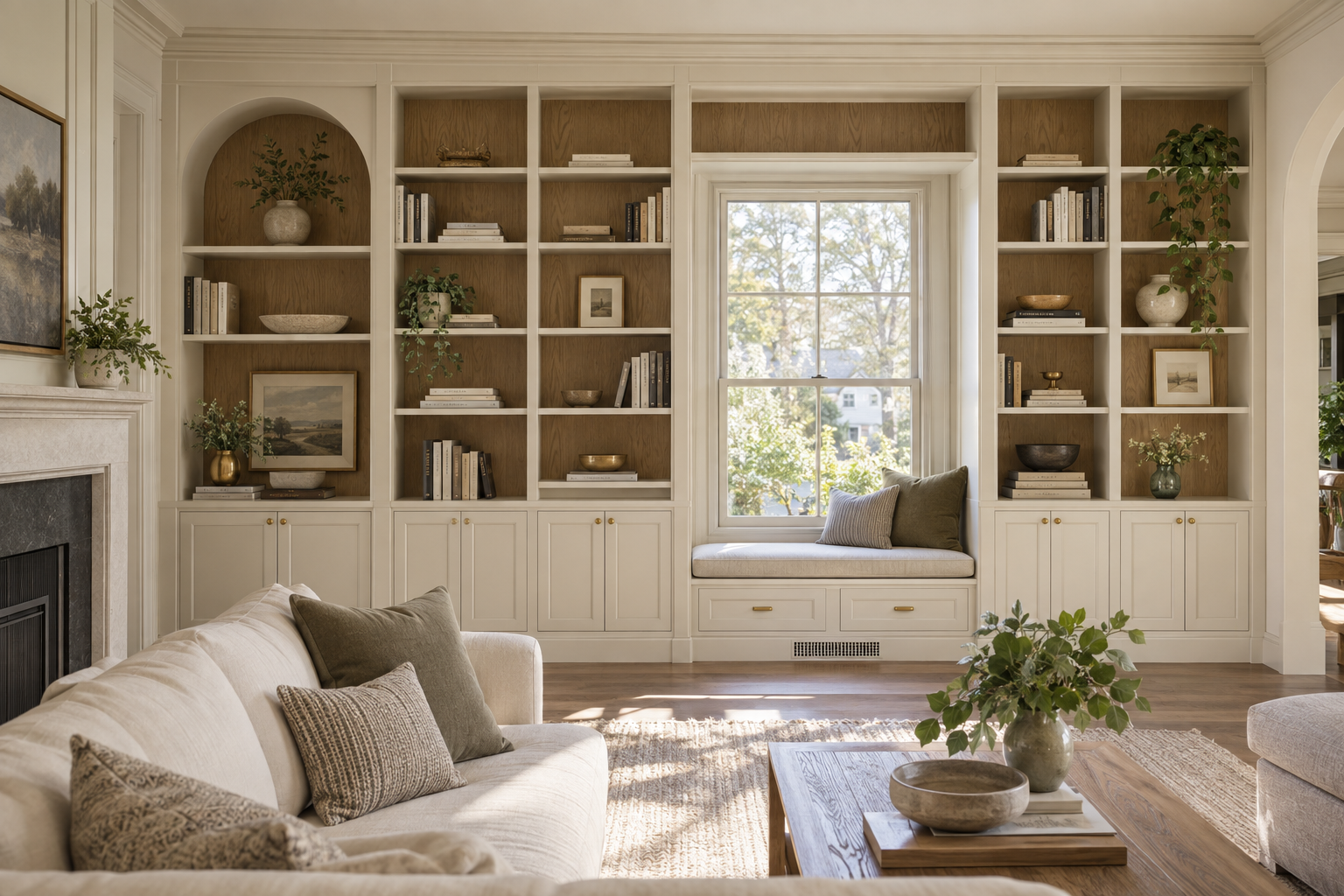
Built-in bookcases can be designed around alcoves, walls, fireplaces, windows, doors, baseboards, and other fixed architectural features. This allows the cabinetry to fit the existing room without leaving awkward, unusable gaps.
Floor-to-Ceiling Home Libraries
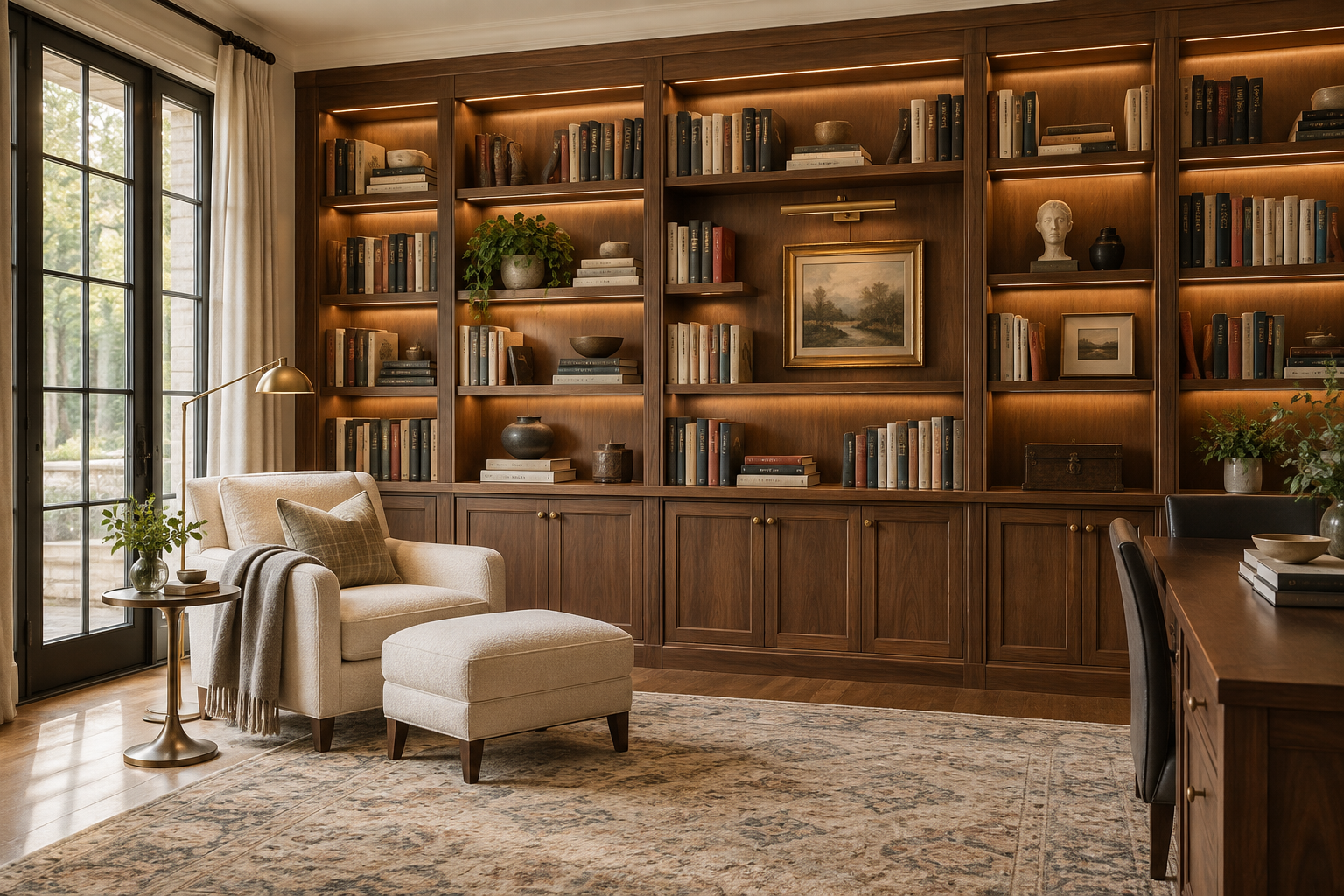
Floor-to-ceiling bookcases work well in studies, home libraries, and rooms that need extensive book storage. Carefully planned shelf heights, spans, and arrangements increase capacity while maintaining an organized, balanced appearance.
Open Shelving With Closed Storage
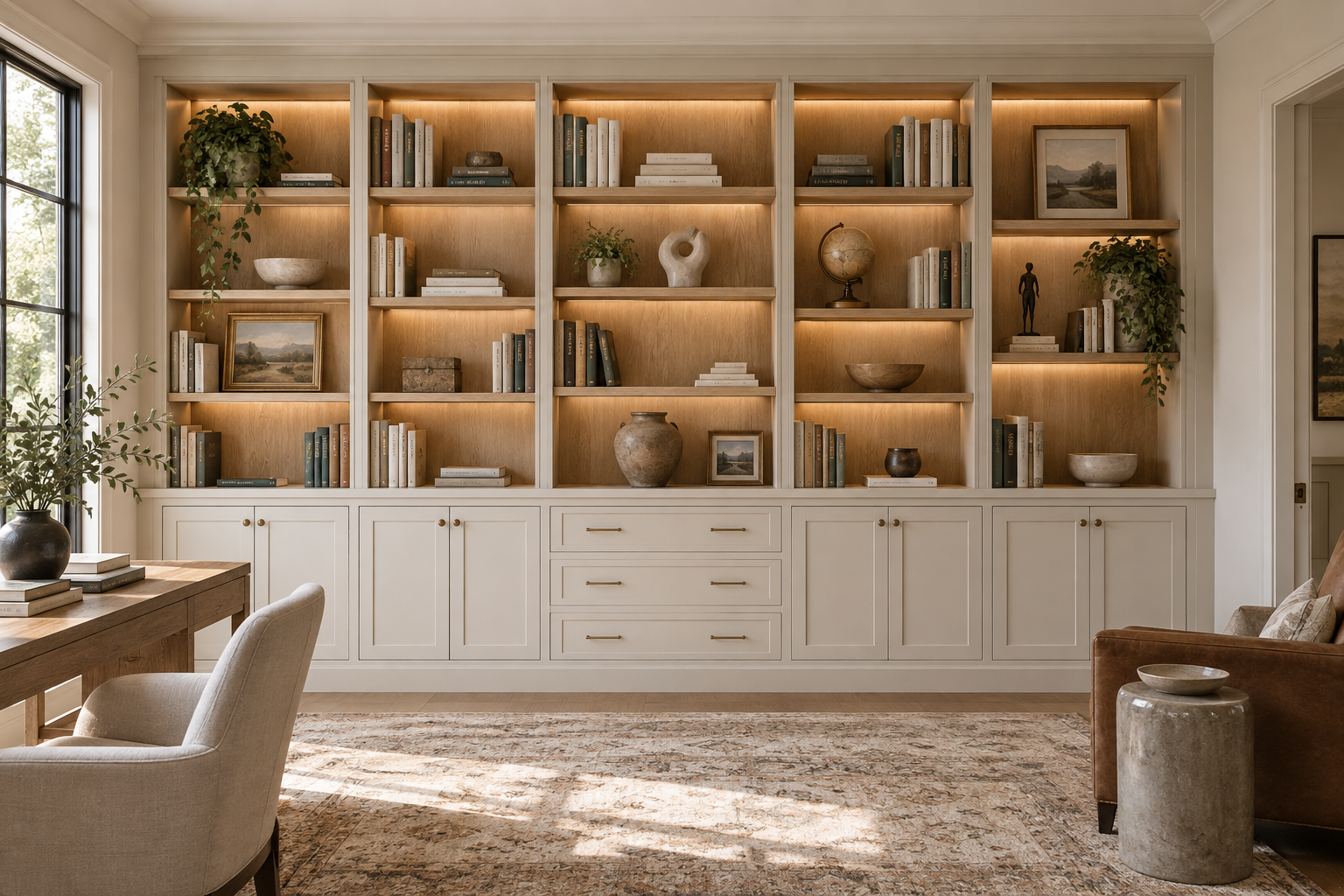
Open shelves can hold books and selected decorative objects, while lower cabinets or drawers provide storage for documents, equipment, cables, and everyday items that do not need to remain on display.
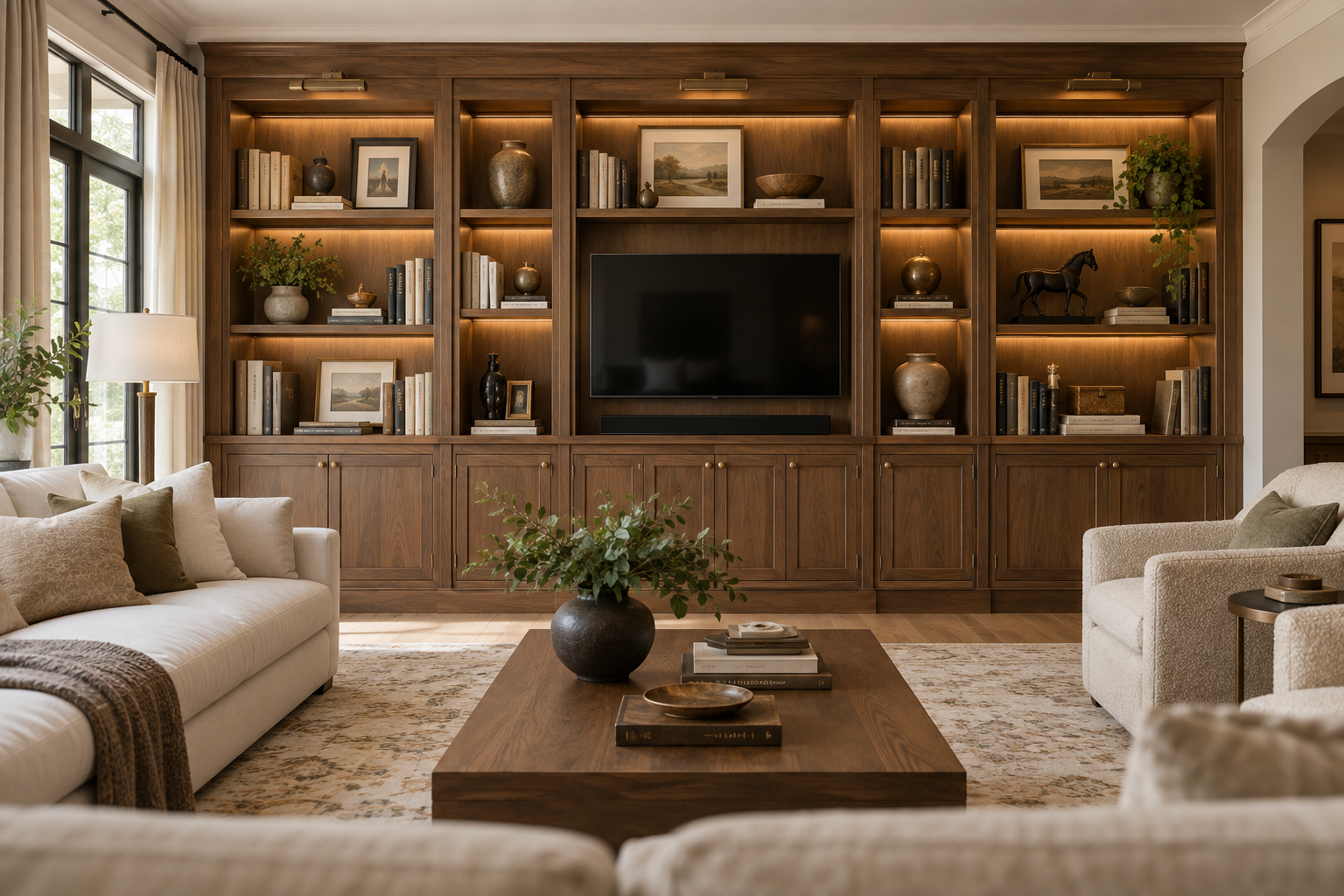
Living Room Display and Storage Bookcases
This configuration works especially well in living rooms and shared spaces. In addition to books, the design can incorporate artwork, collectibles, lighting, and media equipment, allowing the bookcase to provide storage, display space, and visual structure.
What Should You Confirm Before Building a Custom Bookcase?
A custom bookcase is more than a repeated row of shelves. Book dimensions, shelf spans, wall conditions, concealed storage, lighting, and wiring all affect the final dimensions and production drawings.
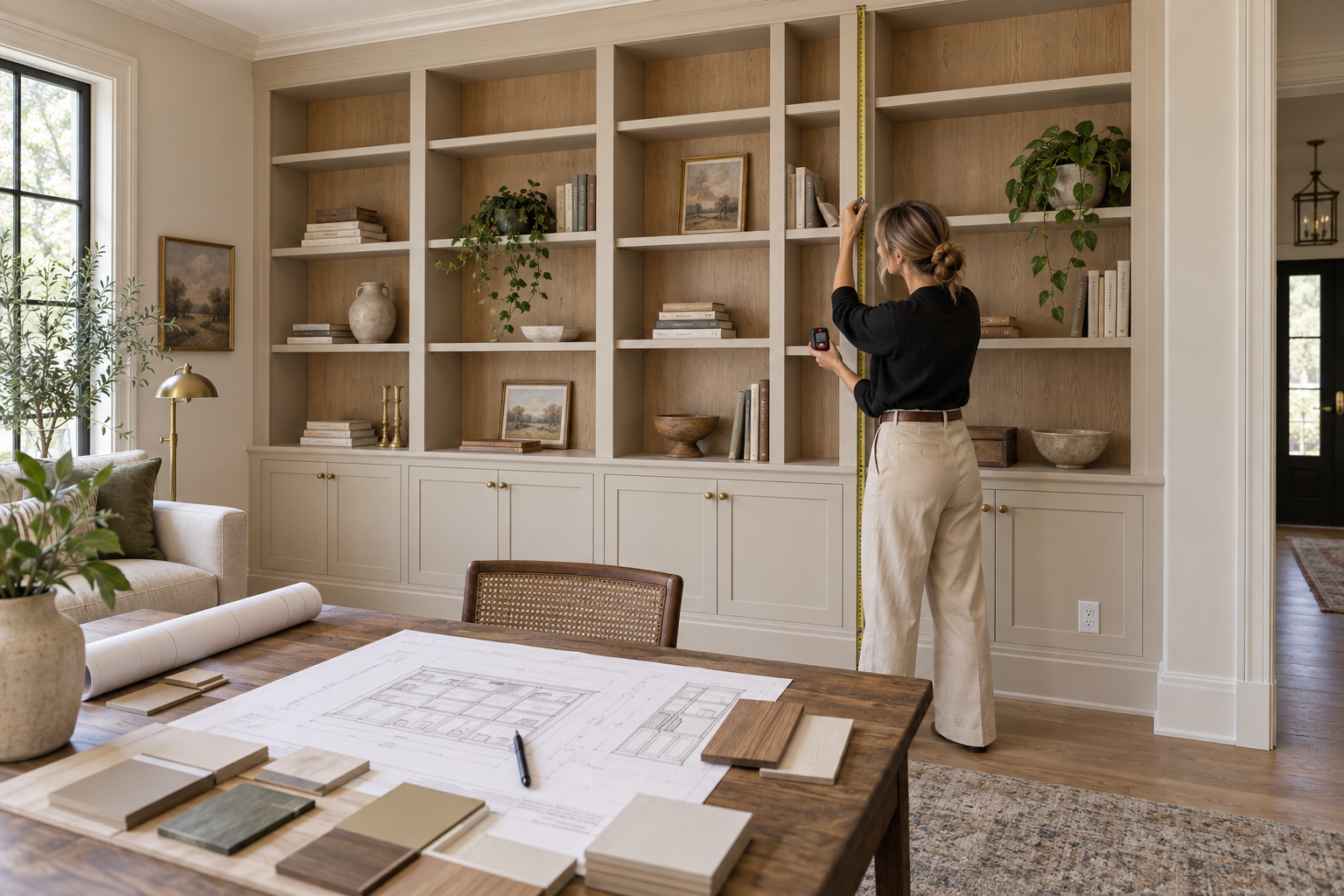
Shelf Depth
Novels, art books, binders, records, and display objects do not require the same shelf depth. Using one depth throughout the entire bookcase may waste space or leave larger items without adequate support. Shelf depth should therefore be based on the items you plan to store.
Shelf Span and Weight Capacity
Longer shelves and heavier book collections require greater structural support. Shelf thickness, support positions, material selection, and the choice between fixed and adjustable shelves should be considered together to reduce the risk of visible sagging or deformation over time.
Wall and Ceiling Conditions
Baseboards, uneven walls, beams, sloped ceilings, outlets, vents, doors, windows, and fireplaces can all affect the finished dimensions. These conditions also determine how fillers, side panels, trim, and transitions should be handled.
Open or Closed Storage
Decide in advance which books and objects should be displayed and which items should remain concealed. Documents, electronics, cables, and everyday clutter can be placed behind cabinet doors or inside drawers to maintain a cleaner overall appearance.
Lighting and Wiring
If the bookcase will include LED lighting, switches, outlets, a television, speakers, or other equipment, the wiring locations should be confirmed before production. Planning these elements early creates space for concealed wiring and reduces the need for exposed cables or additional drilling after installation.
Materials and Finishes for Custom Bookcases
Material selection affects more than appearance. It also influences maintenance, the atmosphere of the room, and whether the bookcase feels like part of the architecture or a freestanding focal point.
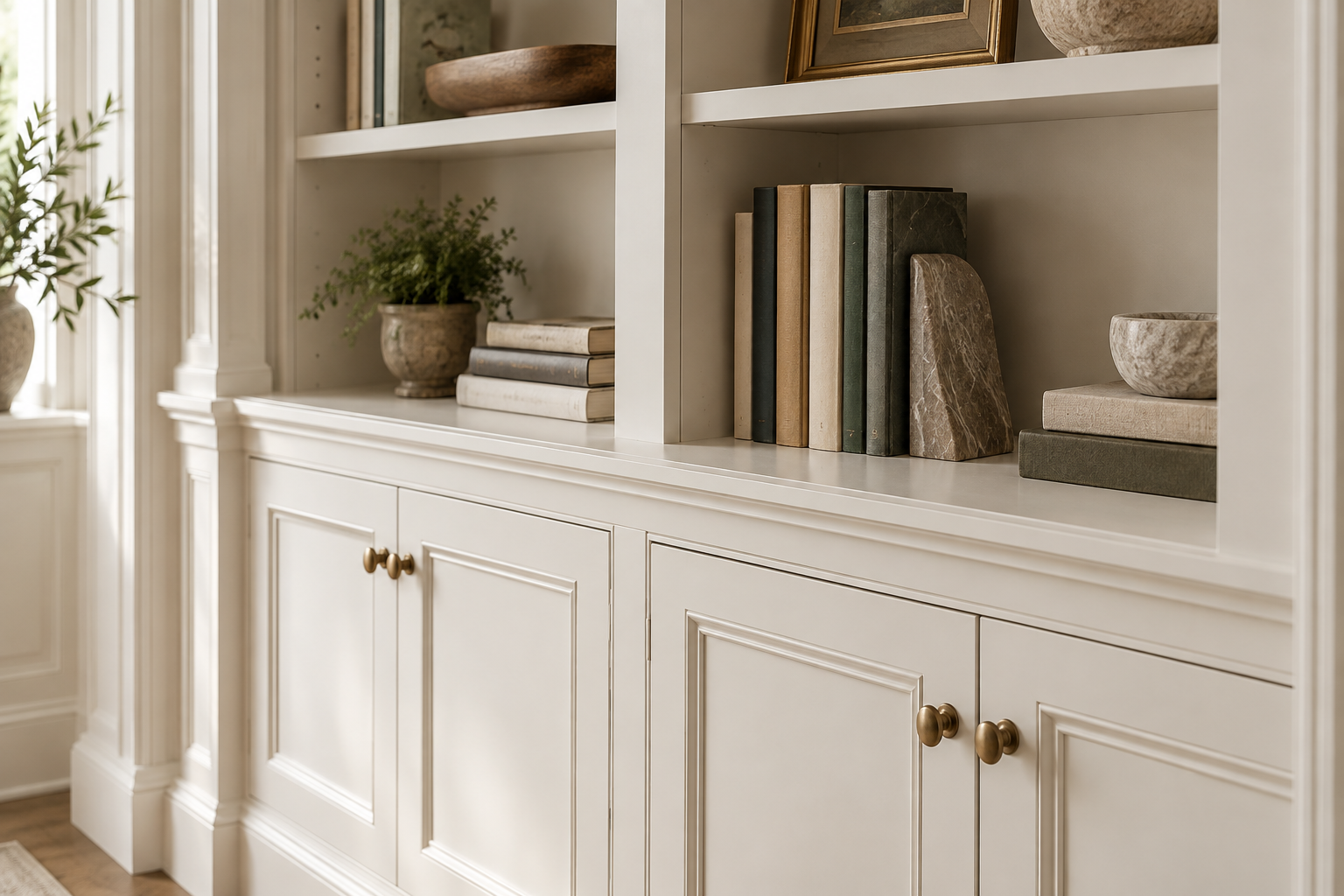
Painted or Lacquered Bookcases
Painted or lacquered finishes are a practical choice when the bookcase should coordinate with walls, door trim, wall paneling, or other custom cabinetry. Colors can be matched to the overall interior palette, helping the full bookcase wall feel more integrated and complete.
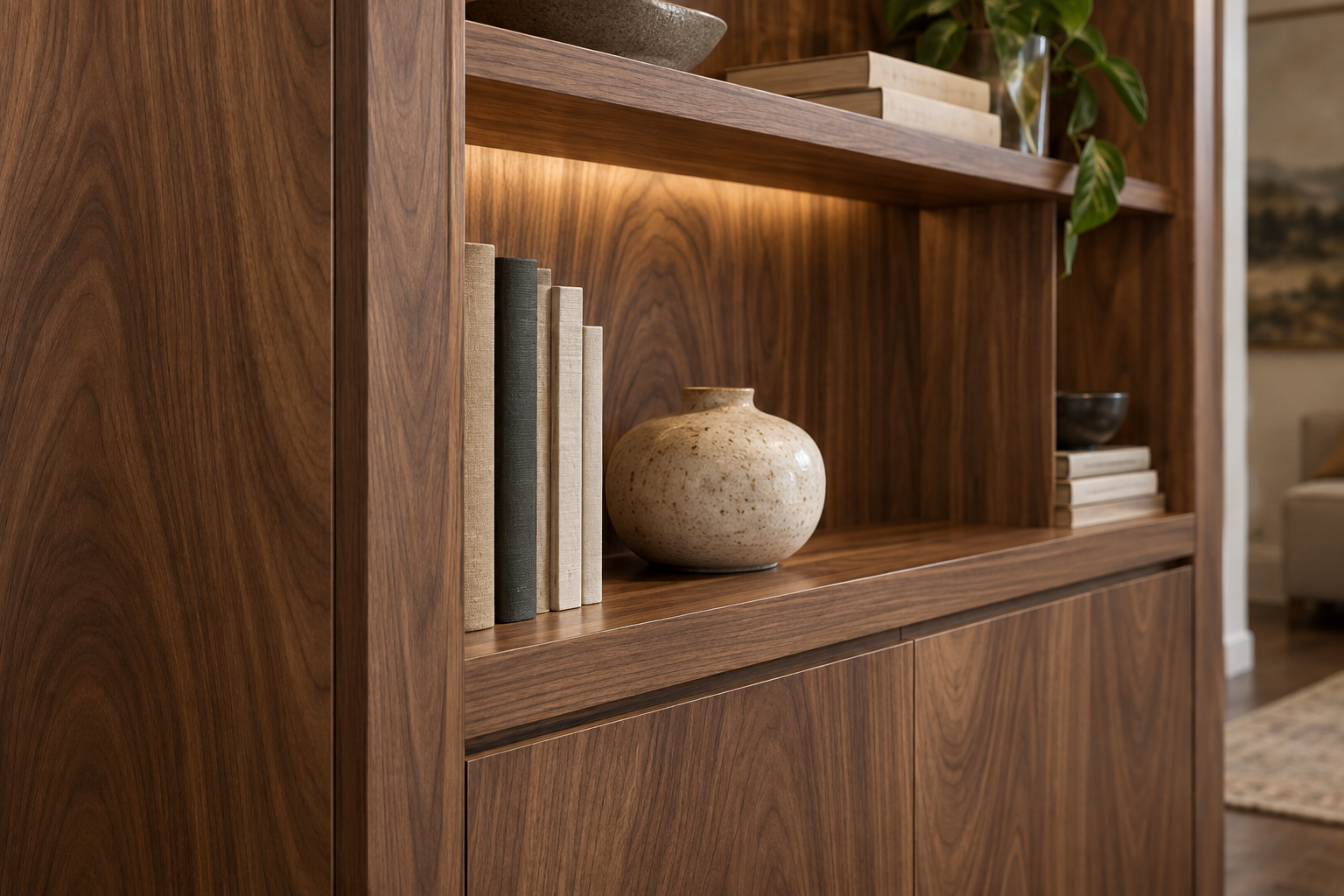
Wood Veneer Bookcases
Natural wood grain brings warmth and visual depth to a room. Wood veneer works especially well in home libraries, studies, and full-wall living room bookcases. It preserves the character of natural wood while providing a more consistent overall finish.
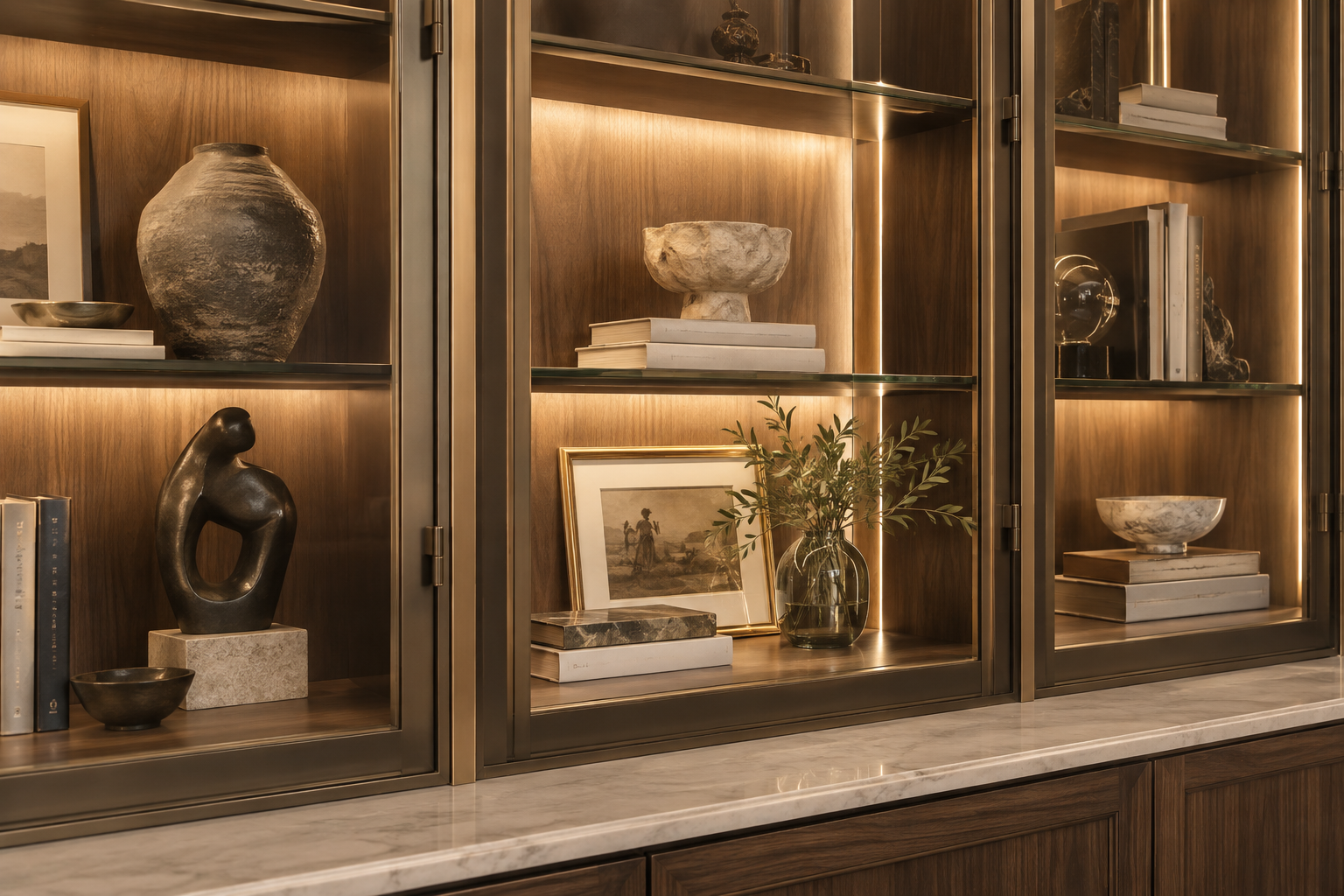
Glass and Display Details
Bookcases designed for collections can incorporate glass doors, illuminated display niches, metal accents, or dedicated display areas. These features help reduce dust while drawing attention to selected objects.
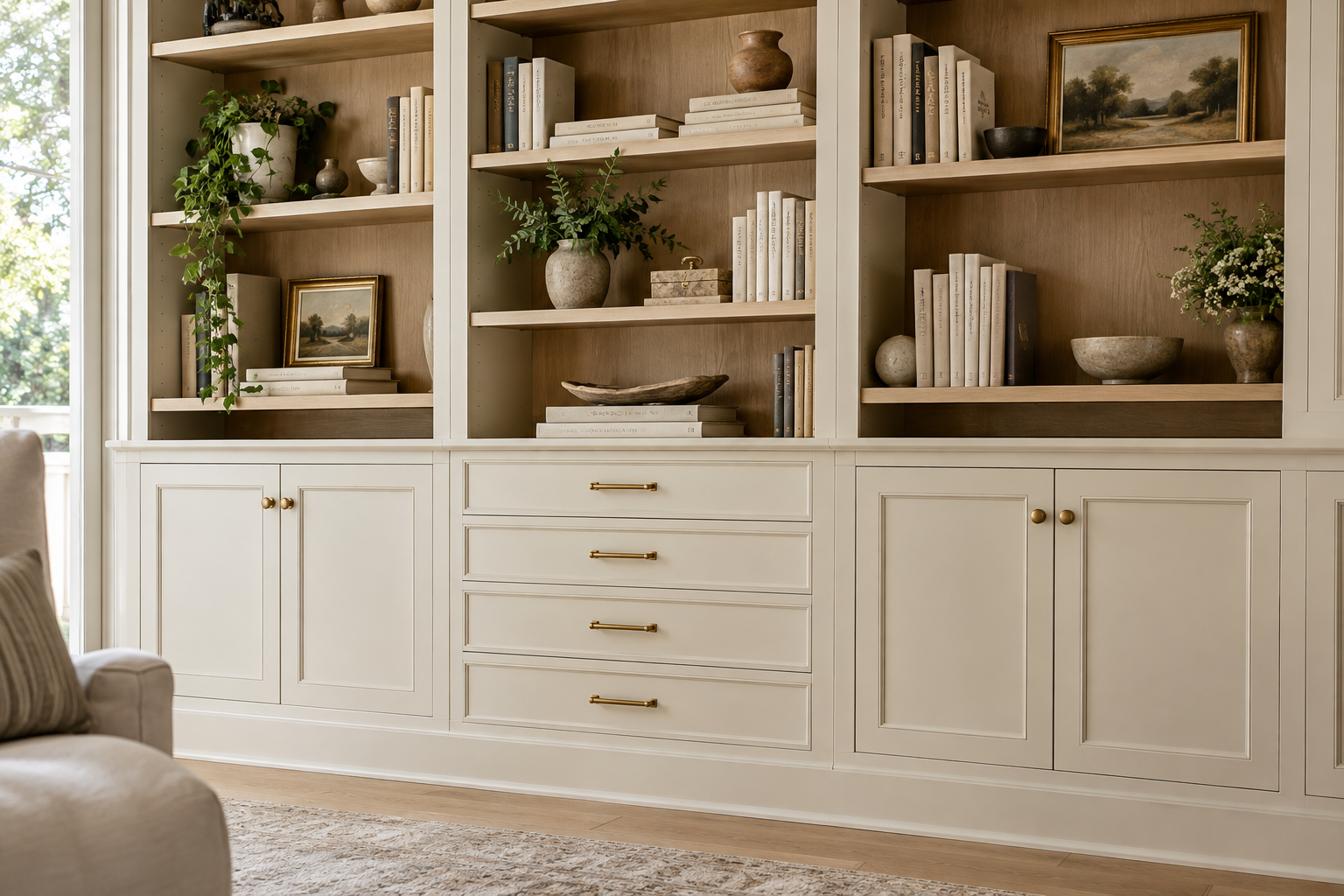
Combined Open and Closed Storage
Open shelving does not mean the entire wall needs to remain exposed. Open shelves can be combined with lower cabinets, drawers, or selected doors. Frequently used books and display-worthy pieces remain visible, while less attractive items are concealed for a better balance between presentation and everyday storage.
How We Plan Your Custom Bookcase
Every stage addresses a different requirement—from existing wall conditions and book storage to shelf dimensions, interior configurations, production drawings, delivery, and installation.
Measure the Wall and Confirm Site Conditions
Confirm the wall width, ceiling height, baseboards, door and window openings, outlets, fireplaces, beams, sloped ceilings, and other fixed site conditions.
Determine What the Bookcase Needs to Store
Organize everyday books, oversized art books, documents, collections, televisions, media equipment, and items that should remain concealed. Their dimensions and frequency of use directly influence the interior layout.
Plan Shelf Depth, Spacing, and Storage Types
Plan fixed and adjustable shelves, display areas, lower cabinets, drawers, and spaces for equipment. Rather than dividing the entire bookcase into equal compartments, each area should be planned around its intended use.
Confirm Materials, Lighting, and Production Drawings
Confirm finishes, cabinet doors, glass, LED lighting, hardware, wiring routes, and detailed production drawings. Finalizing these details before production helps minimize last-minute changes during installation.
Plan Production, Packing, and Installation
Plan component sizes, packaging, delivery access, wall-mounting requirements, installation conditions, and the final assembly sequence. For large full-wall bookcases, these factors should be addressed before production—not after the cabinetry arrives on-site.
Common Layouts for Custom Bookcases
The following layouts illustrate design approaches for different spaces; they are not presented as completed project case studies. Each bookcase can be adjusted to suit the wall, collection size, and function of the room without following a fixed template.
Full-Wall Home Library
Use an entire wall for book storage while adjusting selected shelf heights for oversized books, artwork, and display objects. Closed lower cabinets can also be added when concealed storage is needed.
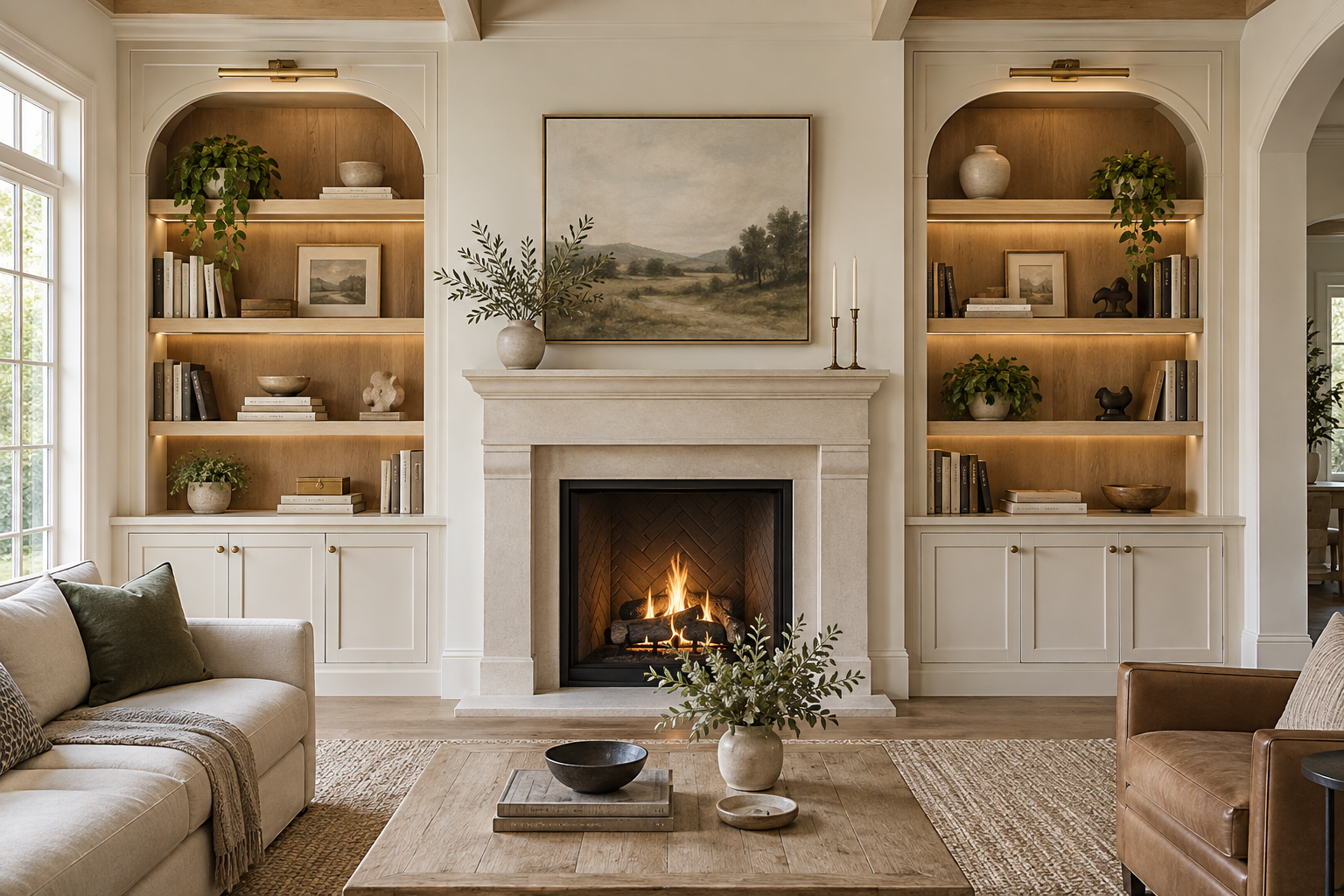
Bookcases Around a Fireplace
Bookcases can be planned on both sides of a fireplace while accounting for the fireplace width, mantel, television position, ventilation requirements, and visual symmetry. Structural conditions and visual balance are equally important.
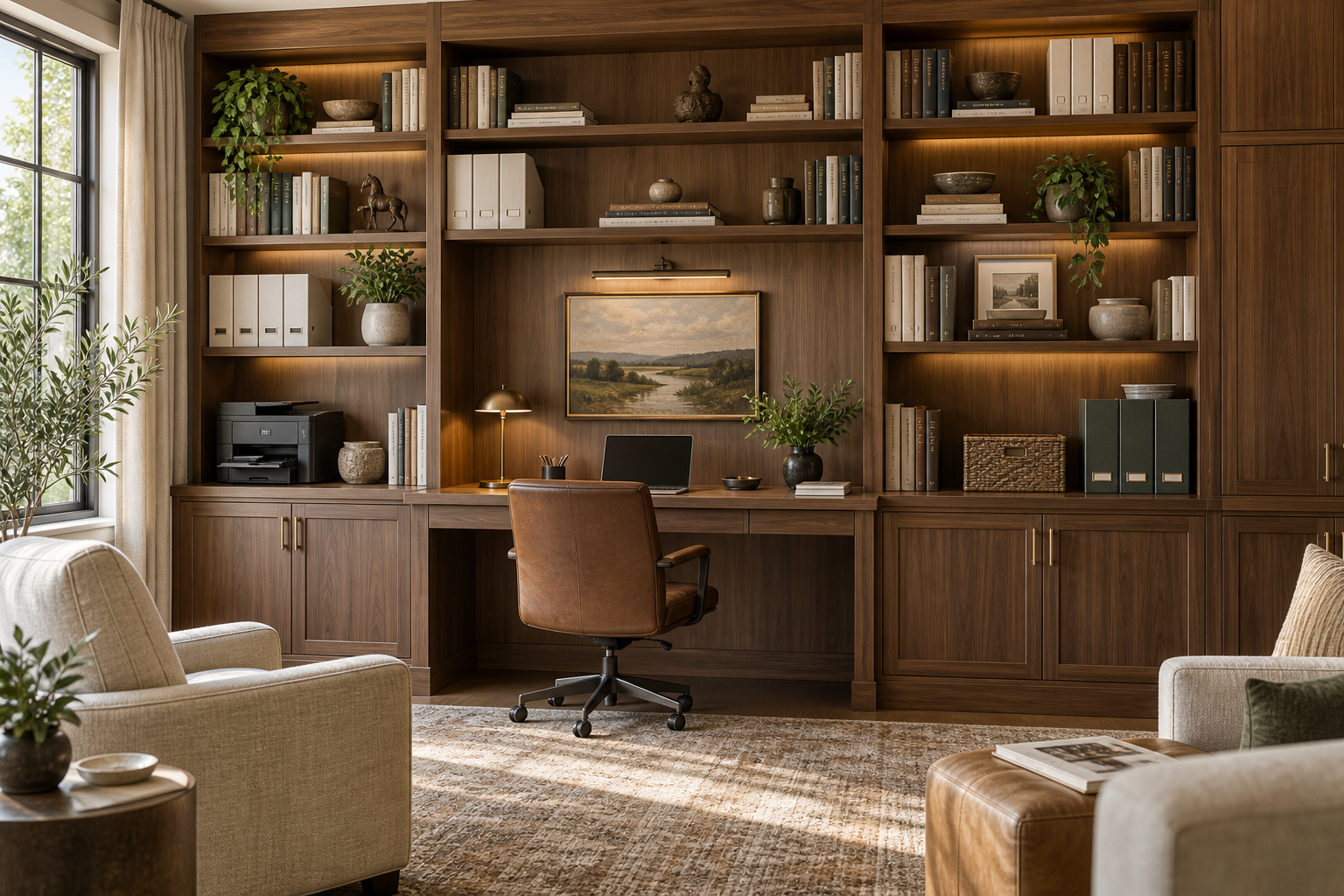
Home Office Bookcase Wall
A home office bookcase often needs to store more than books. The design can include binders, office documents, printing equipment, collections, and closed storage, with each area arranged around the way the office is used every day.
Living Room Display and Storage Wall
Combine books, artwork, collections, lighting, and media equipment within one coordinated wall. Lower cabinets or drawers can conceal equipment and everyday clutter, helping the living room maintain a cleaner and calmer appearance.
Frequently Asked Questions About Custom Bookcases
These are some of the most common questions customers ask when planning bookcase dimensions, shelving, lighting, wall conditions, shipping, and installation.
Can custom bookcases be installed against uneven walls or ceilings?
Yes. Custom bookcases can be adjusted for uneven walls, sloped ceilings, beams, baseboards, and other site conditions. Accurate dimensions or on-site measurement information will be required during the planning stage.
How deep should custom bookcase shelves be?
There is no single depth that works for every collection. Standard books, oversized art books, binders, records, and display objects require different shelf depths. The dimensions should be based on what you actually plan to store.
Can bookcase shelves be adjustable?
Yes. Adjustable shelves can be used in selected areas so their height can be changed as books or display items change. Fixed shelves are generally more appropriate where greater structural support or rigidity is required.
Can lighting be integrated into a custom bookcase?
Yes. Custom bookcases can incorporate LED strips, display lighting, or localized accent lighting. Fixtures, switches, power sources, and wiring locations should be confirmed before production so the wiring can be concealed within the cabinetry.
Can a bookcase include cabinet doors, drawers, or space for a TV?
Yes. Open shelving can be combined with cabinet doors, drawers, media equipment, and a dedicated television area. This allows the same wall to provide both display space and concealed storage.
What information do I need to start a custom bookcase design?
Start with the approximate wall dimensions, site photos, ceiling height, and the locations of windows, doors, and outlets. You should also provide a general list of the books and objects you need to store. If the design will include a television, lighting, speakers, or other equipment, include those requirements from the beginning.
Send the Wall, the Collection, and the Room Requirements
You do not need a finished cabinet drawing to begin. A floor plan, wall dimensions, site photographs, inspiration images, and a simple description of what the bookcase should hold are enough for an initial review.