Standard bathroom vanities don't always fit the way people use their bathrooms. An awkward wall, existing plumbing, or limited storage can make even an attractive off-the-shelf cabinet impractical. Custom bathroom vanity cabinets solve these problems by allowing you to adjust dimensions, materials, storage layouts, and sink configurations to your space.
The tradeoff is a higher budget and more planning. Before ordering, it helps to understand what customization actually offers, how much it costs, and which design choices will make the biggest difference in everyday use.
Benefits of Custom Bathroom Vanity Cabinets
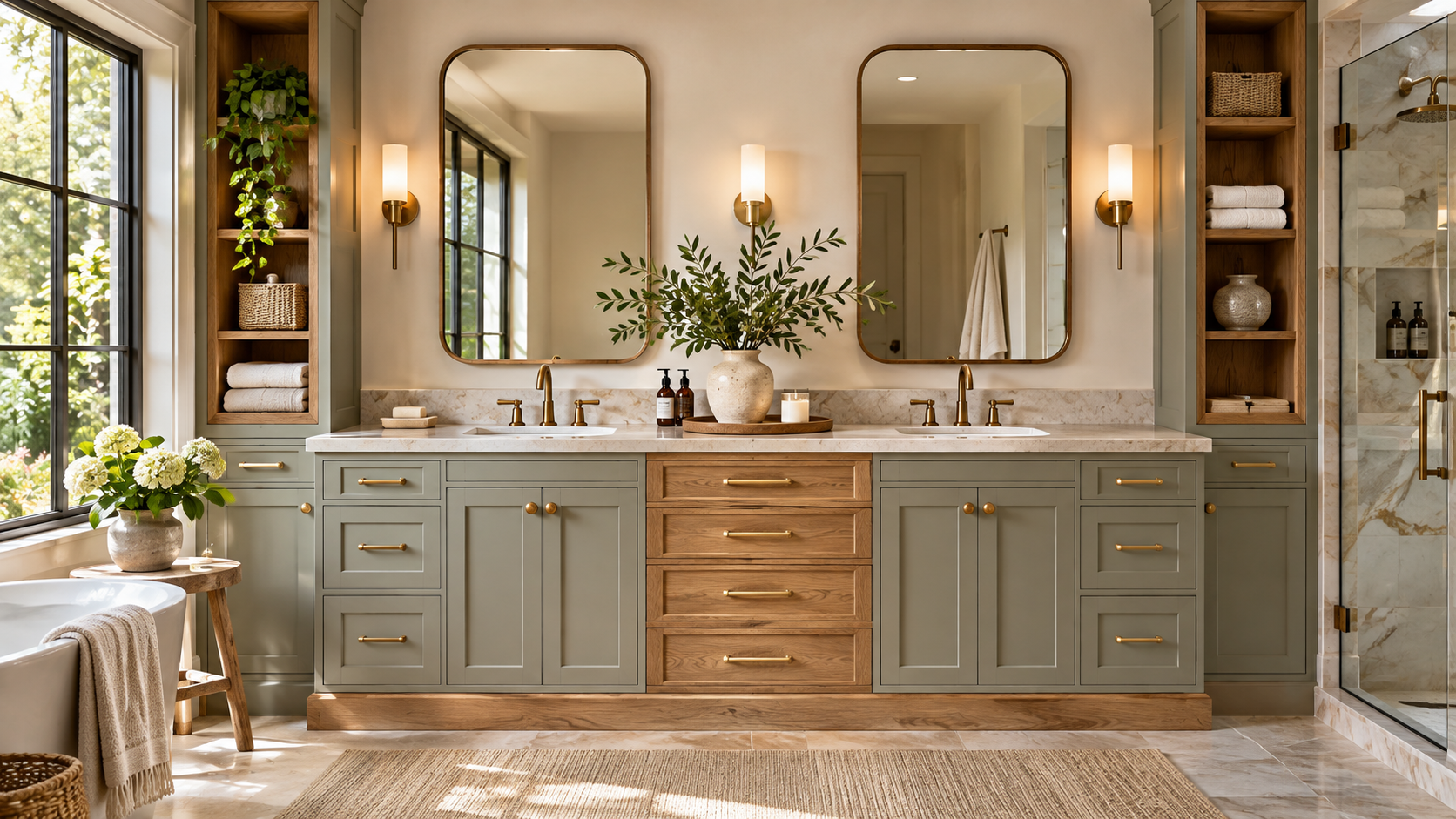
The biggest advantage of custom bathroom cabinetry is flexibility. Instead of working around standard cabinet dimensions, you can plan the vanity around your bathroom layout, storage needs, and preferred design.
Custom vs. Stock vs. Semi-Custom Bathroom Vanities
Bathroom vanities generally fall into three categories: stock, semi-custom, and fully custom. The right choice depends on how much flexibility your project requires.
| Feature | Stock | Semi-Custom | Custom |
|---|---|---|---|
| Dimensions | Standard sizes | Limited adjustments | Made to measure |
| Materials | Preset options | More choices | Flexible selections |
| Storage Layout | Fixed | Some adjustments | Personalized |
| Cost | Usually lowest | Midrange | Usually highest |
| Lead Time | Often shortest | Varies | Requires production |
Stock vanities work well for straightforward replacements. Semi-custom models offer more choices without requiring a completely new design. Fully custom cabinetry becomes worthwhile when your bathroom has unusual dimensions or specific functional requirements.
Key Benefits of Custom Bathroom Cabinets
Better space utilization is often the main reason to go custom. A bathroom with 43 inches of available wall space, for example, may be too narrow for a 48-inch vanity but leave an awkward gap around a 36-inch model. A custom cabinet can fit the available width while allowing room for installation.
Storage is another advantage. Deep drawers can accommodate hair dryers and larger toiletries, while shallow organizers keep smaller items accessible. In shared bathrooms, separate storage zones can make busy mornings easier.
Customization also gives you greater control over cabinet finishes, countertops, mirrors, and hardware, making it easier to create a coordinated bathroom design.
When Are Custom Bathroom Vanities Worth It?
Custom vanities make the most sense for awkward layouts, unusual plumbing locations, or homeowners who need storage that standard cabinets cannot provide.
They're also useful when renovating multiple rooms. For example, Avrelahome's whole-house customization services allow homeowners to coordinate bathroom vanities, kitchen cabinetry, wardrobes, and other furnishings within one interior plan.
However, if standard dimensions work and your budget is limited, a stock or semi-custom vanity may offer better value.
How Much Do Custom Bathroom Vanity Cabinets Cost?
In the U.S., custom bathroom vanity costs depend on cabinet size, materials, countertops, hardware, and installation requirements. A quote for cabinetry alone can look much lower than one that includes the sink, countertop, plumbing, and labor.
Average Custom Bathroom Vanity Cabinet Costs
HomeGuide estimates that installing a custom bathroom vanity typically costs between $1,000 and $4,000. Larger double-sink units, premium materials, and extensive remodeling can push the total higher.
| Cost Component | Estimated Cost |
|---|---|
| Stock vanity with installation | $400–$1,700 |
| Custom vanity cabinet | $500–$3,000 |
| Custom vanity installation labor | $500–$1,000 |
| Custom vanity with installation | $1,000–$4,000 |
These are general U.S. market estimates, not fixed prices. Countertops, sinks, faucets, and plumbing modifications may be charged separately.
If you're ordering cabinetry from an overseas supplier, remember to account for international freight, import duties, and local installation.
What Affects Custom Bathroom Vanity Pricing?
Size and construction are major cost factors. A 72-inch double vanity generally requires more materials than a 30-inch single vanity, but intricate drawer systems and specialty finishes can also increase the price.
Material choices matter too. Solid wood doors, premium veneers, custom lacquer finishes, and high-quality drawer slides may cost more than standard cabinet components. Quartz or natural stone countertops can add another significant expense.
Installation complexity deserves equal attention. A floating vanity may require additional wall support, while moving existing plumbing can increase labor costs.
How to Save Money on Custom Bathroom Vanities
The most effective way to control costs is to customize what matters and simplify everything else.
Keeping the sink and drain in their existing locations can reduce plumbing work. Spend more on durable cabinet construction, moisture protection, and frequently used hardware instead of upgrading every decorative detail.
Request an itemized quote covering cabinetry, countertops, sinks, hardware, delivery, and installation. This makes it easier to identify unnecessary expenses without compromising essential functionality.
Types and Styles of Custom Bathroom Vanity Cabinets
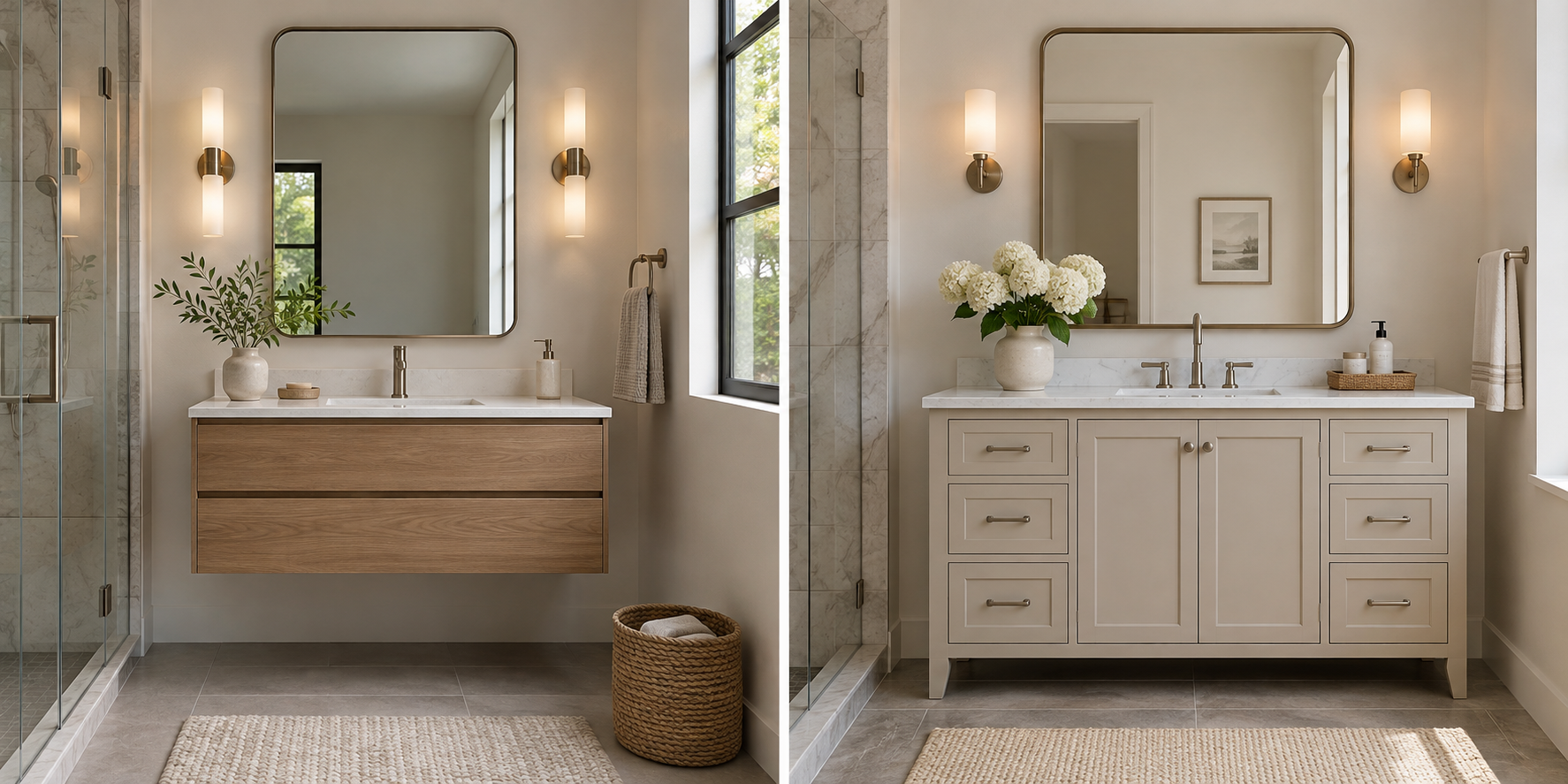
The best vanity style depends on your bathroom's size, storage needs, and the number of people using it. A sleek floating cabinet may suit a small modern bathroom, while a larger freestanding vanity can provide more storage for a family.
Floating vs. Freestanding Bathroom Vanities
A floating bathroom vanity mounts to the wall, leaving the floor underneath exposed. This creates a lighter appearance and makes cleaning beneath the cabinet easier.
However, wall-mounted cabinets require appropriate structural support, especially when paired with heavy stone countertops. Wall construction and mounting hardware should be evaluated before installation.
Freestanding vanities offer a more traditional cabinet profile and often provide greater storage capacity. They can accommodate deeper drawers and larger compartments, making them practical for family bathrooms.
Avrelahome offers different custom bathroom vanity configurations, including floating, freestanding, single-sink, and double-sink designs that can be planned around room dimensions and plumbing locations.
Single-Sink vs. Double-Sink Custom Vanities
Single-sink vanities work well in powder rooms, guest bathrooms, and smaller spaces. With only one basin, there's usually more flexibility for countertop space and storage.
Double-sink vanities are useful in shared primary bathrooms, allowing two people to get ready at the same time. Separate drawers can also give each person dedicated storage.
Still, two sinks aren't always better. On a 60-inch vanity, adding a second basin may leave less countertop space than expected. Consider how often both sinks will actually be used before choosing the layout.
Popular Custom Bathroom Vanity Styles
Modern and minimalist: Flat-panel doors, clean lines, integrated pulls, and understated finishes create a streamlined appearance.
Traditional: Raised-panel doors, decorative details, and natural wood finishes give the vanity a furniture-inspired look.
Transitional: A mix of simple contemporary lines and traditional cabinet details works well in many American homes.
Natural wood and spa-inspired: Warm wood tones, neutral countertops, and simple hardware create a relaxed atmosphere without relying on elaborate decoration.
Regardless of style, choose finishes that can handle regular bathroom humidity and cleaning.
How to Choose the Right Vanity Size and Storage Layout
A custom vanity should fit your bathroom without restricting movement or access. Wall dimensions matter, but so do door swings, toilet clearance, plumbing locations, and the space needed to open drawers.
Custom Bathroom Vanity Cabinet Size Guide
Common U.S. bathroom vanity widths range from 24 to more than 72 inches. These dimensions provide useful starting points, although custom cabinetry can be adjusted to fit a particular room.
| Vanity Width | Best For |
|---|---|
| 24–30 inches | Powder rooms and compact bathrooms |
| 36–48 inches | Standard single-sink bathrooms |
| 48–60 inches | Larger single-sink vanities |
| 60–72+ inches | Shared primary bathrooms |
Vanity depths commonly range from approximately 17 to 24 inches. Finished countertop heights often fall around 30 to 36 inches, depending on the design and user preferences.
Pay particular attention to vessel sinks. Because the basin sits above the countertop, it increases the finished sink height. A tall cabinet combined with a tall vessel sink may feel uncomfortable for everyday use.
Plumbing, Sink Placement, and Clearance Requirements
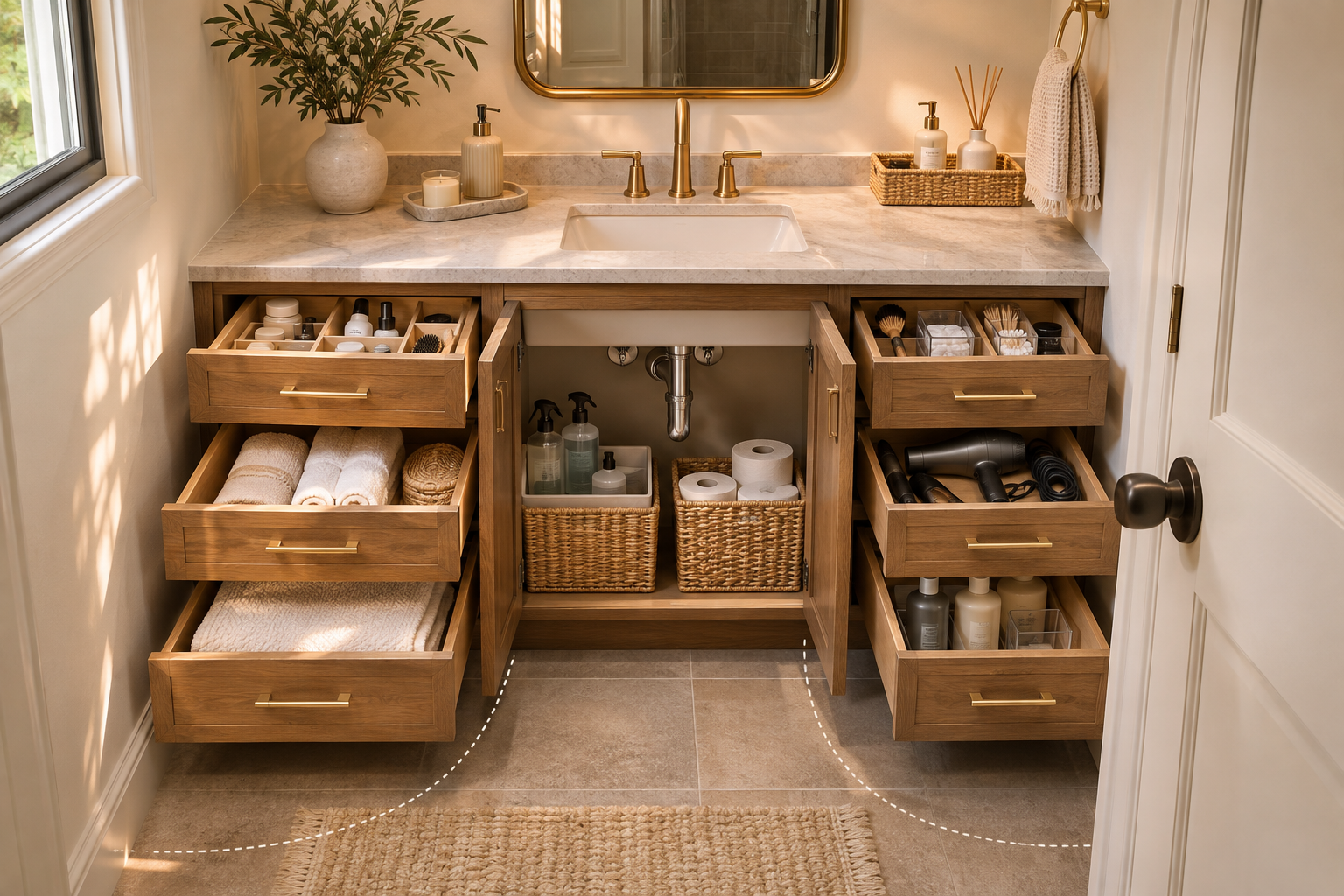
Measure more than the available wall width. Check whether the bathroom door, shower door, and cabinet drawers can open fully without hitting nearby fixtures.
Existing plumbing can also limit drawer placement. If the drain runs through the center of the cabinet, you may need shorter drawers, a U-shaped drawer design, or an open compartment behind the doors.
For double-sink vanities, confirm basin spacing and plumbing locations before finalizing the cabinet drawings. Any planned plumbing or electrical changes should be reviewed by qualified local professionals.
Smart Storage Features for Custom Vanity Cabinets
Storage works best when it's organized around what you actually use.
Shallow drawers are ideal for cosmetics, toothbrushes, and skincare products. Deep drawers can accommodate hair dryers, larger bottles, and cleaning supplies. U-shaped drawers help preserve storage around plumbing.
If you need room for towels and bulk toiletries, a matching tall cabinet or medicine cabinet may be more useful than making the vanity itself deeper.
Best Materials and Finishes for Custom Bathroom Vanity Cabinets
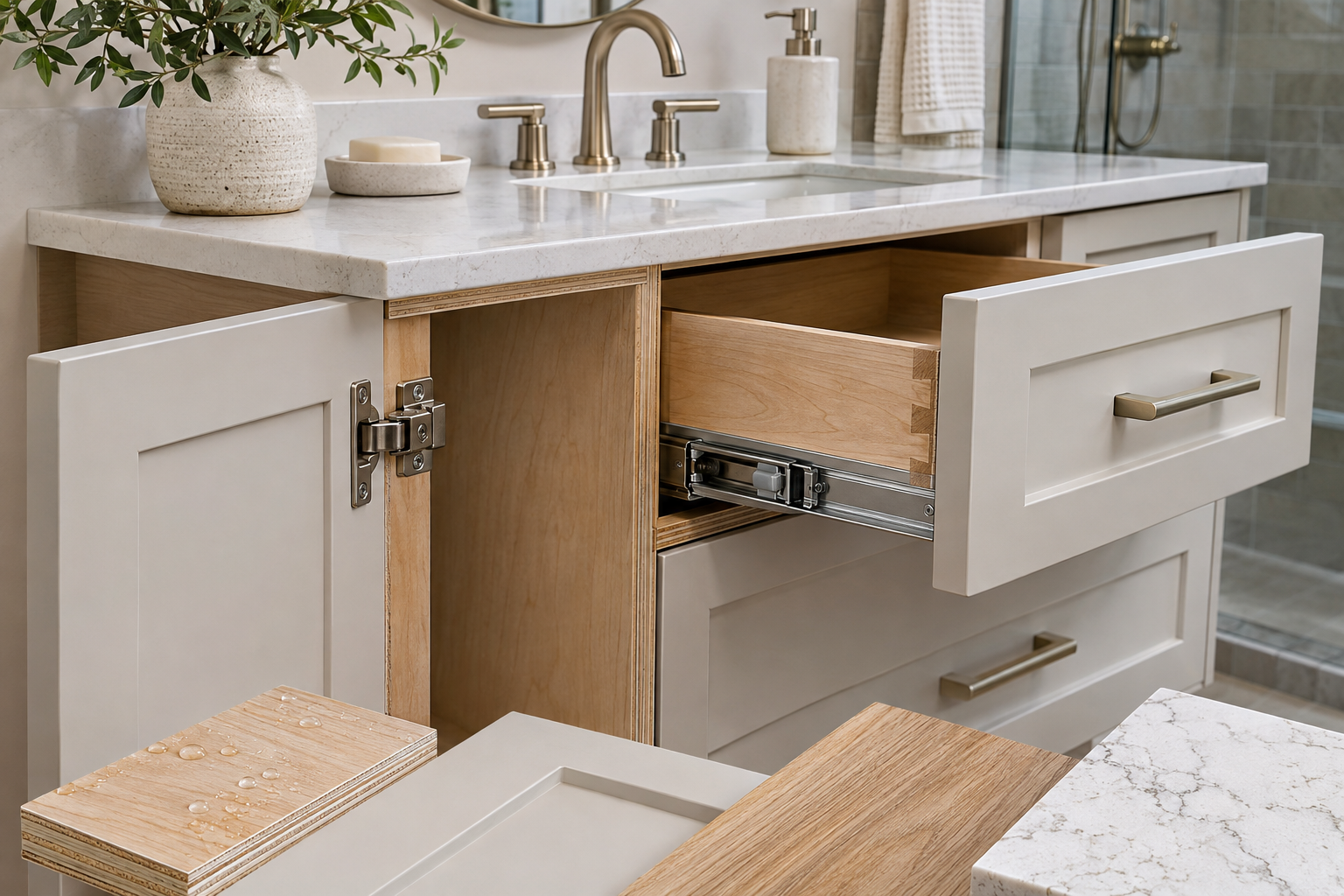
Bathroom cabinetry faces regular humidity changes, splashes, and cleaning products. Choosing the right material means looking beyond appearance to panel construction, edge sealing, surface finishes, and hardware quality.
Solid Wood vs. Plywood vs. MDF
Each material has strengths and limitations. Manufacturing quality and moisture protection can matter as much as the material itself.
| Material | Main Advantage | What to Consider |
|---|---|---|
| Solid Wood | Natural grain and furniture-like appearance | Humidity movement and finishing |
| Plywood | Layered construction and versatility | Panel grade, bonding, and edge sealing |
| Moisture-Resistant MDF | Smooth surface for painted finishes | Moisture rating and exposed edges |
Solid wood appeals to homeowners who prefer natural texture, but it can expand or contract as humidity changes.
Plywood is widely used in custom cabinetry because its layered structure supports a range of cabinet designs. Its performance depends on panel quality and construction.
Moisture-resistant MDF works well for painted cabinet doors and smooth surfaces. However, it still needs properly sealed edges and cutouts.
When comparing suppliers, ask for specific material details rather than relying on broad waterproof claims. Avrelahome's materials and finishes library provides a starting point for reviewing cabinet boards, veneers, surface treatments, and hardware options.
Best Countertop and Sink Options
Quartz is a popular bathroom countertop material because it offers consistent finishes and relatively simple maintenance. Granite and marble provide natural patterns, although their maintenance requirements vary by stone.
Solid surface countertops are another option, particularly when a seamless appearance is important.
Sink configuration affects both appearance and usability:
- Vessel sinks: Create a distinctive look but increase the finished sink height.
- Undermount sinks: Keep the countertop visually clean and make wiping water into the basin easier.
- Integrated sinks: Reduce visible seams between the countertop and basin.
Choose the sink and countertop together so dimensions, cutouts, faucet placement, and cabinet support are coordinated before production.
Cabinet Finishes and Hardware
Painted, lacquered, veneered, and laminate finishes offer different appearances and maintenance requirements. Select the finish based on the bathroom environment and how frequently the cabinet will be cleaned.
Soft-close hinges and drawer slides improve daily operation by reducing slamming. For heavily used bathrooms, drawer stability and corrosion-resistant hardware deserve more attention than decorative accessories.
Check vulnerable areas such as cabinet bottoms, countertop joints, sink openings, and plumbing cutouts. Proper sealing in these locations helps reduce the risk of moisture damage.
How to Order and Install Custom Bathroom Vanity Cabinets
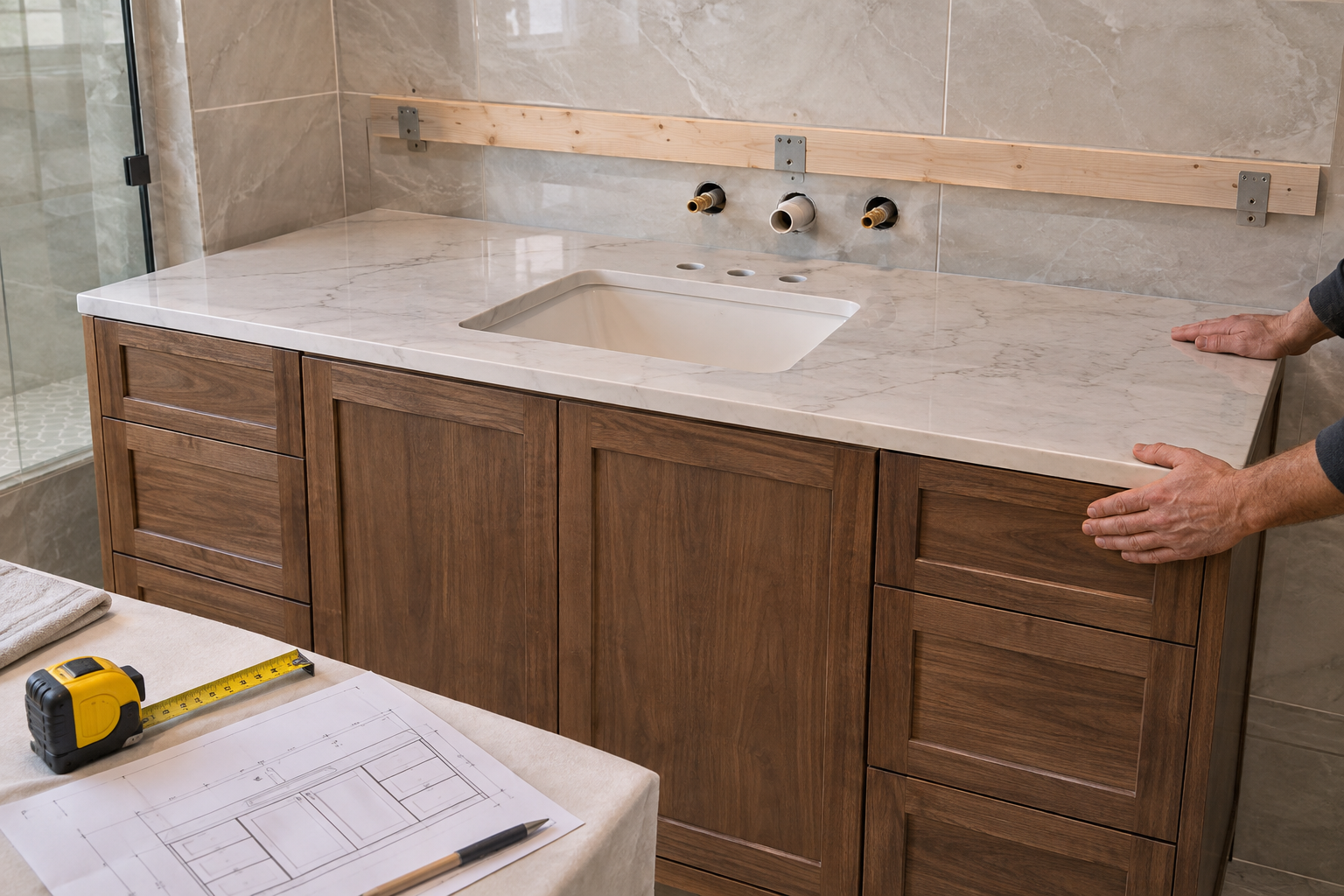
Ordering a custom vanity involves more than choosing a cabinet style. Measurements, plumbing details, materials, and installation requirements need to be confirmed before manufacturing begins.
The Custom Bathroom Vanity Ordering Process
Step 1: Measure Your Bathroom
Record wall dimensions, door clearances, plumbing positions, and surrounding fixtures. For new construction, account for finished flooring and wall surfaces.
Step 2: Choose the Vanity Layout
Decide between single or double sinks, floating or freestanding construction, and the storage arrangement that best supports your routine.
Step 3: Select Materials and Fixtures
Choose cabinet panels, finishes, countertops, sinks, hardware, and coordinating storage units.
Step 4: Review Drawings and Quotes
Confirm dimensions, plumbing openings, sink cutouts, materials, and exactly what's included in the price.
Step 5: Approve Production and Delivery
Once drawings are finalized, the supplier can schedule manufacturing. Confirm packaging, shipping arrangements, and expected delivery dates.
Step 6: Install and Inspect
Check the delivered cabinet before installation. After installation, test drawers, doors, plumbing connections, and countertop joints.
For overseas projects, understanding the supplier's production and delivery process helps clarify which specifications need approval and what installation information should accompany the shipment.
Common Mistakes to Avoid Before Installation
One frequent mistake is measuring only the wall width. A cabinet may technically fit between two walls but still prevent the bathroom door or nearby drawers from opening properly.
Plumbing conflicts are another common problem. A drainpipe can interfere with drawer boxes, while a floating vanity may require additional wall reinforcement.
Never approve manufacturing based only on a rendering. Review the final technical drawings, including cabinet dimensions, sink placement, cutouts, materials, and mounting requirements.
Choosing the Right Custom Bathroom Vanity Supplier
A reliable supplier should help translate your bathroom dimensions into a workable cabinet design. Look for clear material specifications, detailed drawings, defined production responsibilities, and an understandable quotation.
If you're customizing only one bathroom, a specialized vanity manufacturer may be the simplest choice. For a new home or a larger renovation, working with a supplier that handles several rooms can make coordination easier.
Avrelahome is one option for homeowners, designers, and contractors planning custom residential interiors. Its services cover bathroom vanities, kitchen cabinets, wardrobes, and other made-to-measure furniture. Buyers can review cabinet dimensions, materials, storage configurations, and finish choices as part of a coordinated project.
Before ordering, confirm manufacturing arrangements, shipping terms, installation responsibilities, and warranty coverage. If you're planning a renovation or new construction project, you can discuss your custom cabinetry requirements with Avrelahome using your floor plan, measurements, and design references.
Final Thoughts
If your bathroom has standard dimensions and your budget is limited, stock or semi-custom cabinetry may be the smarter purchase. Custom bathroom vanity cabinets are worth considering when you need a precise fit, specialized storage, or a coordinated design across several rooms. Prioritize accurate measurements, durable construction, and a complete project quote before choosing a supplier.
FAQ
How Long Does It Take to Make Custom Bathroom Vanity Cabinets?
Lead times depend on the design, materials, production schedule, and shipping arrangements. Ask your supplier to provide separate estimates for design approval, manufacturing, and delivery rather than relying on a single completion date.
Do Custom Bathroom Vanity Cabinets Come Fully Assembled?
Some arrive fully assembled, while others are delivered in sections or require on-site assembly. The shipping method depends on cabinet size, construction, and supplier arrangements. Confirm these details before ordering.
Can You Replace a Vanity Cabinet Without Replacing the Countertop?
Yes, if the new cabinet matches the existing countertop's dimensions, support requirements, and sink configuration. Removing and reusing stone countertops carries a risk of damage, so have a qualified installer assess the existing setup first.
Can Custom Bathroom Vanity Cabinets Match Kitchen Cabinets?
Yes. Cabinet door styles, finishes, wood tones, and hardware can be coordinated across bathrooms and kitchens. However, bathroom cabinetry should still use materials and construction details appropriate for moisture exposure.
Can You Order a Custom Vanity Before Your Bathroom Renovation Is Finished?
Yes, but the measurements must account for finished flooring, wall surfaces, and fixture locations. Before production, confirm which dimensions are final and who is responsible for verifying them on-site.