
The safest way to clean a leather sofa is to follow its manufacturer instructions, remove dust gently, and use only a method approved for that specific leather. The wrong household cleaner can alter the color, remove a protective finish, or leave the surface dry and uneven.
Use the steps below for basic cleaning. If the sofa has soft, absorbent leather, suede-like leather, peeling areas, or a stain you cannot identify, stop and ask the seller or a leather cleaner for help.
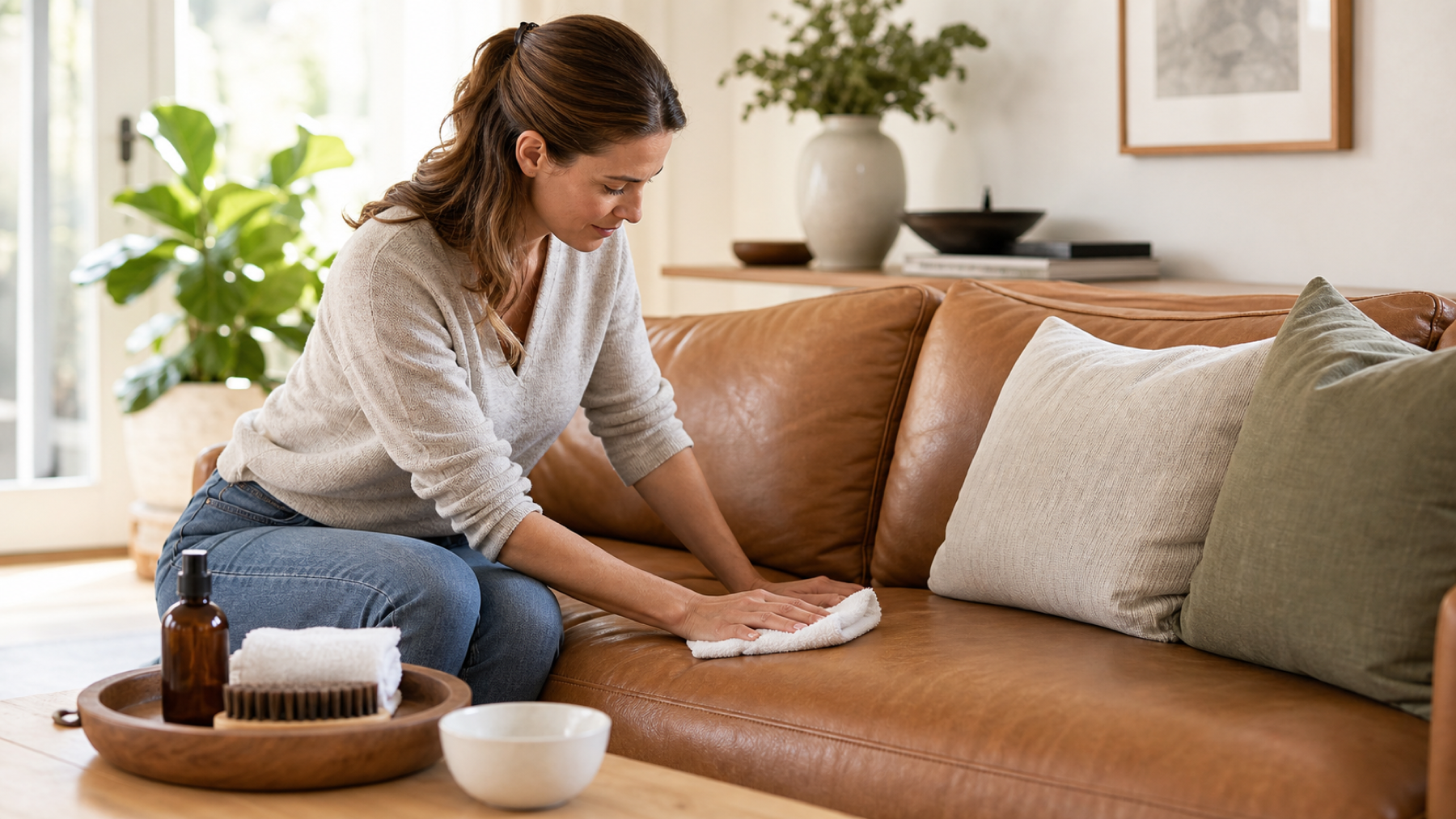
Read the Care Label Before You Clean
Look under the cushions, under the sofa, in the purchase documents, or on the product page. Find the leather name and cleaning instructions. If you are still identifying the upholstery, Avrelahome’s materials and finishes library provides a reference for its fabric and leather options. Always follow the sofa manufacturer’s care instructions instead of a general online recipe.
Not all leather sofas can be cleaned in the same way:
- Protected leather: has a coating over the color. It is often easier to clean, but you still need to follow the maker’s instructions.
- Aniline leather: looks more natural and can soak up liquid or turn darker more easily.
- Nubuck and suede: feel soft and slightly fuzzy. They usually need special cleaning.
- Faux or bonded leather: has a man-made surface. The leather conditioner will not fix peeling or rebuild this surface.
If you do not know the leather type, ask the seller or maker before using liquid. Stop if a hidden test area becomes darker, loses color onto the cloth, or feels different.

What You Need Before Cleaning a Leather Sofa
Before starting, prepare the right tools and cleaning products. You will typically need:
Soft microfiber cloths;
A vacuum cleaner with a soft brush attachment;
Leather cleaner;
Leather conditioner;
A small bucket of clean water;
Soft-bristle brush (for textured leather).
Avoid using harsh household cleaners such as:
- Bleach;
- Ammonia-based products;
- Strong detergents;
- Abrasive cleaning tools.
These products can damage the leather finish and cause discoloration. However, unless the manufacturer’s instructions explicitly approve them, avoid:
Disinfecting wipes, bleach, alcohol, and ammonia
All-purpose cleaners and dishwashing degreasers
Furniture polish and silicone products
Saddle soap intended for other leather uses
Olive, coconut, or other household oils
Baking soda, toothpaste, and abrasive powders
Steam cleaners and excessive water
Hard brushes and scrubbing pads
The risk is not limited to an immediate stain. An unsuitable product may weaken a topcoat, change sheen, create sticky residue, or cause uneven aging that becomes visible later. If you are choosing a sofa rather than cleaning an existing one, a broader custom furniture materials guide explains why upholstery, frame, foam, seams, and cleaning requirements should be considered together.
How to Clean Your Leather Sofa Step by Step
Cleaning a leather sofa does not require complicated equipment or professional skills. The key is to follow the right order and use gentle techniques to protect the leather surface. The following steps will walk you through the cleaning process, from removing surface dust to conditioning the leather after cleaning.
Step 1: Check the Leather Type and Test the Cleaner
Before applying any cleaning product, identify the type of leather and check the manufacturer’s care instructions.
Different leather finishes may react differently to cleaning products.
Common leather types include:
- Finished leather: More resistant and easier to clean;
- Aniline leather: More natural but more sensitive to moisture and stains;
- Semi-aniline leather: A balance between natural appearance and protection.
Before cleaning the entire sofa, test the product on a small hidden area. This helps ensure the cleaner does not affect the color or texture.
Step 2: Remove Dust and Loose Dirt
Start by removing surface dust before applying any cleaner.
Use:
- A vacuum cleaner with a soft brush attachment;
- A dry microfiber cloth.
Pay special attention to:
- Seams;
- Cushion gaps;
- Corners;
- Areas where dust collects easily.
Removing loose dirt first prevents particles from spreading across the leather surface during cleaning.
Step 3: Wipe the Sofa With a Suitable Leather Cleaner
After removing dust, clean the leather surface.
Follow these steps:
- Apply a small amount of leather cleaner to a microfiber cloth;
- Gently wipe the surface in circular motions;
- Work on small sections at a time;
- Avoid soaking the leather with excessive liquid.
Do not scrub aggressively. Leather is a natural material, and excessive friction may damage the finish. For regular maintenance, gentle cleaning is usually more effective than deep cleaning too frequently.
Step 4: Clean Stains Carefully
Different stains require different approaches.
Water-Based Spills
For coffee, water, or other liquid spills:
- Blot the spill immediately with a clean cloth;
- Avoid rubbing, which can spread the stain;
- Allow the area to dry naturally.
Oil or Grease Stains
For oily marks:
- Gently remove excess oil;
- Avoid applying strong cleaners immediately;
- Follow leather-specific cleaning instructions.
Ink or Dye Stains
Ink stains can be difficult to remove and may require professional treatment. Avoid experimenting with aggressive chemicals, as they may create permanent damage.
Step 5: Apply Leather Conditioner
After cleaning, conditioning helps maintain the leather’s softness and appearance.
Leather conditioner can help:
- Reduce dryness;
- Maintain flexibility;
- Protect the surface from everyday wear.
Apply conditioner using a clean cloth and follow the product instructions.
Avoid applying too much product, as excessive conditioner can leave a greasy surface.
Step 6: Allow the Sofa to Dry Naturally
After cleaning and conditioning:
- Let the sofa air dry naturally;
- Keep it away from direct sunlight;
- Avoid using heat sources such as hair dryers.
High heat can dry out leather and affect its finish.
How Often Should You Clean a Leather Sofa?
The ideal cleaning frequency depends on how often the sofa is used. A general maintenance schedule:
Weekly
- Remove dust;
- Vacuum seams and cushions;
- Wipe visible dirt.
Monthly
- Perform a deeper surface cleaning;
- Check for stains or signs of dryness.
Every 3–6 Months
- Apply leather conditioner if needed.
Homes with children, pets, or heavy daily use may require more frequent cleaning.
How to Protect Your Leather Sofa After Cleaning
Cleaning your leather sofa removes dirt and stains, but proper protection is what helps maintain its appearance and durability over time. After cleaning, a few simple care habits can help prevent dryness, fading, and unnecessary wear, keeping your leather sofa comfortable and looking its best for years.
Keep Your Leather Sofa Away From Direct Sunlight
Direct sunlight can gradually affect the appearance of leather furniture. Prolonged exposure to strong sunlight may cause the leather surface to fade, dry out, or lose some of its natural softness.
To protect your sofa:
- Place it away from windows with strong sunlight;
- Use curtains or blinds to reduce UV exposure;
- Rearrange cushions occasionally to help maintain even wear.
Keeping your leather sofa away from excessive sunlight can help preserve its color and overall condition. If sofa placement is part of a wider room refresh, this living room furniture guide also covers placement, household use, and material selection.
Avoid Excess Moisture and Spills
Although leather is durable, too much moisture can affect its surface and may lead to marks or changes in texture.
For better protection:
- Wipe spills as soon as they happen;
- Use a clean, dry cloth to absorb liquids;
- Avoid leaving damp items on the sofa;
- Do not use excessive water during cleaning.
Quick action is especially important for liquids that may leave visible marks, such as coffee, juice, or other colored drinks.
Apply Leather Conditioner Regularly
Leather conditioner helps maintain the flexibility and appearance of the material after cleaning.
Regular conditioning can help:
- Reduce dryness;
- Maintain a smooth texture;
- Support long-term leather care.
The frequency of conditioning depends on the leather type, room environment, and how often the sofa is used. Always follow the product instructions and avoid applying more conditioner than recommended.
Keep Your Sofa Clean With Regular Maintenance
Small cleaning habits can reduce the need for frequent deep cleaning. A simple maintenance routine includes:
Removing dust regularly with a soft cloth;
Vacuuming seams and gaps where dirt collects;
Cleaning spills promptly;
Checking the leather surface for dryness or wear.
Consistent care helps prevent dirt buildup and keeps your leather sofa looking better between deeper cleanings.
Protect the Sofa From Scratches and Heavy Wear
Leather surfaces can be affected by sharp objects, pet claws, and repeated friction. To reduce unnecessary damage:
Avoid placing sharp items directly on the sofa;
Keep pets’ nails trimmed if they frequently use the furniture;
Use blankets or protective covers when needed.
These small precautions can help maintain the sofa’s appearance while allowing it to remain part of your everyday living space. If the upholstery or structure is already beyond routine care, you can compare replacement and customization options under custom sofas and couches.
Maintain a Suitable Indoor Environment
The surrounding environment can also influence leather conditions. Very dry air may contribute to leather becoming stiff, while excessive humidity may affect the material over time.
Maintaining a comfortable indoor environment and avoiding extreme conditions can support better long-term leather care.
Common Mistakes When Cleaning a Leather Sofa
Cleaning a leather sofa may seem simple, but using the wrong products or techniques can damage the surface and affect its appearance over time. Many common cleaning mistakes happen because leather is treated like other materials, even though it requires more gentle care.
Understanding what to avoid can help you protect the leather finish, maintain its texture, and extend the lifespan of your sofa.
Using Regular Household Cleaners
One of the most common mistakes is using general household cleaners that are not designed for leather.
Products such as bleach, strong detergents, or ammonia-based cleaners may remove dirt, but they can also damage the leather surface, cause discoloration, or remove protective finishes.
Instead, use a cleaner specifically formulated for leather furniture and always test it on a small hidden area before applying it to the entire sofa.
Applying Too Much Water During Cleaning
Leather should not be treated like fabric that can be soaked and washed.
Using too much water can cause problems such as:
- Water marks;
- Uneven drying;
- Changes in leather texture.
When cleaning your sofa, use a slightly damp microfiber cloth instead of pouring water directly onto the surface. Remove excess moisture quickly and allow the leather to dry naturally.
Scrubbing the Leather Too Hard
Aggressive scrubbing can damage the surface finish and create uneven areas, especially on softer leather types.
Instead of applying heavy pressure:
- Wipe gently in circular motions;
- Clean small sections at a time;
- Repeat the process if needed.
A gentle cleaning approach is usually more effective and safer for maintaining leather quality.
Skipping the Conditioning Step
Some homeowners focus only on removing dirt and forget that leather also needs regular care after cleaning.
Cleaning removes unwanted buildup, but conditioning helps maintain the leather’s softness and flexibility.
Skipping conditioning for long periods may contribute to a dry or less comfortable surface, especially in environments with low humidity or frequent use.
Ignoring Spills and Stains for Too Long
Waiting too long to clean spills can make stains harder to remove.
When accidents happen:
- Blot liquids as soon as possible;
- Avoid rubbing the stain deeper into the leather;
- Use appropriate leather cleaning products.
Quick action can help prevent permanent marks and reduce the need for stronger cleaning methods.
Placing the Sofa in Harsh Conditions
Even a well-cleaned leather sofa can deteriorate faster if it is placed in an unsuitable environment.
Avoid positioning your sofa:
- In direct sunlight for long periods;
- Near strong heat sources;
- In areas with extreme humidity changes.
Proper placement is an important part of long-term leather sofa maintenance.
Frequently Asked Questions
Can I clean a leather sofa with soap and water?
Only if the manufacturer permits that method for the specific leather. Some protected finishes allow a carefully diluted mild soap process; other leathers may darken or lose finish. Pretest and avoid saturation.
Can I use disinfecting wipes or alcohol on leather?
Do not use them unless the furniture manufacturer explicitly approves them. Alcohol and disinfecting chemicals can damage color, finish, and protective coatings.
How often should I clean a leather sofa?
Dust and vacuum it as needed for the household, often weekly in a frequently used room. Deeper cleaning and conditioning do not have one universal schedule; follow the product instructions and respond to visible soil rather than applying products automatically.
Why did my leather become darker after cleaning?
The leather may have absorbed moisture or cleaner, especially if it has a natural or worn finish. Allow the test area to dry fully. If the color does not return or the edge remains visible, stop and contact the manufacturer or a leather specialist.
Can peeling faux leather be repaired by cleaning or conditioner?
No. Cleaning can remove dirt, but it cannot rebuild a peeling man-made surface. A repair professional can check a small damaged area. Heavy peeling often means the cover or sofa needs to be replaced.