
Counter stools and bar stools may look similar, but choosing the wrong height can make your kitchen island or bar area uncomfortable to use. The main difference between them is height: counter stools are designed for standard kitchen counters and islands, while bar stools are made for taller bar-height surfaces.
Before buying, it is important to consider more than just appearance. The right stool should match your counter height, provide enough legroom, fit your space, and support how you use the area every day.
Counter Stool vs Bar Stool: Key Differences at a Glance
The biggest difference between counter stools and bar stools is their intended surface height. Counter stools are usually better for everyday kitchen use, while bar stools are designed for elevated seating areas such as home bars.
| Feature | Counter Stool | Bar Stool |
| Seat Height | 24–26 inches | 28–32 inches |
| Best For | Kitchen islands, countertops, breakfast areas | Home bars, bar-height tables, entertainment spaces |
| Typical Surface Height | Around 36 inches | Around 40–42 inches |
| Comfort | Better for everyday meals and work | Better for higher seating positions |
| Space Requirement | Fits most kitchens | Requires more vertical clearance |
Choosing the correct stool height helps maintain a comfortable sitting position and prevents your knees from being too high or your arms from sitting awkwardly above the countertop.
In open-plan kitchens, stool proportions and finishes should also work with nearby cabinetry and furniture to create a coordinated home interior.
What Is a Counter Stool?
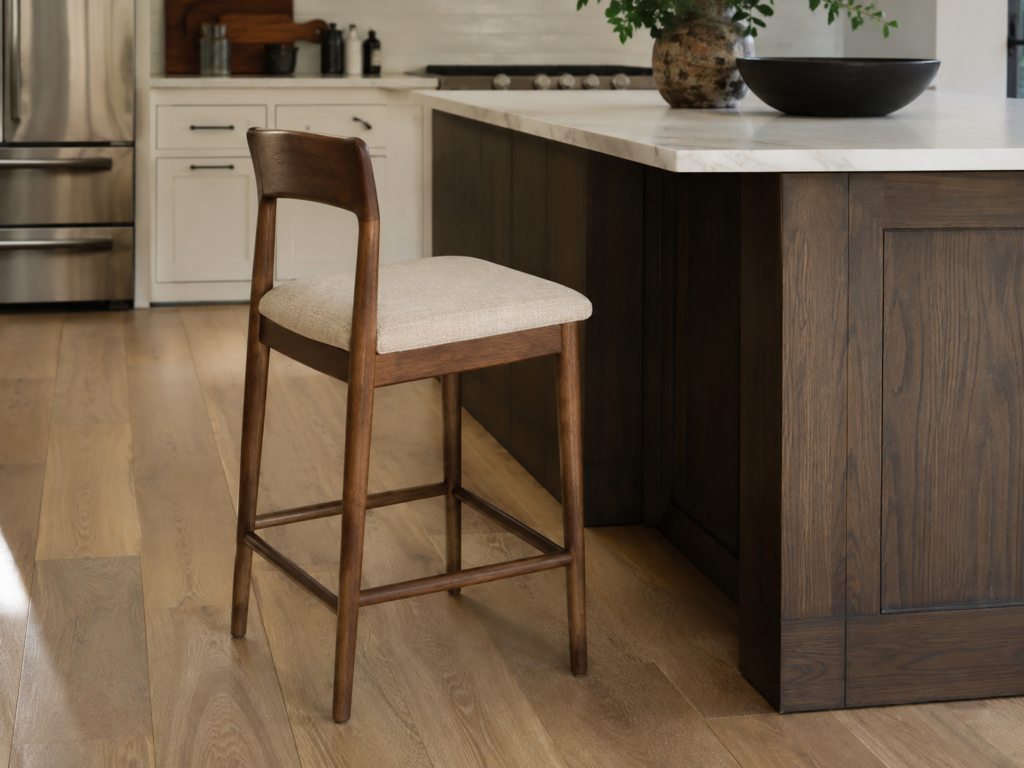
Counter stools are designed for standard-height kitchen counters and islands. They provide a comfortable seating position that works well for everyday activities such as eating, working, or socializing in the kitchen.
Unlike taller bar stools, counter stools allow users to sit closer to the countertop without feeling too elevated. This makes them one of the most common choices for modern kitchen islands and open-concept living spaces.
Why Are Counter Stools Popular for Kitchen Islands?
Counter stools are popular because they balance comfort, functionality, and style in everyday spaces.
They work well for:
- Casual meals and breakfast seating
- Working from a kitchen island
- Family conversations while cooking
- Creating additional seating without using a full dining table and chairs
Many homeowners choose counter stools because kitchen islands are often used as a multi-purpose area for dining, preparation, and daily activities. If the island is part of a larger kitchen remodel, its dimensions, seating panels, cabinetry, and finish choices can also affect the overall custom kitchen cabinet budget.
What Is a Bar Stool?
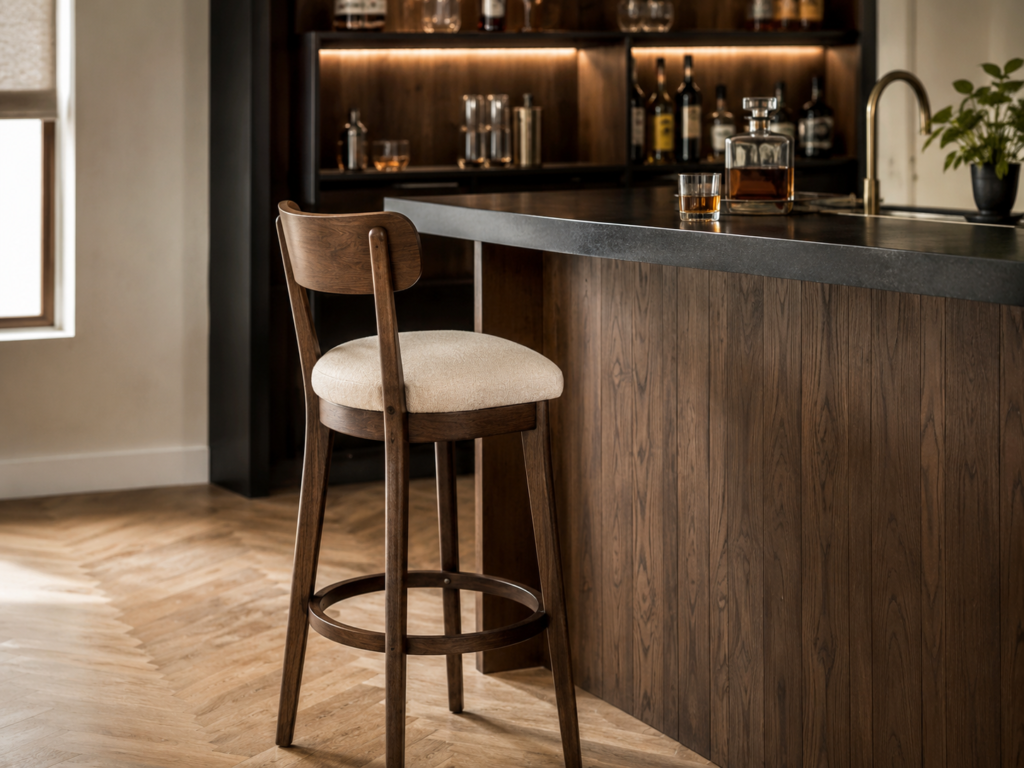
Bar stools are taller seating options designed for raised surfaces, including home bars, pub-style counters, and bar-height tables. Their increased height creates a more elevated seating experience and works well in entertainment-focused spaces.
Bar stools are often chosen when homeowners want to create a more social atmosphere or a dedicated area for drinks, conversations, or gatherings.
When Should You Choose a Bar Stool?
A bar stool is a better choice when your seating surface is higher than a standard kitchen counter.
Common uses include:
- Home bars
- Game rooms
- Entertainment areas
- High-top tables
Because bar stools sit higher, they may not be comfortable for standard kitchen counters. Always match the stool height with the surface height to ensure proper posture and legroom.
How Do You Choose the Right Stool Height?
Choosing the right stool starts with measuring your counter or bar height. A stool that is too tall or too short can make sitting uncomfortable, even if the design matches your room.
Measure Your Counter or Bar Height
If you are planning stools as part of a larger kitchen or dining layout, it also helps to measure the room for furniture so you can account for walkways, nearby cabinets, and clearance behind each seat.
As a general guideline:
- Counter-height surfaces: Pair with counter stools
- Bar-height surfaces: Pair with bar stools
Checking measurements before purchase helps avoid common mistakes, such as buying stools that look good but are difficult to use.
Consider How You Use the Seating Area
The best stool depends on your daily activities.Choose a counter stool if you mainly use the space for:
- Family meals
- Coffee or breakfast
- Laptop work
- Everyday kitchen activities
Choose a bar stool if you mainly use the space for:
- Entertaining guests
- Drinks and conversations
- Creating a dedicated bar area
Thinking about how often and why you use the seating area can help you choose a more practical option. Standard stools work well when common seat heights and widths fit your layout, while unusual island heights, limited clearance, or specific material requirements may make it worth comparing custom furniture vs. ready-made furniture.
Leave Enough Legroom and Space
Comfort also depends on the space around each stool. Even the correct height may feel uncomfortable if stools are placed too close together or there is not enough room to move.
Consider:
- Space between each stool
- Clearance behind the stool
- Room for people to sit and stand comfortably
- Whether stools can move easily in and out
If standard stool dimensions leave awkward gaps or make the seating area feel crowded, one of the practical benefits of custom furniture is the ability to adjust dimensions around the actual space rather than forcing the room to accommodate a fixed size.
What Else Should You Consider Before Buying a Stool?
Height is the most important factor, but other design and comfort features can affect how well a stool works in your space.
Choose the Right Back Support
Stools come in different back designs, from backless models to full-back chairs.
- Backless stools: Save space and create a cleaner look but offer less support.
- Low-back stools: Provide some comfort while maintaining a lightweight appearance.
- Full-back stools: Offer better support for longer sitting periods.
If your kitchen island is used for meals or work, a stool with back support may provide better long-term comfort. For spaces that require a specific seat height, width, back design, upholstery, or finish, custom furniture also gives you more control over how the seating fits the room.
Check Stool Spacing
The number of stools you can fit depends on the length of your counter or island and the width of each seat.
Allow enough space between stools so people can sit comfortably without feeling crowded. Wider stools, stools with arms, and swivel designs usually require more space than simple backless options.
Consider Materials and Maintenance
The right material depends on your lifestyle and how often the stools are used.
- Wood stools: Add warmth and suit traditional or natural interiors.
- Metal stools: Offer a modern look and are often easy to maintain.
- Upholstered stools: Provide extra comfort but may require more cleaning.
For kitchens, choose materials that can handle frequent use, spills, and daily cleaning.
FAQ
Can You Use Bar Stools at a Kitchen Counter?
Bar stools are usually too tall for standard kitchen counters. They are designed for higher surfaces and may create an uncomfortable seating position when paired with regular countertops.
How Much Space Should Be Between Counter Stools?
Most counter stools need around 24 inches of space per seat to allow comfortable sitting and movement. Larger stools or stools with arms may require additional space.
Are Counter Stools More Comfortable Than Bar Stools?
Counter stools are often more comfortable for everyday kitchen use because their height matches standard counters. However, comfort also depends on seat design, back support, and cushioning.
Do Counter Stools Come in Different Heights?
Yes. While most counter stools are designed for standard counter heights, some variations are available for different surfaces and design preferences.
How Many Stools Fit Around a Kitchen Island?
The number of stools depends on the island length and stool width. Most kitchen islands can fit one stool for approximately every 24 inches of available counter space.
Conclusion
Choosing between a counter stool and a bar stool comes down to matching the stool height with your surface height and considering how you plan to use the space. Counter stools are usually the better choice for kitchen islands and everyday seating, while bar stools work best for higher surfaces and entertainment areas.
By measuring your space, considering comfort features, and selecting a style that fits your room, you can create a seating area that is both functional and visually balanced.