
Custom kitchen cabinets commonly cost about $500 to $1,200+ per linear foot installed in the United States. A complete cabinet package may range from roughly $15,000 to $50,000+, but kitchen size alone does not determine the final price. Cabinet quantity, construction, finish, hardware, installation and local labor conditions all matter.
Use these figures to test whether a custom kitchen is financially realistic—not as a substitute for a project quote. This guide explains what changes the price, what should appear in a quote and how to reduce cost without creating expensive corrections later.

How Much Do Custom Kitchen Cabinets Cost?
For early budgeting, most homeowners need two numbers: the estimated price of the cabinets and the complete installed cost. Confirm what the published range includes before using it. Some estimates cover the cabinet package only, while others include delivery and installation.
| Cabinet category | Typical installed cost per linear foot | What the category usually means |
|---|---|---|
| Stock cabinets | $100–$400 | Fixed sizes, limited finishes and standard configurations |
| Semi-custom cabinets | $150–$700 | More sizes, finishes and selected modifications |
| Custom cabinets | $500–$1,200+ | Made for the room, appliance plan, storage needs and finish specification |
These are broad U.S. planning ranges, not Avrelahome prices. Regional labor rates and project scope can move a quote below or above them. The current ranges are consistent with the 2026 cabinet-cost data published by HomeAdvisor.
What does “per linear foot” mean?
A linear foot measures the horizontal length of a cabinet run. It is useful for an early feasibility check, but suppliers do not always count it the same way. One estimate may combine base and wall cabinets; another may cover only base cabinets. Islands, tall pantry units, appliance towers and decorative panels may be separate.
Once the layout is available, replace the linear-foot allowance with a cabinet-by-cabinet quote. Twelve feet of door cabinets will not cost the same as twelve feet containing drawer banks, an appliance garage and a tall oven unit.
Define What the Cabinet Budget Includes
Cabinet cost is not the same as the cost of a complete kitchen renovation. A cabinet quote may include boxes, doors, drawers, shelves and standard hardware while excluding countertops, appliances, demolition, plumbing, electrical work, flooring, backsplash and painting.
Delivery and installation also need clear definitions. Check whether the price includes unloading, carrying the cabinets into the home, installation, fillers, trim, handle fitting, adjustments, cleanup and final punch-list work.
For a broader comparison outside the kitchen, see the assumptions used in our custom furniture cost guide.
What Factors Affect Custom Kitchen Cabinet Cost?
Kitchen size and cabinet quantity
More cabinets require more material, hardware, finishing and installation time. Count base, wall and tall cabinets separately. Treat the island as its own assembly, including finished backs, seating panels and service access.
A smaller kitchen is not automatically inexpensive. A compact layout containing several drawer stacks, a difficult corner, integrated appliances and custom panels can cost more per foot than a larger run of simple door cabinets.
Cabinet box construction
Box material, thickness, back construction, shelf specification, edge treatment and interior finish all affect price. Plywood, furniture board, MDF and moisture-resistant panels can each be appropriate when the grade and intended use are clearly specified.
Ask for the complete construction specification instead of relying on one material name. Frameless, face-frame and inset construction also require different manufacturing and installation tolerances.
Doors, drawer fronts and finishes
Slab doors generally require fewer operations than detailed frame-and-panel fronts, curved pieces, fluted surfaces or matched veneer. High-gloss finishes, specialty paint, natural wood matching and hand-applied details can add sampling and finishing work.
Natural wood varies in grain and color. Approve a representative range instead of expecting every door to look identical. For painted cabinetry, record the color reference, sheen and approved sample.
Drawers, hardware and accessories
A drawer bank often costs more than a two-door cabinet of the same width because it requires additional fronts, drawer boxes, slides and assembly. Hinges, full-extension slides, handles and soft-close systems should be identified by brand or performance level when comparing quotes.
Pullout pantries, corner systems, appliance garages, waste sorting, lift mechanisms, lighting channels and custom dividers add convenience, but they should be assigned to named cabinets. A general accessory allowance does not show what will actually arrive.
What Should Be Included in a Custom Cabinet Quote?
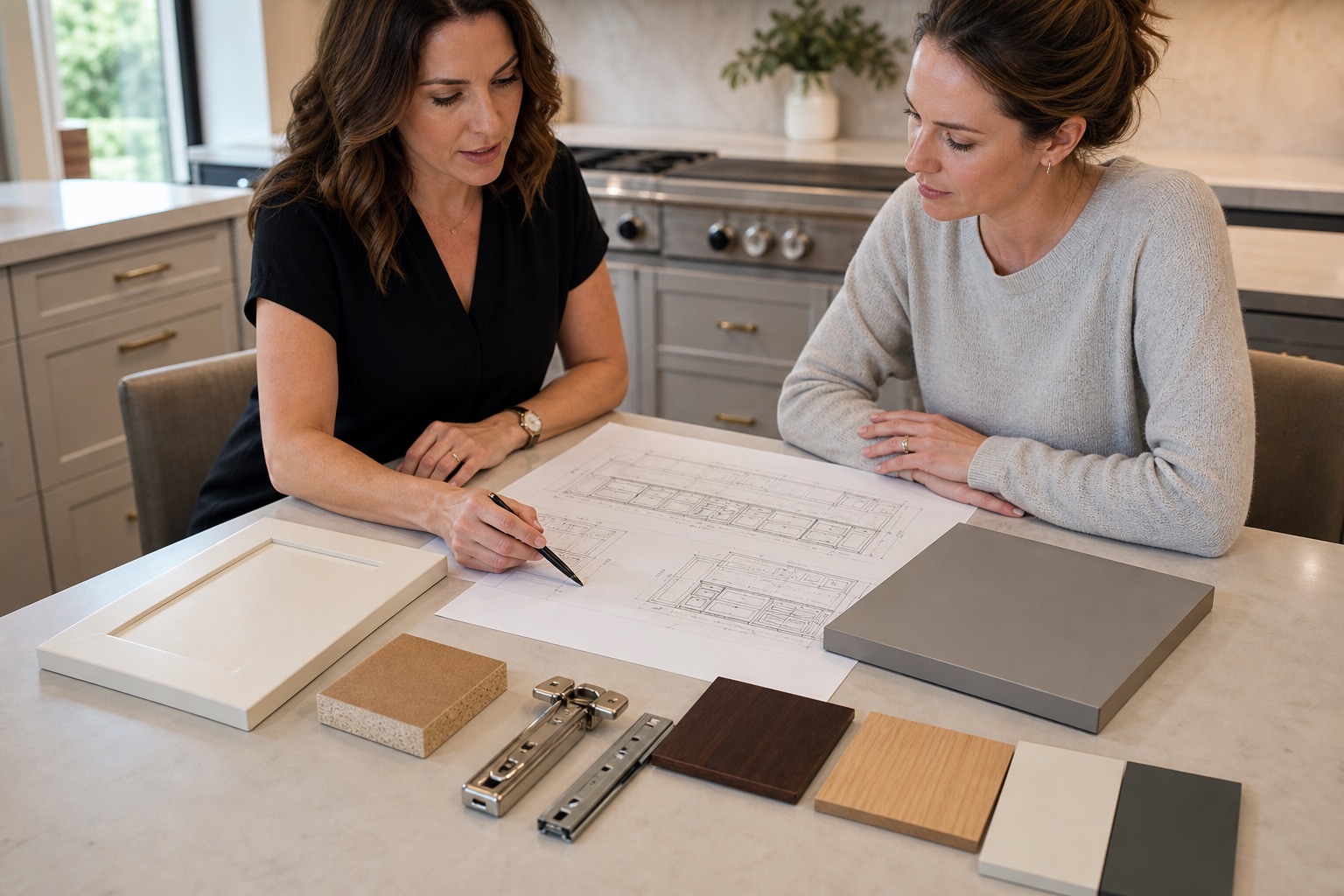
A useful quote should show enough detail for you to compare the same scope across suppliers. If one price includes appliance panels and installation while another excludes both, the totals are not directly comparable.
| Quote item | What to look for | Possible exclusions or upgrades |
|---|---|---|
| Design and drawings | Measurements, layout, elevations and production drawings | Additional revisions, renderings or site measurement |
| Cabinet construction | Boxes, doors, drawers, shelves, visible panels and trim | Special sizes, curved work or upgraded materials |
| Hardware and accessories | Hinges, slides, handles and named organizers | Premium mechanisms, lighting and specialty storage |
| Finish | Material, color, sheen, sample and exposed surfaces | Matched veneer, specialty paint or hand finishing |
| Delivery | Packing, freight, unloading and room delivery | Storage, difficult access and final-mile charges |
| Installation | Cabinet setting, fillers, trim, hardware and adjustments | Demolition, wall repair, plumbing and electrical work |
Anything shown in a rendering but missing from the written scope should be clarified before approval. The custom kitchen cabinet page can help you organize the cabinet types and functional elements that belong in the request.
Custom vs. Semi-Custom vs. Stock Cabinets
| Decision | Custom | Semi-custom | Stock |
|---|---|---|---|
| Dimensions | Developed for the room and appliances | Standard system with selected modifications | Fixed sizes |
| Finish options | Project-specific specification | Manufacturer’s available range | Limited range |
| Storage flexibility | Interior planned by cabinet and user need | Selected accessories and configurations | Standard interiors |
| Best fit | Unusual layouts, integrated appliances and specific design requirements | Standard rooms needing additional choice | Conventional layouts and cost-led projects |
Choose custom cabinets when unusual dimensions, appliance integration, ceiling conditions, storage requirements or finish continuity justify the additional design and coordination. Semi-custom can be effective when the room fits the manufacturer’s system. Stock cabinetry is most appropriate when standard sizes work and minimizing product cost is the main priority.
How Installation and Site Conditions Change the Price
Installation cost depends on cabinet quantity, ceiling height, trim complexity, appliance panels, site access and the condition of the room. Floors and walls that are out of level or plumb require shimming, scribing, fillers and adjustment. Demolition, disposal and wall repairs may be separate.
Confirm who takes the final measurements and who carries responsibility if the site differs from the approved drawings. Even a small appliance-opening or ceiling-height error can require expensive field changes after delivery.
For imported cabinetry, compare the landed and installed cost:
Factory cabinet cost + packing and international logistics + local delivery and installation
Freight, duties, tariffs, brokerage and destination charges can change. Obtain current written estimates instead of applying an old percentage to the factory price.
How Can You Reduce Custom Kitchen Cabinet Costs?
Keep the existing layout when it works
Moving plumbing, electrical points, windows or major walls can add costs outside the cabinet package. Retaining a functional layout allows more of the budget to remain focused on cabinetry and storage.
Standardize hidden cabinet dimensions
Use special widths and shapes where they solve a real fit problem. Repeating practical cabinet sizes in less visible areas can reduce drawing, production and installation complexity.
Prioritize daily-use hardware
Reliable hinges, drawer slides and durable work surfaces usually provide more value than filling every cabinet with a specialty mechanism. Add organizers where the stored items and user reach genuinely justify them.
Limit finish complexity
A controlled material palette can reduce sampling and finishing work. Matched grain, multiple specialty colors, curved panels and hand-applied details should be concentrated where they materially change the design.
Lock critical decisions before production
Finalize appliance models, door swings, plumbing points, outlets, ventilation, lighting and finish samples before releasing the cabinets. Preventing a production change is often more valuable than downgrading a material later.
How to Compare Custom Cabinet Suppliers
A low opening price does not automatically represent better value. Give each supplier the same room dimensions, cabinet list, appliance models, material direction, hardware requirements, delivery location and installation scope.
Compare:
- Cabinet and door construction
- Materials, thicknesses and visible finishes
- Hardware brands or performance levels
- Included panels, fillers, trim and accessories
- Sample and drawing approval stages
- Packing, delivery and installation responsibilities
- Change pricing, payment milestones and exclusions
The questions in our pre-order checklist also help expose differences that a total price alone cannot show.
Frequently Asked Questions
How much do custom kitchen cabinets cost per linear foot?
Custom kitchen cabinets commonly cost about $500 to $1,200+ per linear foot installed in the United States. The range varies with construction, finish, cabinet mix, accessories, location and installation scope.
Does a linear-foot price include upper and lower cabinets?
Not always. Some suppliers combine a basic base-and-wall configuration, while others price only one cabinet category. Ask for the counting method and an itemized cabinet schedule.
Is installation included in custom cabinet pricing?
Only when the proposal says so. Confirm unloading, room delivery, fastening, fillers, trim, handles, adjustments, cleanup and punch-list work instead of assuming “installation” includes every task.
Are countertops and appliances included?
Usually not. They should be treated as separate scope unless the written quote lists them. Plumbing, electrical work, backsplash, flooring and demolition are also commonly separate.
Are custom cabinets more expensive than semi-custom cabinets?
Usually, because they add project-specific dimensions, finishes, engineering and production coordination. However, the gap can narrow when a semi-custom order requires many modifications, fillers and upgraded accessories.
Are custom kitchen cabinets worth the cost?
They can be when the room has unusual dimensions, integrated appliances, specific storage requirements or a finish that standard cabinet systems cannot provide. In a conventional layout with modest design requirements, semi-custom may offer better value.
Can imported custom cabinets cost less?
They can, but factory price is only one part of the comparison. Add packing, freight, insurance, duties or tariffs, brokerage, local delivery and installation before comparing with a domestic installed quote.
What should I approve before cabinet production?
Approve the cabinet schedule, dimensioned drawings, appliance models, box and door construction, materials, finish samples, visible panels, trim, hardware, accessories, packing, delivery scope and installation responsibility.
Plan the Cabinet Package You Will Actually Buy
A national price range can tell you whether custom cabinetry belongs in the budget. It cannot tell you whether a supplier’s quote is complete. Build the comparison around the cabinet schedule, construction, finish, hardware, delivery, installation and exclusions.
You can begin with the information already available: a floor plan, approximate dimensions, appliance ideas, inspiration images, budget level and project location. For a broader kitchen scope, review Avrelahome’s custom kitchen planning service or send your project details.