
A king bed offers one of the largest sleeping spaces available for a bedroom, but choosing the right size is not as simple as picking the biggest option. A mattress that feels spacious in a showroom may leave your bedroom feeling crowded if you do not consider the bed frame, walking space, and bedroom furniture layout.
A standard king bed measures 76 inches wide by 80 inches long, making it a popular choice for couples who want more personal space or families who share the bed with children or pets. This guide explains king bed dimensions, required room size, comparisons with other bed sizes, and key factors to consider before buying to help you decide whether a king bed is the right fit for your home.
What Is the Standard King Bed Size?
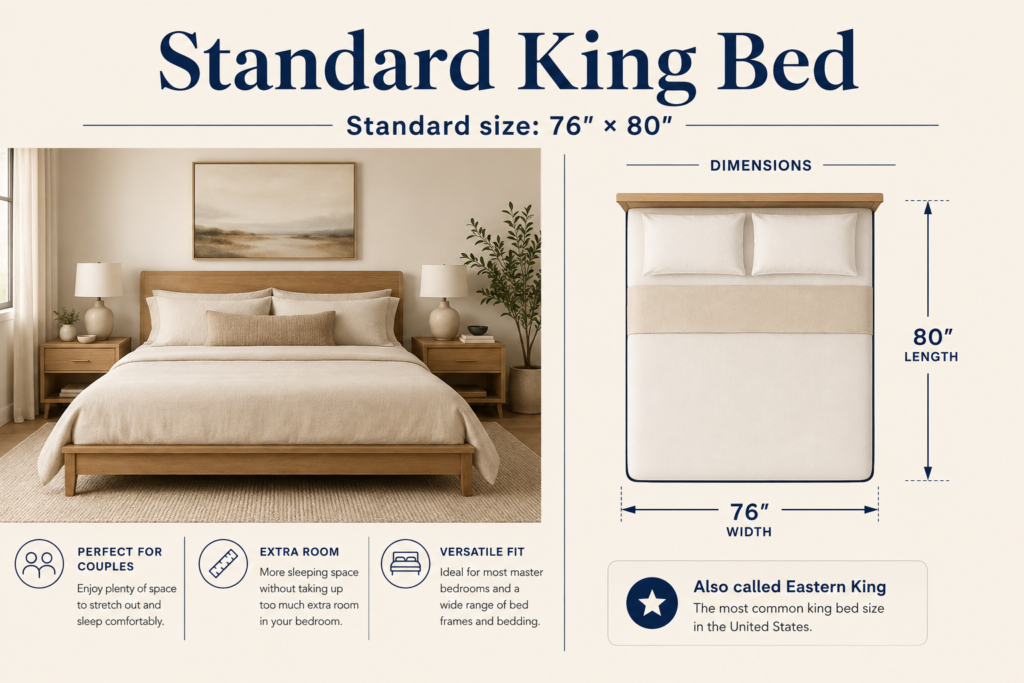
A standard king bed, also known as an Eastern king, measures 76 inches wide × 80 inches long (about 6.3 ft × 6.7 ft). It is the widest standard mattress size available in the U.S., providing more sleeping space for couples compared with smaller options like queen beds.、
However, the right bed size depends on your bedroom layout, available floor space, and sleeping preferences. A king bed offers extra width, while a California king provides additional length for taller sleepers.
| Bed Size | Dimensions (W × L) | Best For |
| King | 76″ × 80″ | Couples who want maximum sleeping space and larger bedrooms |
| California King | 72″ × 84″ | Taller sleepers who need extra legroom |
| Queen | 60″ × 80″ | Couples or smaller bedrooms with limited space |
When comparing these sizes, a king bed is 16 inches wider than a queen bed, giving each person more personal sleeping space. A California king is 4 inches narrower but 4 inches longer than a standard king, making it a better choice for people who prioritize length over width.
How Much Space Does a King Bed Need?
A king bed requires more than just enough room for the mattress itself. You also need to consider the bed frame size, walking space around the bed, nightstands, dressers, and other bedroom furniture. Planning the layout before buying helps ensure the room remains comfortable and functional while creating a cohesive whole house customization plan.
King Mattress Size vs Bed Frame Size
A standard king mattress measures 76 inches wide × 80 inches long, but the total space required is usually larger once the bed frame, headboard, and additional features are included.
Most king bed frames add several inches to each side, depending on the design. For example, upholstered beds, storage beds, and beds with large headboards or footboards may require more floor space than a simple metal frame.
Before purchasing a king bed, measure:
- The available bedroom floor space
- Doorways and hallways for delivery
- Space needed for nightstands and other furniture
- Walking clearance around the bed
What Bedroom Size Fits a King Bed?
A king bed generally works best in bedrooms that are at least 12 × 12 feet, while larger rooms around 14 × 14 feet or more provide more flexibility for additional furniture, storage solutions, and bedroom design ideas.
| Bedroom Size | King Bed Fit |
| 10 × 10 ft | Usually too tight, with limited walking space |
| 12 × 12 ft | Fits a king bed with a basic layout |
| 12 × 14 ft | More comfortable with nightstands and storage furniture |
| 14 × 14 ft+ | Ideal for spacious layouts and additional furniture |
For smaller bedrooms, a king bed may make the space feel crowded by limiting storage options and movement. A queen bed may be a better choice if you need more room for furniture or prefer a more open layout.
King Bed vs Queen Bed: Which Is Better
Choosing between a king and queen bed mainly depends on your bedroom size, sleeping habits, and how much personal space you need. A king bed provides significantly more width, while a queen bed is easier to fit into smaller rooms and usually costs less.
| Feature | King Bed | Queen Bed |
| Size | 76″ × 80″ | 60″ × 80″ |
| Sleeping Space | More room for couples, children, or pets | Comfortable for couples but with less personal space |
| Bedroom Requirement | Best for medium to large bedrooms | Works well in smaller bedrooms |
| Cost | Higher mattress, frame, and bedding costs | More affordable overall |
| Best For | Couples who want maximum comfort and space | Guest rooms, apartments, and smaller bedrooms |
Choose a King Bed If You:
- Want more personal sleeping space with a partner
- Share the bed with children or pets
- Have a larger bedroom with enough room for furniture
- Prefer a more spacious and comfortable sleeping experience
Choose a Queen Bed If You:
- Have limited bedroom space
- Want more flexibility for furniture placement
- Need a more budget-friendly mattress and bedding option
- Prefer a bed that is easier to move and rearrange
For couples with enough bedroom space, a king bed provides a more comfortable sleeping area. However, a queen bed may be the better choice for smaller rooms or homeowners who want to balance sleeping space with overall room functionality.
King Bed vs California King: What Is the Difference?
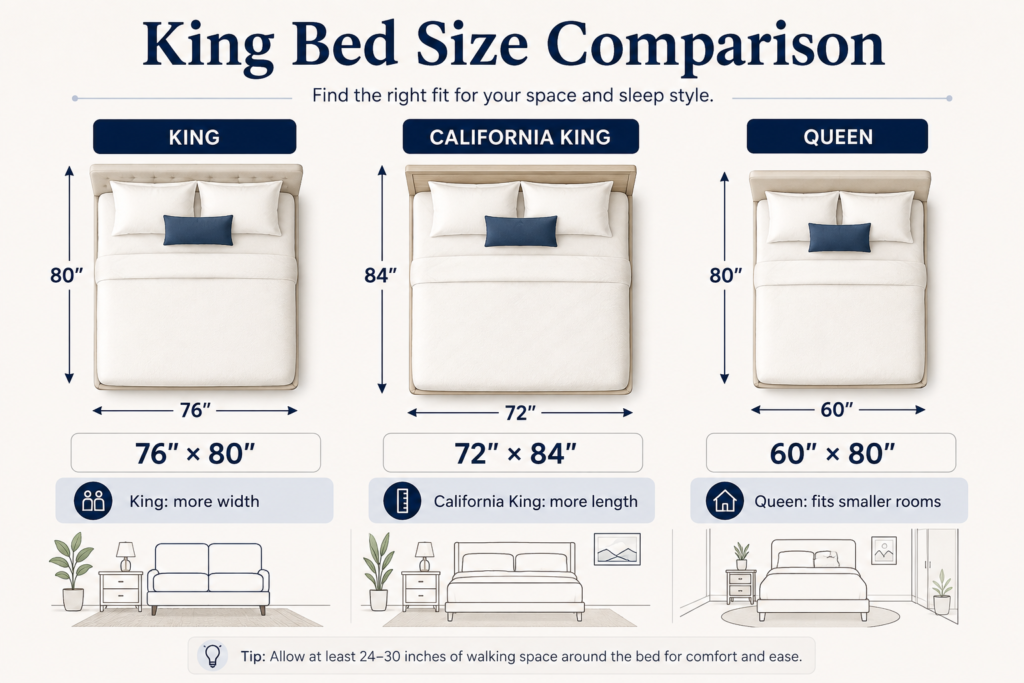
King and California king beds are both designed for people who want more sleeping space, but they offer different benefits. A standard king bed is wider, while a California king is longer, making the better choice depending on whether you need extra width or additional legroom.
| Feature | King Bed | California King |
| Dimensions | 76″ × 80″ | 72″ × 84″ |
| Width Difference | 4 inches wider | 4 inches narrower |
| Length Difference | 4 inches shorter | 4 inches longer |
| Best For | Couples who want more side-to-side space | Taller sleepers who need extra length |
| Room Layout | Works well in wider bedrooms | Better for longer, narrower rooms |
Choose a King Bed If You:
- Prefer more space to move from side to side
- Share the bed with a partner, children, or pets
- Want more options for mattresses, frames, and bedding
- Have a wider bedroom layout
Choose a California King If You:
- Are taller and need extra legroom
- Have a long, narrow bedroom
- Prefer a longer sleeping surface
- Want a bed that fits better along a specific wall layout
The main difference comes down to width versus length. A king bed provides more overall sleeping width, while a California king offers additional length for taller sleepers. Before choosing either option, measure your bedroom dimensions and consider the placement of other furniture to ensure the bed fits comfortably.
What Are the Pros and Cons of a King Bed?
A king bed offers one of the largest standard sleeping surfaces, making it a popular choice for couples who want more comfort and space. However, its larger size also comes with higher costs and greater space requirements. Understanding the advantages and drawbacks can help you decide whether a king bed fits your lifestyle and bedroom layout.
Benefits of a King Bed
A king bed provides extra width compared with smaller mattress sizes, giving each sleeper more personal space and reducing disturbances caused by movement during sleep.
Key benefits include:
- More sleeping space: A king bed gives couples more room to spread out and can comfortably accommodate children or pets.
- Better sleep comfort: Extra width can help reduce partner disturbance, especially for couples with different sleeping habits.
- Ideal for larger bedrooms: A king bed can create a balanced look in spacious master bedrooms.
- More flexibility for sleeping positions: The additional surface area allows sleepers to move more freely throughout the night.
Potential Drawbacks of a King Bed
While a king bed provides more comfort, its larger size may not suit every bedroom or budget.
Potential drawbacks include:
- Requires more bedroom space: A king bed can make smaller rooms feel crowded and leave less space for other furniture.
- Higher overall cost: King mattresses, bed frames, sheets, and bedding accessories are usually more expensive than smaller sizes.
- Harder to move: The larger mattress and frame can be more difficult to transport, especially through narrow doorways or staircases.
- More maintenance effort: Making the bed, rotating the mattress, and changing bedding may require more time due to the larger surface area.
A king bed is a great choice for homeowners who prioritize comfort and have enough space, but it may not be the best option for smaller bedrooms or those looking for a more budget-friendly setup.
What Should You Consider Before Buying a King Bed?
A king bed can significantly improve sleeping comfort, but its larger size also affects your budget, bedroom layout, and installation process. Before purchasing, consider not only the mattress dimensions but also the available space and whether your home can accommodate the bed properly.
Room Access and Installation
A king bed may fit your bedroom but still be difficult to move into your home. The mattress, bed frame, and headboard can be large and heavy, creating challenges when moving through doorways, hallways, stairs, or elevators.
Before purchasing, measure:
- Bedroom doors and entryways
- Hallway width and corners
- Staircases or elevator access
- The space needed for assembly inside the room
This is especially important for oversized headboards, upholstered frames, and storage beds, which may come in larger pieces. Planning ahead can help avoid delivery issues or unexpected installation problems.
Bed Frame Compatibility
Not every bed frame is designed to support a king mattress. A proper king bed frame should match the mattress dimensions and provide enough support to prevent sagging or uneven wear.
Before buying a frame, consider:
- Frame size: Make sure it fits a 76″ × 80″ king mattress with enough structural support.
- Support system: Look for strong center supports and durable slats or foundations.
- Room layout: A larger frame, especially with a headboard or footboard, may require more floor space than expected.
If you already own a king mattress, check the frame compatibility before replacing or upgrading your bed setup. Choosing the right frame helps protect your mattress investment and ensures long-term comfort.
FAQ
What Is the Difference Between a King Bed and an Eastern King?
A standard king bed is also called an Eastern king. These terms refer to the same mattress size: 76 inches wide by 80 inches long. The name “Eastern king” is mainly used to distinguish it from a California king.
Are King Size Mattresses Hard to Move?
King size mattresses can be more challenging to move because of their larger surface area and weight. Planning the moving route, using proper lifting techniques, and choosing a flexible mattress design can make transportation easier.
How Often Should You Replace a King Mattress?
A king mattress typically needs replacement after around 7–10 years, depending on the mattress material, usage, and maintenance. Signs such as sagging, reduced support, or discomfort may indicate that it is time for a new one.
Can You Use Two Twin Mattresses on a King Bed Frame?
Yes, two twin XL mattresses can be combined to create the same dimensions as a standard king bed. This setup can be useful for couples who prefer different mattress firmness levels or adjustable bases.
Do King Beds Work Well for Couples With Different Sleep Preferences?
Yes, a king bed can be a good choice for couples with different sleep habits because the larger surface area reduces movement disturbance. Some couples also choose split king setups to customize mattress firmness or adjust each side independently.
What Is the Best Mattress Type for a King Bed?
The best mattress type depends on personal comfort preferences, sleeping position, and support needs. Memory foam, hybrid, and innerspring mattresses can all work well in king sizes, but factors such as firmness, temperature control, and edge support should be considered.