
A straightforward custom furniture order may take roughly 8–14 weeks from a complete brief to delivery, while built-ins, kitchens, closets, and multiroom packages may require 12–24 weeks or longer. These are early planning ranges—not promises—because approvals, materials, freight, site readiness, and installation can change the total schedule.
The number that matters is not factory production time alone. A useful timeline begins with reliable information and ends when the furniture is delivered, installed, adjusted, and ready to use.
Custom Furniture Lead Time at a Glance

Ask the supplier to replace general ranges with project-specific milestones before ordering.
| Stage | Early planning range | Buyer decision or input | Main schedule risk |
|---|---|---|---|
| Brief, measurements, and initial estimate | 1–3 weeks | Scope, budget, site information | Incomplete or changing information |
| Drawings, revisions, finishes, and samples | 2–6 weeks | Consolidated written approval | Slow decisions or repeated revisions |
| Production | 4–12 weeks | No unapproved changes | Material availability and complexity |
| Inspection, corrections, and packing | 1–2 weeks | Inspection acceptance | Late findings or incomplete parts |
| Transportation and final delivery | Days to weeks locally; usually longer internationally | Receiving plan | Freight, customs, access, appointments |
| Installation and closeout | One day to several weeks | Ready site and access | Trade conflicts or corrective work |
Some stages can overlap, but not all should. A factory should not cut fitted cabinetry before final dimensions are stable, and a custom finish should not be applied throughout an order before its representative sample is approved.
When Does the Lead-Time Clock Start?
It depends on the supplier’s written terms. One company may count from the deposit; another may start only after final drawings, dimensions, materials, finishes, hardware, and quantities have been approved.
Define four points before ordering:
What event starts the quoted lead time?
Which stages are included?
Which buyer decisions or site changes pause the schedule?
Does “completion” mean factory-ready, shipped, delivered, or fully installed?
A milestone schedule protects the project better than a statement such as “about ten weeks.”
The Custom Furniture Timeline, Stage by Stage
1. Project Brief and Preliminary Estimate
The supplier first needs the furniture scope, approximate dimensions, destination, style direction, budget level, and target installation date. A floor plan, room list, site photos, and inspiration images are usually enough to begin an initial review.
For U.S. projects, the delivery context matters early. A large piece may fit its intended wall but fail at an elevator, stair landing, gated entrance, or narrow hallway. HOA delivery hours, legal truck access, receiving facilities, and the distance from unloading point to room can also affect the plan.
A price based on approximate measurements is useful for budgeting, but it should remain preliminary until the dimensions and specifications are stable.
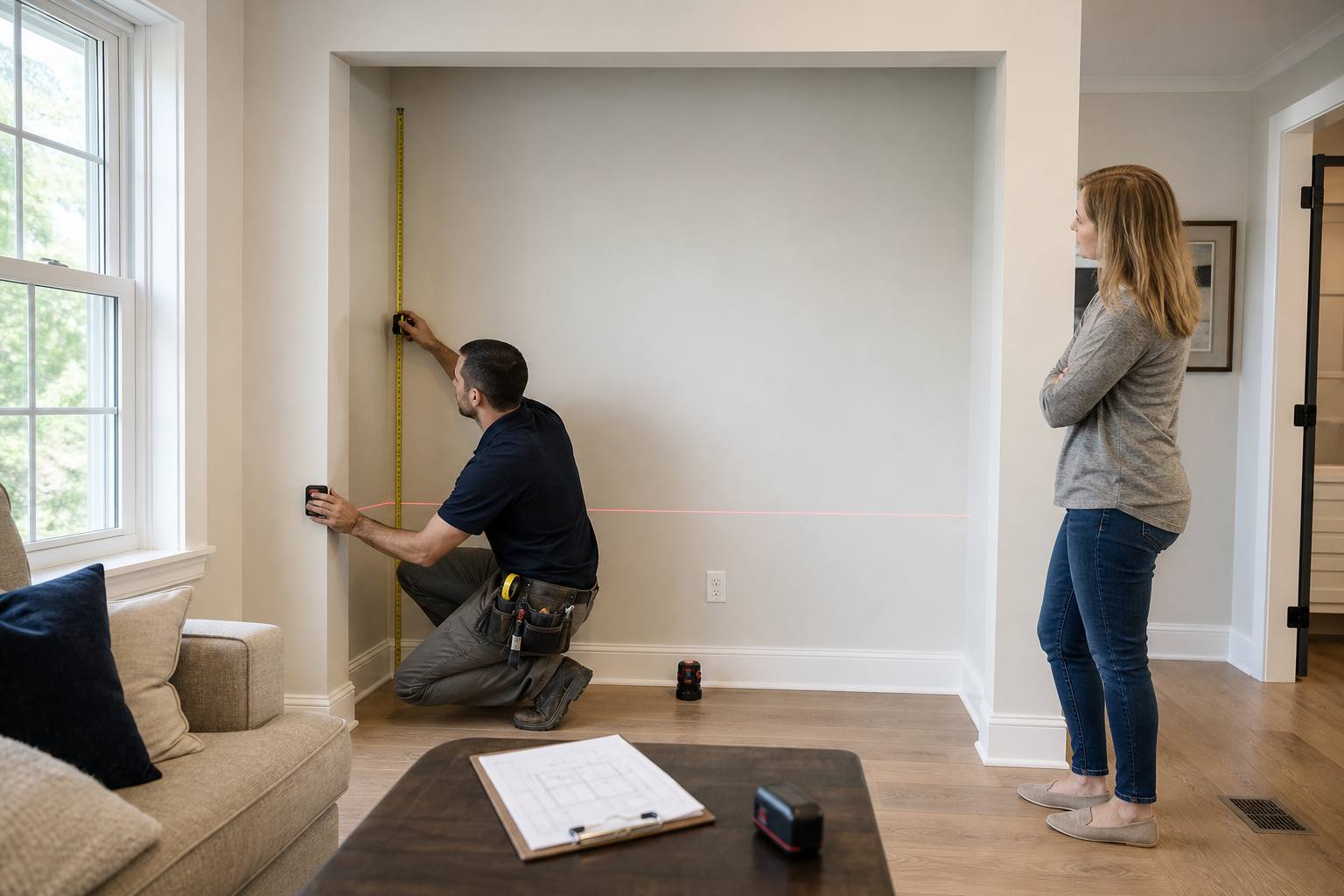
2. Final Measurements, Shop Drawings, and Samples
Built-ins depend on the finished conditions they must fit. Flooring, drywall, tile, trim, countertops, appliance locations, plumbing, and electrical work can all change the usable opening.
A 3D rendering communicates the intended appearance. A shop drawing shows how the factory will build, dimension, and assemble the product. Before approval, review dimensions, door swings, drawer clearance, fillers, toe kicks, ventilation, access panels, outlets, and relationships to adjacent finishes.
For kitchens and appliance cabinetry, approve the exact appliance models—not only nominal widths. Manufacturer-required hinge, ventilation, water, electrical, and service clearances may change the cabinet design.
Physical samples are important when a screen cannot reliably communicate veneer variation, paint color, fabric texture, leather, stone, or metal finish. Record what each approval covers so the final expectation is not based on an unlabeled photo.
3. Production and Pre-Packing Inspection
Production time depends on construction and supply. Straight panel cabinetry made with established materials is generally easier to schedule than curved millwork, complex solid-wood work, hand-applied finishes, custom upholstery, or products combining stone, glass, metal, and lighting.
Late revisions are expensive at this stage. Moving a shelf in a drawing is simple; moving it after panels have been cut and drilled may require replacement components.
Inspection should happen before protective packing. For a remote project, useful evidence may include overall views, key measurements, finish consistency, hardware identification, door and drawer operation, quantities, and a component list. The inspection plan should leave time for corrections before freight is booked.
4. Packing, Freight, and Final-Mile Delivery
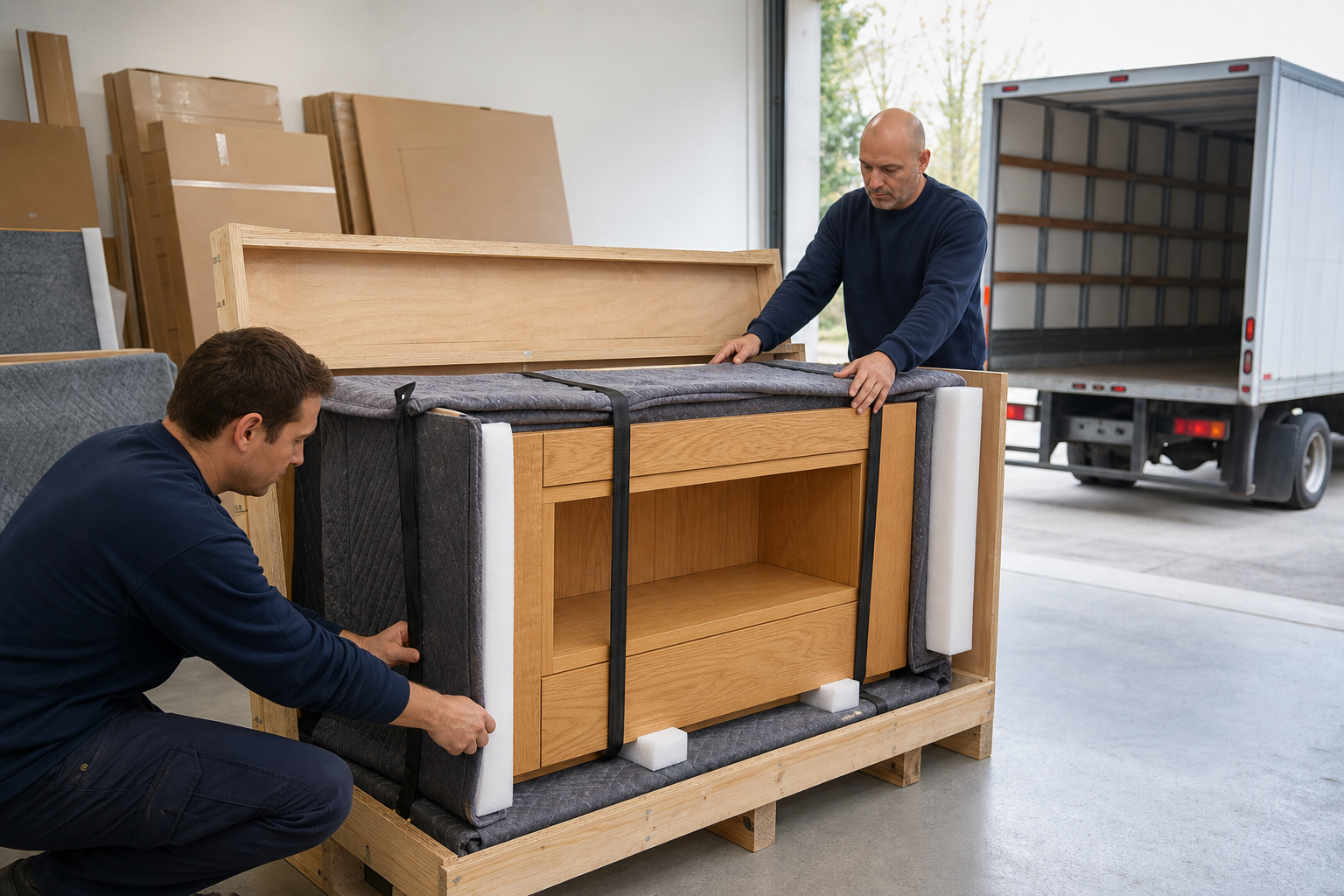
Packing should match the product and the journey. Finished panels, glass, stone, upholstery, freestanding furniture, and preassembled cabinets do not need the same protection. Multiroom orders should be labeled by room, floor, or installation sequence and reconciled with the packing list.
International delivery includes more than the ocean crossing. Export handling, freight booking, customs clearance, port or warehouse handling, inland transportation, delivery appointments, and jobsite unloading all affect the date.
Treat international transportation as a planning window, not a guaranteed day. If a move-in, hotel opening, or photography date cannot change, preserve contingency before the shipment leaves—not only after a delay occurs.
5. Installation and Closeout
Delivery is not project completion. Before installation, confirm that the site is dry, secure, accessible, and clear of conflicting trades. Identify who will receive and count the shipment, move products to the correct rooms, assemble and anchor furniture, connect lighting, protect floors, dispose of packaging, and complete wall or trim touch-ups.
Local electrical, plumbing, stone, and code-related work may fall outside a furniture installer’s scope. These handoffs should be assigned before the products arrive.
The schedule should also allow for adjustment, punch-list review, and replacement of any missing or damaged component.
How Project Type Changes the Schedule
One Freestanding Piece
A table, bed, dresser, or console with confirmed dimensions and familiar materials usually has the simplest approval path. Custom upholstery, stone, unusual finishes, or difficult access may still extend it. If timing is the overriding priority and a standard size fits, ready-made furniture may be the better decision.
A Single Wall of Built-Ins
A media wall, bookcase, or window seat needs dependable field measurements and an installation plan. Outlets, baseboards, vents, TV brackets, and uneven walls can create more coordination than the project’s physical size suggests.
A Kitchen, Closet, or Multiroom Cabinet Package
These packages contain dependent dimensions. One appliance change can affect several cabinets, countertops, service points, and fillers. Multiroom orders also require a receiving and staging plan so boxes do not occupy the rooms installers need to work in.
A Whole-Home or Hospitality Package
Large projects may need prototypes or a model room, repeated room types, phased approvals, batch inspections, multiple shipments, and installation sequencing. Use separate milestones for each phase; one final completion date cannot show which approval threatens the program.
What Most Often Delays Custom Furniture?
The most common delays begin before or outside production:
- Missing dimensions or changing finished surfaces
- Conflicting feedback from several decision-makers
- Revisions after shop-drawing approval
- Unavailable materials, hardware, or fabrics
- Samples approved too late
- Freight treated as a fixed number
- An unfinished, occupied, blocked, or unsafe installation site
- Unchecked delivery access or loading restrictions
A missing appliance specification may seem minor during design, but it can stop cabinet engineering or cause expensive rework later.
How to Shorten the Timeline Safely
The safest acceleration happens before fabrication:
Start with a clear product and room list.
Provide current plans, photos, approximate dimensions, destination, budget level, and target installation date.
Identify one authorized person to consolidate feedback.
Separate “must-have” specifications from acceptable alternatives.
Choose materials and hardware with dependable availability.
Review appearance, function, dimensions, and quantity together.
Reserve time for a representative sample and pre-packing inspection.
Skipping final measurement, sample approval, or inspection does not remove the risk; it moves the risk to the point where correction costs more. Paid expediting is credible only when specifications are locked and production, freight, receiving, and installation can all move earlier.
Contract and Risk Checks Before You Order
Your proposal or contract should state:
- The event that starts lead time
- Drawing and sample issue dates
- Buyer response deadlines
- Revision limits and change-order rules
- Production and inspection milestones
- Packing and shipping responsibilities
- The point at which transportation risk transfers
- Site-readiness and installation responsibilities
- The process for damage, shortages, and replacement parts
Also define what is excluded. Removal of existing cabinets, wall repair, plumbing, electrical work, permits, appliance installation, floor protection, and paint touch-ups should not be assumed.
Build a Practical Timeline With Avrelahome
You can begin with the information already available: a floor plan, room list, inspiration images, approximate dimensions, destination, budget level, and target date.
Avrelahome can review the proposed scope and identify the drawings, samples, production stages, delivery considerations, and local installation handoffs that should be scheduled. Project-specific lead times and responsibilities should be confirmed in the written proposal before ordering.
Frequently Asked Questions
Can custom furniture be completed in four weeks?
Occasionally, a simple local piece made from available materials may fit that schedule. It is not a safe general expectation once design, approvals, delivery, and installation are included. Ask what the four weeks covers and what must be approved before it begins.
Does lead time start when I pay the deposit?
Not necessarily. Many suppliers start the production clock only after drawings, dimensions, finishes, hardware, and quantities are approved. The written order should define the start condition.
Can design continue before final site measurements?
Yes. Preliminary dimensions can support layout, budgeting, and material decisions. Fitted products should not be released for production until the relevant final conditions and dimensions are stable.
How much contingency should I add?
There is no universal percentage or number of weeks. Base the allowance on project complexity, material risk, transport distance, customs exposure, installation capacity, and how costly it would be to miss the target date.
What happens if parts are missing or damaged?
The order should define the inspection period, required photos and records, responsible party, and replacement process. Keep packaging labels and reconcile the shipment with the packing list before installation begins.
How can I tell whether a supplier’s timeline is credible?
Look for separate milestones, dependencies, responsible parties, and a clear definition of completion. A single total duration without a start point or included scope offers little scheduling protection.