
Sectional and modular are often treated as synonyms. For a buyer, the useful distinction is how the pieces are built, finished, connected, and rearranged after delivery.
A sectional sofa usually combines a few directional pieces into a planned L, U, or chaise configuration. A modular sofa is made from individual seats, corners, ottomans, and end units intended to work in more than one arrangement. Some sofas are both. Others are advertised as modular even though only two layouts are practical. The component schedule and connection details tell you more than the category name.

The Short Answer
Choose a conventional sectional when the room plan is stable, the viewing direction is settled, and you value a continuous appearance with fewer joints. It can be the simpler answer for a family room that will keep the same TV wall, traffic path, and seating pattern for years.
Choose a genuinely modular system when you expect the room to change, may move to another home, want to split one large group into smaller seating areas, or face a difficult delivery route. The tradeoff is that more modules bring more seams, connectors, and decisions. Flexibility is valuable only when the pieces remain stable, comfortable, and visually complete in the arrangements you will actually use.
Do not compare only overall width. Check maximum depth, chaise direction, each module, usable seat dimensions, connectors, cushions, fabric, and packaged dimensions. A sofa that fits the wall can still fail at the doorway or obstruct the room.
| Decision point | Sectional sofa | Modular sofa |
|---|---|---|
| Best fit | Stable room with a clear focal direction | Changing room, future move, or several useful layouts |
| Configuration | Usually one primary L, U, or chaise plan | Individual units can form multiple approved plans |
| Visual continuity | Often fewer seams and a more unified silhouette | More joints, but greater compositional freedom |
| Delivery | Directional pieces may be long or difficult to turn | Smaller pieces often help, though corner units can still be large |
| Key risk | Wrong orientation or poor fit in the next room | Movement, seam comfort, or modules that are not finished on all sides |
Start With the Room and the Way You Live
Draw the room before shopping. Mark walls, doors, windows, a fireplace, the TV, floor registers, outlets, and the route people use to reach the kitchen, hallway, patio, or stairs. In many U.S. open-plan homes, the sofa helps define the living zone. That can be useful, but a deep chaise or long return can also become a barrier between the kitchen and a backyard door.
The living room furniture layout guide explains a circulation-first method: protect the important route, then place furniture inside the usable zone. Apply that same test to the sofa in its full operating condition. Include recliners when extended, pull-out beds when open, side tables, floor lamps, and the space needed to clean behind the unit.
Write down who uses the sofa and how. Two adults watching movies, a family with young children, a household with a large dog, frequent overnight guests, and a furnished rental have different priorities. Upright conversation, lounging, napping, gaming, reading, and entertaining can call for different seat depths and back support. Design for the ordinary week before optimizing for a once-a-year gathering.
If the room shares sightlines with a dining area or kitchen, compare the sofa's back height and mass with the wider composition. The open-floor-plan furniture guide can help you define zones without turning the sofa into a visual wall.
Sectional Sofas Favor a Stable Plan
A conventional sectional can feel calm because the relationship between its parts has already been resolved. The corner, arms, backs, and chaise are designed to form one composition. With fewer independent units, there may be fewer visible joints and fewer places for pieces to shift. That makes sense when the room has an obvious corner and the main use will not change.
Directional terminology is the first trap. A “left-facing” chaise may be described from the viewpoint of a person looking at the sofa, but some sellers use other conventions. Never rely on that phrase alone. Put the exact components on a dimensioned plan, identify the arm and chaise positions, and approve a drawing or order diagram. One reversed return can block a door or leave the chaise projecting into the main walkway.
The second risk is the size of the largest component. A two-piece sectional may have one long sofa section and one deep corner or chaise. The assembled sofa can fit the room while that single piece cannot turn through a stair landing, elevator vestibule, or narrow entry. Finished dimensions are not a substitute for packaged dimensions and a delivery-route check.
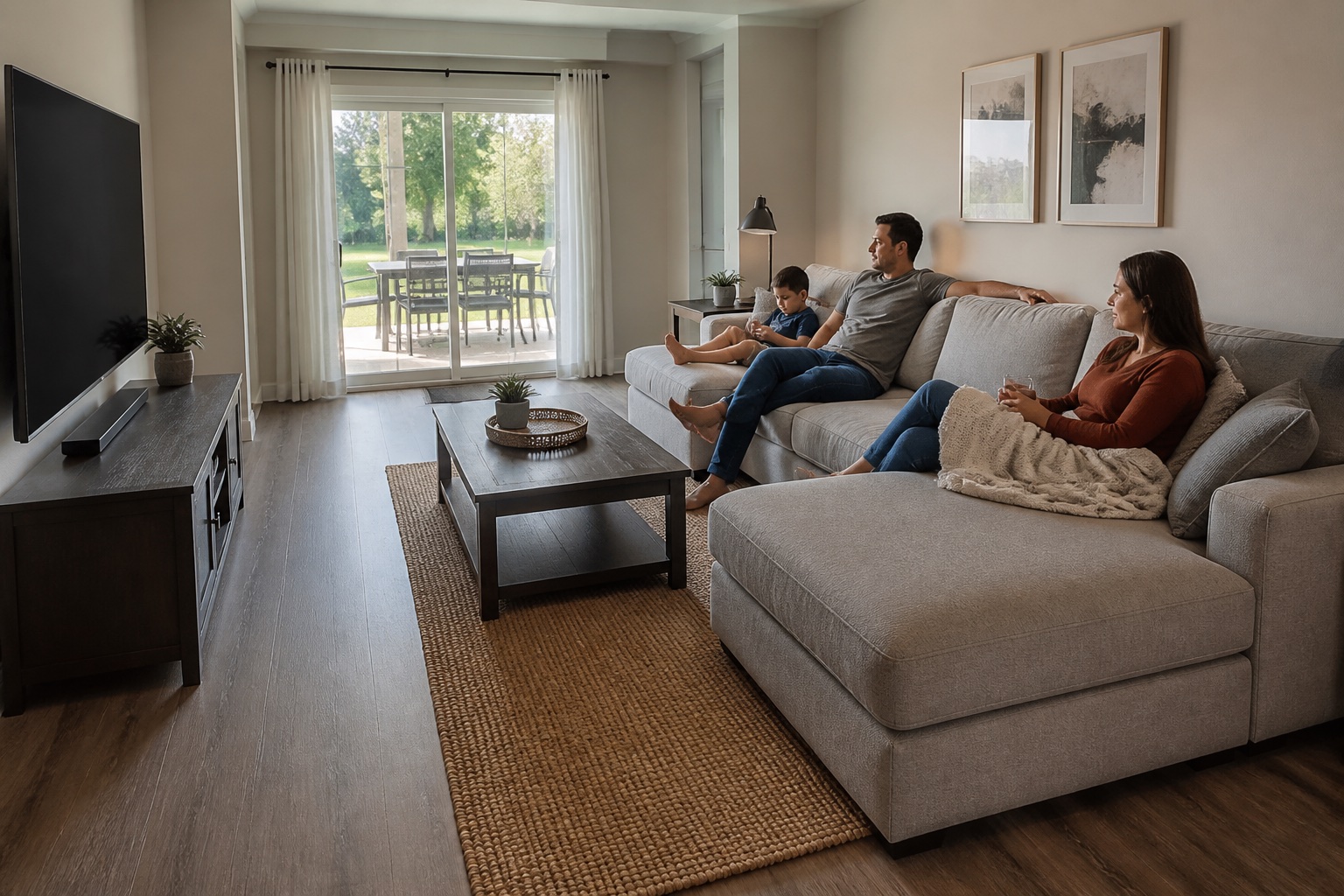
Modular Sofas Favor Change
A modular sofa earns its name when individual units can be separated and recombined without looking unfinished or becoming unstable. An armless seat might join a corner to make an L, move across the room as a chair, or combine with an ottoman for a chaise. This can be helpful in a multipurpose living room, a loft, a home that hosts groups of different sizes, or a property where furniture must travel through tight access points.
Ask for manufacturer-approved configurations, not a promise that the sofa is “limitless.” Some units expose hardware or unfinished upholstery when moved, and some corners work only one way. Confirm that each planned unit is complete, supported, and connectable in its actual position.
Modularity can also support a mixed room. Instead of one enormous U, you might use a compact L for everyday television viewing and place one movable unit across from it for conversation. This follows the same principle used when you mix and match living room furniture: establish a shared scale and purpose rather than forcing every piece into a matched block. Choose two or three realistic arrangements and make one the dependable daily plan.
Comfort Depends on More Than the Label
Neither type is inherently more comfortable. Seat height, usable seat depth, back angle, lumbar support, cushion crown, arm height, and suspension determine how the sofa feels. A deep seat can be inviting for curling up but may leave a shorter person without back support. A high, firm seat often helps upright conversation and easier standing, while a low lounge seat can be less convenient for some users.
Use effective seat depth, measured from the front of the seat cushion to the point where the back cushion supports the body. The outside depth includes the back and frame, so it can be much larger. If the sofa will sit in a compact room, both numbers matter: outside depth controls circulation, while effective depth controls comfort.
Module seams deserve special attention. More units mean more junctions. Sit directly over or beside a joint during a showroom test if possible. Check whether the cushions stay level, whether a hard frame edge is noticeable, and whether the modules rock relative to each other. For an online or custom order, request a section drawing or clear description of the cushion build, suspension, edge support, and tolerances between modules.
Foam density alone is not a complete comfort or durability specification. Firmness, thickness, layering, suspension, cushion size, and expected use also matter. Ask which cushions rotate, which covers come off, and whether replacement inserts are available.
Inspect Frames, Connectors, and Upholstery
Ask what supports each seat and how the frame is reinforced at corners, backs, arms, and connector points. The useful answer identifies materials and construction, not merely “solid frame” or “premium build.” The overview of custom furniture materials can help you ask more specific questions about wood, panels, veneers, finishes, and where each material is appropriate.
For a modular system, examine the connector as a serviceable part. It should prevent normal sitting and standing forces from pushing units apart, yet allow intentional disassembly without damaging upholstery or the floor. Ask whether it is installed at the factory or on site, whether tools are required, and whether replacement connectors can be ordered. Hard flooring, carpet, and an area rug can change how easily units move, so floor glides and protection need to suit the actual room.
Fabric selection should match the household rather than a generic performance adjective. With pets, consider snagging, hair visibility, cleaning method, and whether separate covers can be replaced. With children or rentals, ask for written care instructions and a sample that can be tested with the likely cleaning routine. Strong window exposure makes colorfastness relevant. If the sofa will receive heavy hospitality use, confirm that the selected upholstery and underlying construction are specified for that project rather than assuming a residential option will perform the same way.
The sofas and couches service page is a useful starting point for organizing shape, upholstery, and customization preferences. Final approval should still be based on the actual fabric sample, component drawing, and written specifications for the selected build.
Compare Delivery, Moving, and Long-Term Flexibility
Measure the route from the unloading point to the final position. Record the narrowest clear door or gate, the lowest opening, elevator dimensions, stair width, landing depth, ceiling obstructions, and the sharpest turn. Remove assumptions about detachable feet or backs: ask which parts actually come off, how they are reinstalled, and whether that work is included.
Request the dimensions and weight of the largest packaged piece. Modular systems often reduce the size of each item, but a broad corner, curved module, or high-back unit can remain difficult to handle. A conventional sectional with removable backs may pass through a route more easily than a so-called modular sofa with one oversized corner. The product label does not answer the logistics question.
For a condominium or managed building, confirm delivery hours, elevator reservations, insurance requirements, protection, and packaging removal. In a house, inspect porches, foyer turns, stairs, and gates. Put carrying, assembly, placement, and damage reporting responsibilities in writing.
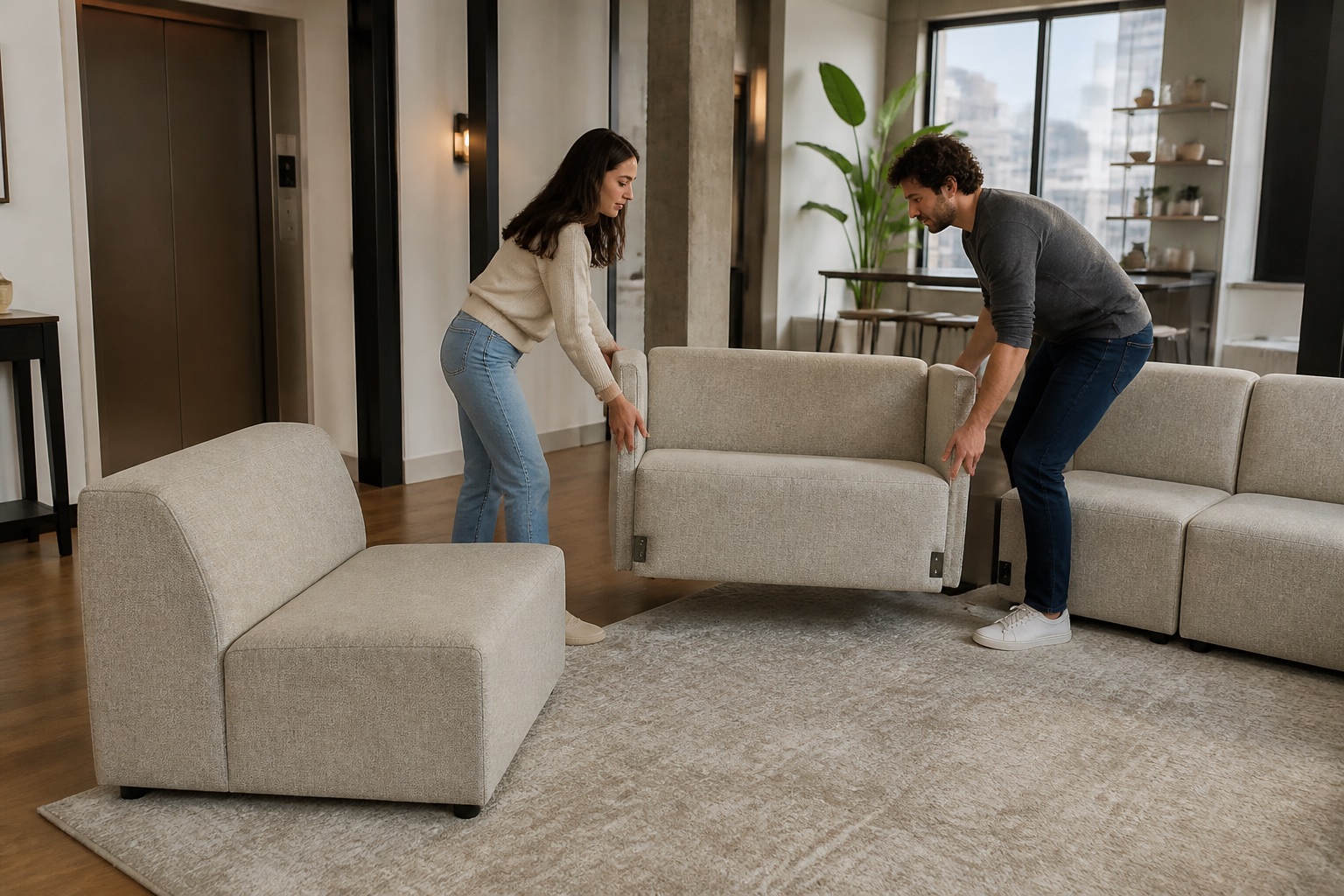
Long-term flexibility also depends on supply continuity. Adding a module later works only if its height, connector, and fabric remain compatible; new upholstery may also differ from sun-exposed fabric. Ask about component and cover availability without assuming an indefinite product run.
Build a Quote That Can Be Compared
Create one buying brief and send the same document to every serious supplier. Include a dimensioned room plan, preferred daily layout, one alternative layout if modularity matters, user and activity notes, comfort preferences, pets or children, fabric requirements, delivery ZIP code, access photos, and the required installation scope.
Use the living room furniture page to organize the other pieces that must coexist with the sofa, such as coffee tables, side tables, media furniture, and storage. Their operating clearances belong in the same plan; they should not be added after the sofa has consumed the room.
The quote should itemize module codes, quantities, orientations, dimensions, fabric, cushions, connectors, freight, inside delivery, assembly, taxes, and spare parts. A quote that omits an ottoman, fabric upgrade, connector kit, or installation is not comparable with a complete scope.
For a custom project, approve a component plan, elevations, critical dimensions, fabric sample, finish sample, and written responsibility for field measurements before production. A useful drawing shows which sides are finished, where seams fall, and which configurations are supported. It should also identify acceptable tolerances and any element that must be confirmed on site.
Avrelahome can discuss a custom sofa around a measured room, preferred configuration, comfort target, material choices, and delivery conditions. The productive starting point is a specific brief, not a request for the “best modular sofa.” The answer should connect the room and use pattern to a build that can be drawn, sampled, transported, and checked.
Risk Checks Before You Order
Confirm chaise orientation with a drawing. Verify the finished appearance of every exposed side. Check module connectors, cushion removal, cover replacement, wall and walkway clearances, floor protection, packaged dimensions, delivery responsibilities, warranty scope, and return restrictions. Custom dimensions and fabrics may change cancellation or return rights, so review those terms before paying a deposit.
With children, consider gaps, movable ottomans, climbing, reclining mechanisms, and unsecured pieces. Follow the manufacturer's instructions. Have an appropriate local professional confirm any attachment to a wall, floor, platform, electrical feature, or building structure.
One final test is subtraction. If removing the least-used module improves circulation and comfort, the larger package may be solving a capacity problem you do not have.
Frequently Asked Questions
Is every sectional sofa modular?
No. A sectional is made from multiple sections, but those parts may be directional and intended for only one configuration. A modular sofa should support several specified arrangements with individual units that remain finished and stable where they are used.
Do modular sofas separate during use?
They can if the connectors are weak, missing, incorrectly installed, or unsuitable for the floor and use pattern. Review the connector design, installation instructions, and floor protection before buying. A rug may reduce movement, but it is not a substitute for a system designed to stay aligned.
Which is better for a small living room?
The better choice is the one whose full dimensions protect the room's essential route. A few compact modules can be flexible, but oversized deep modules can crowd a small room just as easily as a sectional. Test the actual footprint with tape before ordering.
Are modular sofas less comfortable?
Not necessarily. Comfort depends on seat height and depth, back angle, suspension, cushions, arms, and the feel of the module joints. Compare those specifications and test the seams rather than judging by the word modular.
Can a sectional fit through a narrow doorway?
Possibly. The key measurements are the largest individual section and its packaged dimensions, plus every turn on the delivery route. Detachable feet or backs can help only when the product is designed for safe removal and reassembly.
Which usually costs more, sectional or modular?
There is no dependable rule. Module count, frame and cushion construction, upholstery, connectors, customization, freight, and installation drive total cost. Compare itemized quotes with the same scope.
Choose the System, Not the Trend
A stable room with a fixed focal point may benefit from the simplicity and continuity of a sectional. A changing room, likely move, or need for several real layouts may justify a modular system. Neither term guarantees fit, comfort, durability, or value.
The stronger decision comes from the component plan: measure the room and route, identify the daily configuration, inspect the joints and materials, test comfort, and put delivery and service responsibilities in writing. Choose the sofa system that survives those checks, even if its marketing label is less exciting.