
There is no universal winner in the fabric vs. leather sofa debate. The better choice depends on how you live, what you value most, and how much maintenance you are willing to do. Fabric sofas typically feel softer, come in a wider range of colors and textures, and often have a lower upfront cost. Leather sofas are usually easier to wipe clean, and high-quality leather can age well when properly cared for.
If you have pets or kids, or if durability, cleaning, and long-term value matter to you, comparing leather and fabric at a basic level is not enough. Upholstery quality, leather type, daily use, and routine care can all have a major impact on how a sofa performs over time.
Fabric vs. Leather Sofa: Quick Comparison
If you are deciding between a fabric and leather sofa, start with the factors that are most likely to affect everyday use.
| Factor | Fabric Sofa | Leather Sofa |
| Comfort | Usually softer and warmer | Smooth surface with a firmer feel |
| Upfront Cost | Usually lower | High-quality leather is usually more expensive |
| Durability | Depends heavily on fabric quality | Quality leather can age well over time |
| Cleaning | Requires vacuuming and spot cleaning | Everyday spills are often easier to wipe up |
| Pets | Tight weaves and performance fabrics can work well | Pet hair is easy to remove, but scratches may show |
| Kids | Washable or stain-resistant fabrics can be practical | Food and drink spills are often easier to clean |
| Hot Weather | Usually more breathable | Can feel more affected by room temperature |
| Style Options | More colors, textures, and patterns | Classic look, but fewer texture and color options |
| Routine Care | Vacuuming, stain removal, fabric care | Wiping and occasional leather conditioning |
In general, choose fabric if softness, design flexibility, and a lower starting price matter most. Choose leather if you prefer easier surface cleaning, a classic look, and a material that can develop character over time.
How Do Fabric and Leather Sofas Feel in Everyday Use?
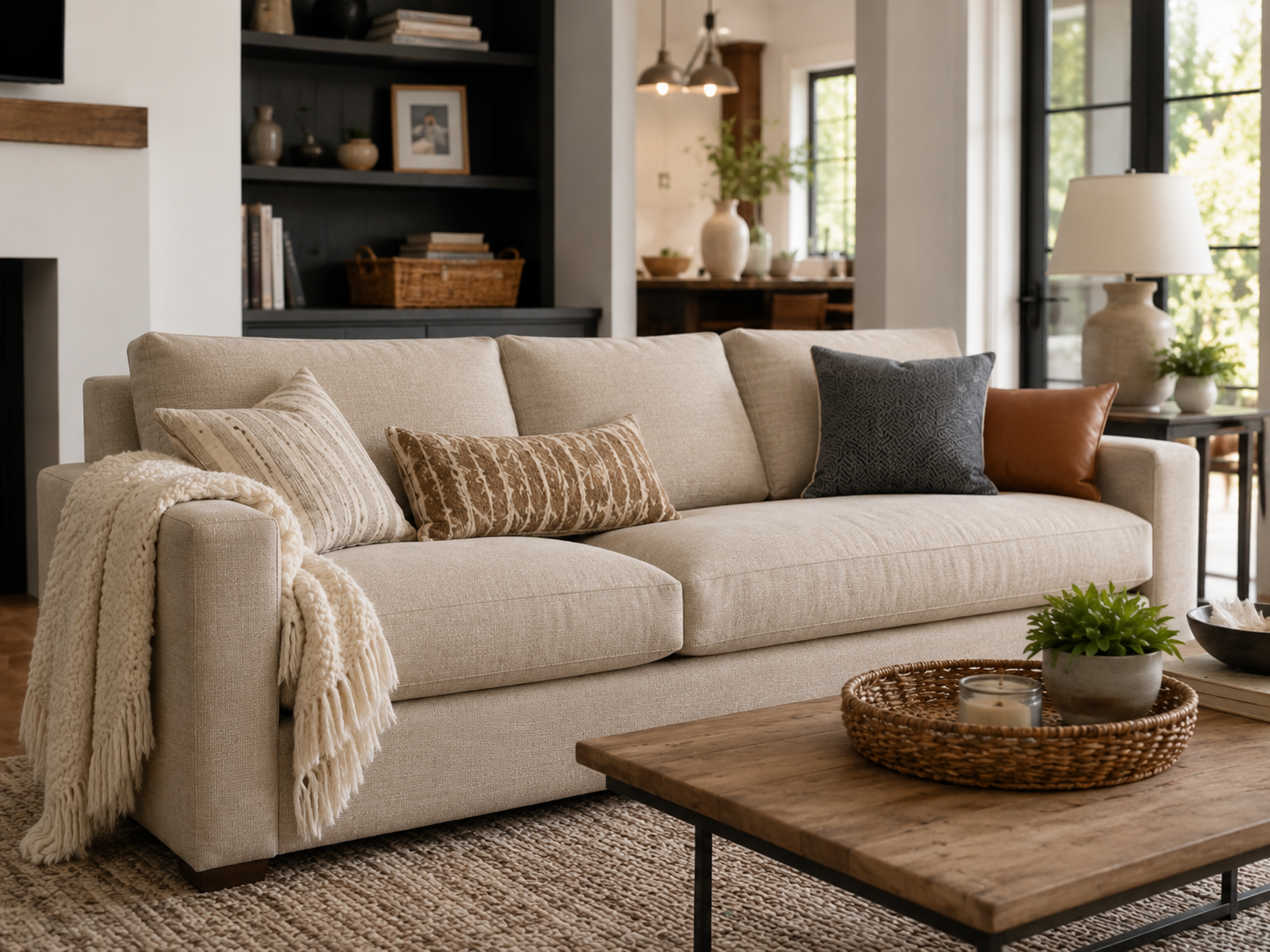
Comfort is not determined by upholstery alone. Cushion fill, seat depth, back angle, and suspension often matter more than whether a sofa is covered in fabric or leather. Still, the two materials do feel noticeably different in everyday use.
Fabric Sofas Usually Feel Softer and More Temperature-Neutral
One of the biggest advantages of a fabric sofa is its softer surface feel. Fabric usually does not react to room temperature as noticeably as leather, so it is less likely to feel especially cold or warm when you first sit down.
For people who like to lounge, watch TV, read, or relax for long periods, fabric can feel more casual and inviting. Some fabrics are also more breathable, which may make them more comfortable in warm climates or during the summer.
That said, not all fabric sofas feel the same. Linen, cotton, polyester, velvet, and performance fabric can vary significantly in softness, breathability, texture, and abrasion resistance. It is better to evaluate the specific upholstery than to treat all fabric sofas as one category.
Leather Sofas Feel Smoother and Often More Structured
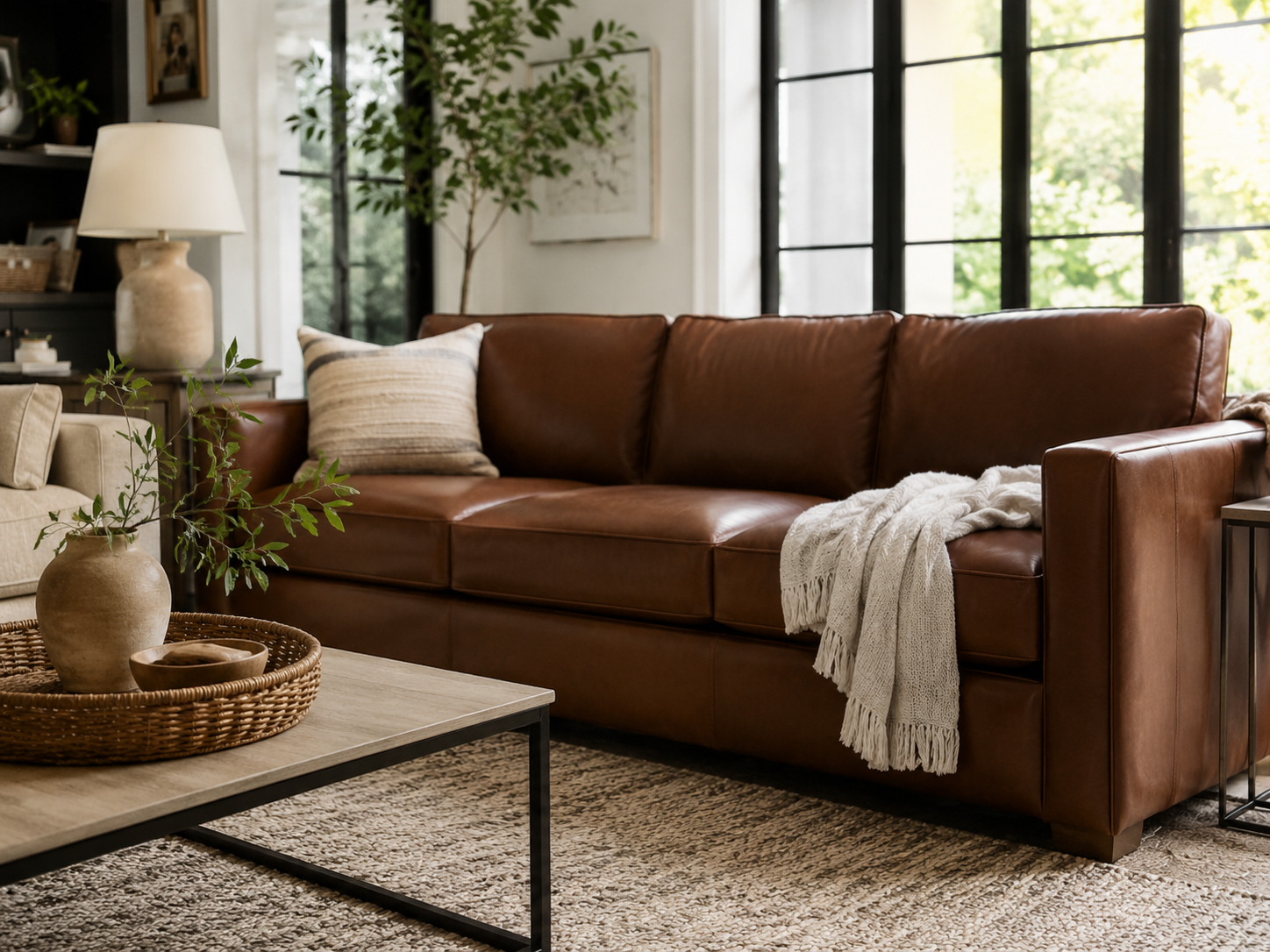
Leather has a smooth, clean surface and usually feels less plush than fabric at first. High-quality leather, however, can soften with use and develop natural changes in color and texture over time.
Leather is also more responsive to temperature. It may feel cool when you first sit down in winter and warmer in a hot room or in direct sunlight.
If your living room gets strong afternoon sun or you live in a very warm climate, sofa placement and indoor temperature control are worth considering before choosing leather.
Which Is More Durable and Offers Better Long-Term Value?
There is no single answer to the question of whether fabric or leather lasts longer. Upholstery grade, frame construction, frequency of use, and maintenance habits all affect how long a sofa stays comfortable and presentable.
High-Quality Leather Can Age Gracefully
One advantage of quality leather is that it does not always look worse as it gets older. Some natural leathers develop a patina over time, creating subtle changes in color and texture that many homeowners find appealing.
That does not mean leather is maintenance-free. Extended exposure to direct sunlight, very dry indoor conditions, harsh cleaners, or pet claws can lead to fading, scratches, dryness, or cracking. Leather types also vary significantly in durability, so it is important to look beyond a simple “leather sofa” label and understand what type of leather is actually being used.
Fabric Durability Depends Heavily on the Upholstery
The difference between one fabric sofa and another can be much greater than many shoppers expect.
Some basic upholstery fabrics may pill, fade, stretch, or show wear over time, while dense polyester blends, tightly woven materials, and certain performance fabrics can hold up well in busy households.
Instead of asking whether fabric sofas are durable in general, look at whether a particular fabric suits the way your household uses the sofa.
If the sofa will be used every day or shared with kids and pets, abrasion resistance and stain performance may matter more than softness alone.
Upfront Price Is Only Part of the Cost
Fabric sofas are available at a wider range of entry-level price points, while high-quality genuine leather sofas usually cost more upfront.
Long-term value, however, should not be judged by purchase price alone.
A more useful way to compare value is:
Purchase Price → Routine Care → Wear Over Time → Repairability → Replacement Frequency
A more expensive sofa that stays in good condition for many years may cost less over time than a cheaper sofa that needs to be replaced sooner. At the same time, lower-grade leather or fabric that does not fit your household needs will not automatically deliver better value just because of the material label.
Which Is Easier to Clean: Fabric or Leather?
If low-maintenance cleaning is a priority, leather is usually easier to manage on the surface. Fabric depends more on the specific upholstery, stain resistance, and care requirements.
Leather Is Usually Easier to Wipe Clean
Dust, crumbs, and pet hair generally stay on top of smooth leather instead of settling deep into the upholstery, making routine cleaning relatively simple.
Small spills are also often easier to manage when they are wiped up quickly.
However, “easy to wipe” does not mean any household cleaner is safe to use. Different leathers react differently to moisture, alcohol, solvents, and cleaning products. The wrong cleaner can cause discoloration, dryness, or surface damage.
Always follow the manufacturer’s care instructions before applying a new cleaning product.
Fabric Sofas Need More Regular Vacuuming and Stain Care
Fabric upholstery is more likely to collect dust, crumbs, hair, and other small particles, so regular cleaning is usually important.
Liquids can also soak into fibers, which means spills should be addressed as soon as possible.
That said, many modern fabric sofas use removable covers, stain-resistant upholstery, or performance fabrics that are much easier to maintain than traditional woven materials.
Before buying, check three things:
- Are the cushion covers removable?
- What cleaning method does the fabric require?
- Is the upholstery designed to resist common household stains?
Those details are often more useful than simply asking whether fabric sofas are difficult to clean.
Should You Choose Fabric or Leather If You Have Pets or Kids?
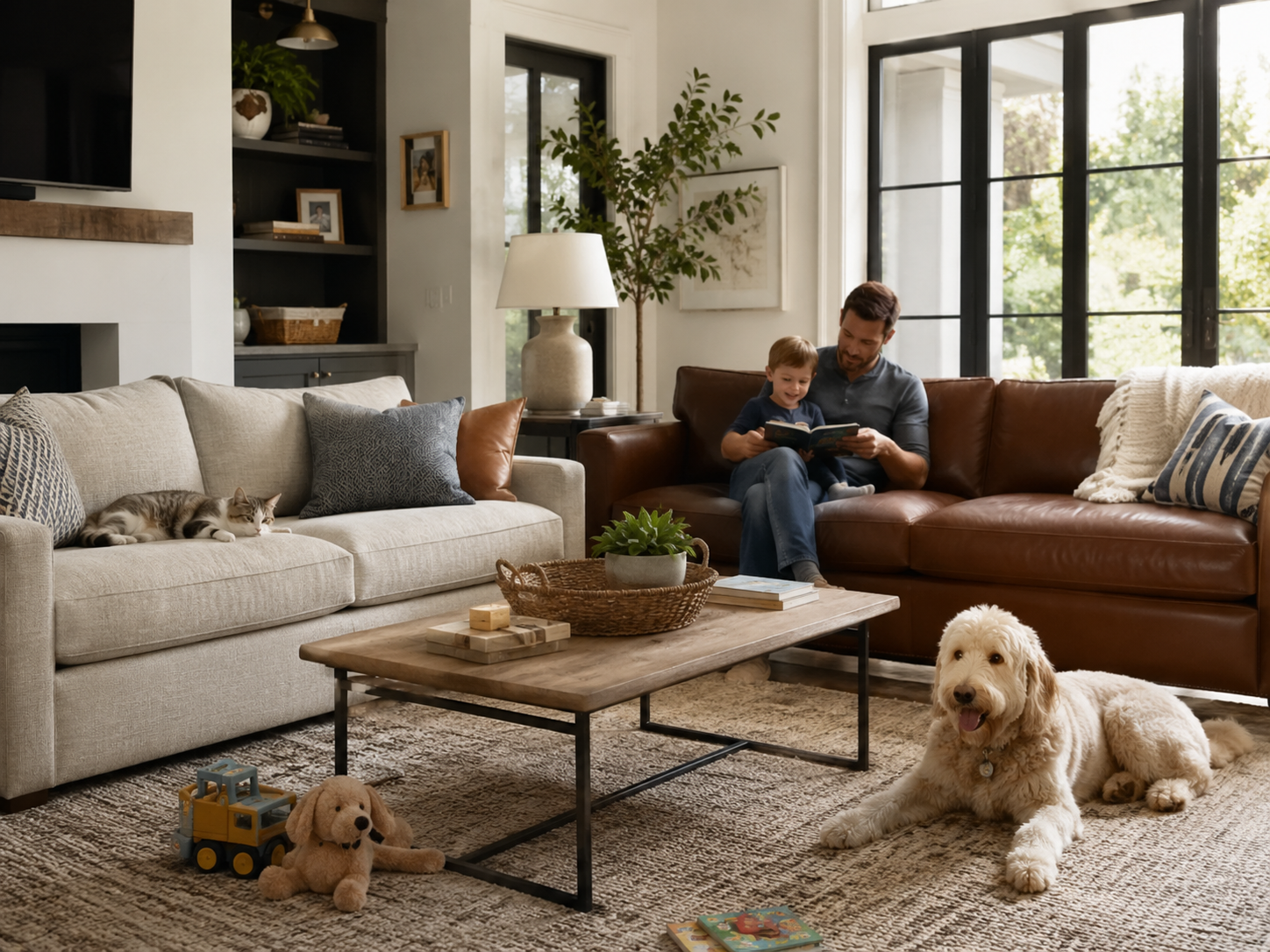
For households with pets or children, the sofa usually has to handle more than one issue at a time. Pet hair, claws, snacks, drinks, spills, and heavy daily use can all affect how well the upholstery performs.
That is why these households should choose a material based on the specific risks they deal with most.
With Cats or Dogs, Consider Both Pet Hair and Claw Marks
If pet hair is your main concern, leather is usually easier to maintain. Hair does not work its way into the surface as easily and can often be removed with a vacuum, soft cloth, or suitable cleaning tool.
Claws are a different story.
Cat claws and sharp dog nails can leave visible scratches on leather, and some marks may be difficult to fully repair.
For pets that tend to scratch furniture, a tightly woven fabric, textured upholstery, or a performance fabric designed for everyday family use may be a more practical option.
With Kids, Focus on Spills, Food, and Heavy Use
Households with children often deal with milk, juice, snack crumbs, and frequent climbing or lounging.
Leather can be convenient because many surface spills are easy to wipe up quickly, although liquids should still not be left sitting on the surface.
If you prefer fabric, look for features such as:
- Removable and washable cushion covers
- Stain-resistant upholstery
- High-abrasion fabrics
- Materials that are easy to spot clean
There is no automatic winner for families with kids.
If spills are your biggest concern, leather may be easier to manage. If you want a softer feel but still need practical stain resistance, performance fabric can offer a useful middle ground.
Performance Fabric Is a Practical Third Option
Traditional comparisons often frame the choice as standard fabric versus leather, but performance fabric has become an important third option for many households.
These fabrics are generally designed to improve stain resistance, abrasion resistance, and everyday durability while still offering the softness, color variety, and texture associated with fabric upholstery.
For families with both kids and pets who do not prefer the feel of leather, performance fabric can be more practical than traditional upholstery.
However, the term “performance fabric” is not defined exactly the same way by every brand. Always check the actual fiber content, care instructions, stain-resistance claims, and testing information before making a decision.
Which Is Better for Dust and Everyday Cleanliness?
If dust, pet dander, or everyday surface cleaning are major concerns, leather is generally easier to wipe clean.
Fabric fibers can hold onto more dust, pollen, and pet dander, which is why routine vacuuming matters more with upholstered sofas. Leather has a smoother surface, so these particles are typically easier to remove.
That said, both materials still require regular cleaning.
With fabric sofas, pay extra attention to cushion seams, armrests, and other high-contact areas. With leather sofas, remove surface dust regularly and follow the recommended care routine for the specific leather type.
If someone in your household is sensitive to dust or pet dander, cleaning frequency may matter just as much as the upholstery material itself.
How Do Fabric and Leather Sofas Differ in Style?
A sofa is often one of the largest visual elements in a living room, so the upholstery material can have a major effect on the overall look of the space.
Fabric offers the greatest range of design options. Linen-like textures, soft velvets, woven polyester, and other upholstery fabrics are available in a wide variety of colors, patterns, and surface textures. If you want to coordinate the sofa with rugs, curtains, throw pillows, or other soft furnishings, fabric usually gives you more flexibility.
Leather tends to create a more classic and consistent look. Brown, black, cognac, camel, and other neutral leather tones can work well in traditional, modern, industrial, or transitional interiors. Some natural leathers also become more visually distinctive as they age.
You do not have to use only one upholstery type in the same room. A leather sofa can work well with fabric accent chairs, just as a fabric sofa can be paired with a leather chair or ottoman. Coordinating the color palette, proportions, and overall style matters more than matching every material.
How to Choose Between a Fabric and Leather Sofa
If you are still unsure after comparing the differences, start with how the sofa will actually be used in your home.
| Your Priority | Better Starting Point |
| You prefer a softer, warmer feel | Fabric |
| You want a lower upfront cost | Fabric |
| You want more colors and textures | Fabric |
| You live in a warmer climate | Fabric |
| You want easier everyday wipe-down cleaning | Leather |
| Your pets shed heavily | Leather |
| You like a classic look that develops character | High-quality leather |
| You have a cat that scratches furniture | Tight-weave or performance fabric |
| You have kids and frequent food spills | Leather or performance fabric |
| You have both kids and pets | Performance fabric is worth considering |
The upholstery material should not be the only factor in your decision.
Two sofas covered in the same material can perform very differently depending on frame construction, suspension, cushion fill, stitching, and overall build quality. Do not judge whether a sofa is worth buying based on the words “fabric” or “leather” alone.
Frequently Asked Questions
What Is the Difference Between Genuine Leather, Faux Leather, and Fabric Sofas?
Genuine leather is made from natural animal hide and is usually more expensive, with texture and appearance that can change over time. Faux leather uses synthetic materials to imitate the look of leather and typically costs less, but it wears differently. Fabric offers the widest variety of colors, textures, and surface feels. Always check the actual material rather than relying on a generic “leather” label.
Is Leather or Fabric Better for a Small Living Room?
Either can work well in a small living room. Sofa size, color, and silhouette usually matter more than upholstery material. Light colors, low backs, slim arms, and exposed legs can make a sofa feel visually lighter, while a dark, oversized leather sofa may have a stronger visual presence.
Can a Leather Sofa Sit in Direct Sunlight?
It is best to avoid prolonged direct sunlight. UV exposure and heat can contribute to fading and dryness in leather over time. Fabric can also fade with continued sun exposure, so window treatments, shades, or adjusting the sofa placement can help protect either material.
What Type of Leather Should You Look for in a Sofa?
Do not rely on the phrase “genuine leather” alone. Leather type, finish, thickness, and surface treatment can all affect feel, appearance, maintenance, and how the material ages. Check the manufacturer’s material details and care instructions before buying.
Can a Sofa Be Reupholstered Later?
Some well-built sofas can be reupholstered, but whether it makes financial sense depends on the frame condition, sofa construction, labor cost, and upholstery price. A high-quality frame is often more worth reupholstering, while the total cost for a lower-priced sofa may come close to replacing it.
Is Fabric or Leather Better for a Sectional Sofa?
Either can work, but upholstery choice becomes more noticeable on a large sectional because there is more surface area and more daily contact. Fabric can feel softer and more relaxed for lounging, while leather or performance fabric may be easier to manage if the sectional is used for entertaining, snacking, or heavy family use.
Conclusion
Choosing between a fabric and leather sofa is less about which material is more premium and more about which one fits your lifestyle.
Fabric is often the better choice if you want a softer feel, more color and texture options, and greater flexibility in your starting budget. Leather may be a better fit if you prefer easy surface cleaning, a classic appearance, and are comfortable paying more upfront for quality material.
For households with kids or pets, the choice does not have to come down to traditional fabric versus leather. Stain-resistant, abrasion-resistant performance fabrics can offer a useful balance between comfort and everyday maintenance.
Ultimately, upholstery is only part of what makes a sofa worth owning. Frame quality, cushion construction, craftsmanship, and how well the sofa fits your household will matter just as much over the long term.