
Most sofas last about 7 to 15 years, but condition is a better replacement guide than age. A couch with a stable frame and supportive suspension may remain useful beyond 15 years, while a newer sofa with structural damage may need replacing much sooner.
The broad 7-to-15-year range is a planning estimate rather than a guaranteed lifespan. In a 2026 survey of 4,451 sofa owners, Which? concluded that a sofa from the right brand should last at least 10 years, although reported wear varied substantially by brand.
What Determines a Sofa’s Actual Lifespan?
A sofa ages through three separate systems: its frame, seat support, and surface materials. Upholstery may look worn while the structure remains sound, or an attractive sofa may conceal failed suspension and loose joints.
Frame and Joint Construction
The frame determines whether the sofa remains stable under repeated loading. Warning signs include arms that move sideways, separated joints, recurring cracking sounds, loose legs, or a frame that twists when someone sits down.
Minor hardware problems may be repairable. Cracked rails or movement across several joints usually make replacement more practical.
Suspension and Seat Support
Springs, webbing, or another support system hold the cushions above the frame. When suspension fails, one seat may sink substantially lower than the others or pull the user toward the center.
Remove the cushions and press across the seat deck. A localized soft spot beneath an otherwise usable cushion suggests a suspension problem rather than ordinary cushion wear.
Cushion Quality
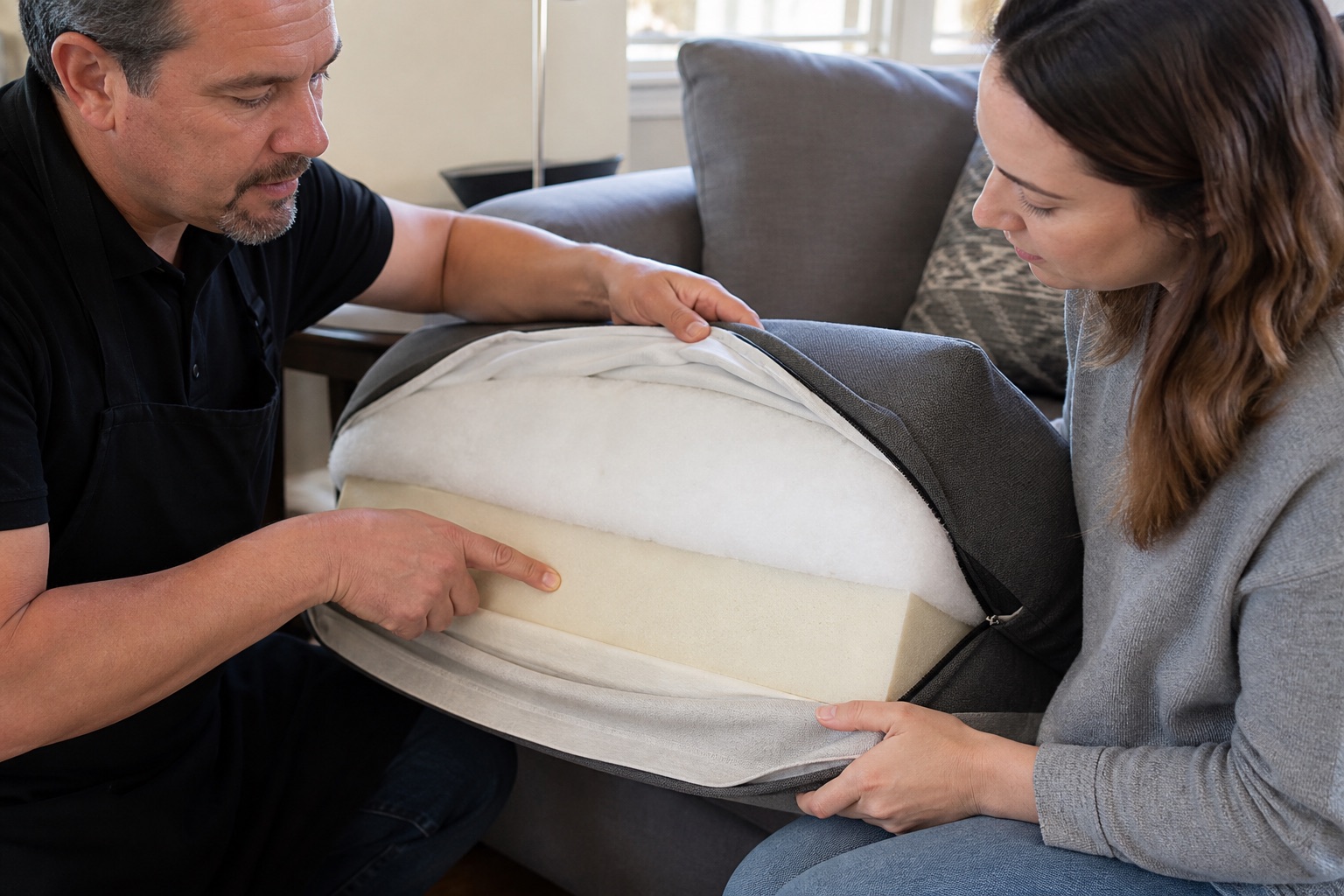
Cushions often wear out before the sofa frame. Replacement inserts may restore comfort when cushions remain compressed, feel hollow in the center, or no longer return to their original shape.
Replacing cushions is worthwhile when the frame and suspension remain stable. It is less economical when sagging cushions are only one of several failures.
Upholstery
Fabric and leather influence appearance, maintenance, and surface durability, but upholstery type alone cannot predict the sofa’s life expectancy.
Abrasion ratings can help compare fabrics, but the Association for Contract Textiles warns that test results do not directly predict service life. Cleaning, sunlight, application, maintenance, seams, and household use also affect performance.
How Upholstery Materials Typically Wear
| Material | Practical strength | Common failure mode | Suitable household |
|---|---|---|---|
| Genuine leather | Wipes clean and may develop an attractive patina | Drying, fading, scratches, or cracking | Homes prepared for regular leather care |
| Performance fabric | Designed for easier maintenance and everyday wear | Performance varies by product and treatment | Families, pets, and frequent use |
| Woven synthetic fabric | Often resists abrasion and stains well | Pilling, snagging, or heat retention | Busy family rooms |
| Natural-fiber fabric | Breathable with a soft appearance | Staining, fading, or wrinkling | Lower-risk rooms |
| Velvet | Rich texture and color depth | Crushing and visible pressure marks | Decorative or moderate-use seating |
| Faux leather | Easy to wipe and initially affordable | Peeling or cracking of the surface layer | Shorter-term or budget-focused use |
Which? found that faux-leather owners were more likely to report cracking and other upholstery damage. This finding concerns surface durability; it does not establish the lifespan of every faux-leather sofa.
How Daily Use Changes Sofa Life Expectancy
A formal-room sofa used occasionally may age mainly through sunlight and material deterioration. A family-room couch experiences repeated cushion compression, spills, and concentrated wear in favorite seats.
Children and pets add impact, claws, moisture, and frequent cleaning. For these households, removable covers, replaceable cushions, tightly woven upholstery, and accessible replacement parts can matter more than delicate styling.
A sofa used by pets does not have a fixed shortened lifespan. The result depends on the upholstery, animal behavior, cleaning practices, and whether wear is distributed across the seats.
Repair or Replace? Use This Five-Minute Test
- Sit in every seat and compare support.
- Watch whether the cushions recover after you stand.
- Push each arm gently from side to side.
- Listen for repeated cracking rather than an occasional squeak.
- Remove the cushions and inspect the support deck.
- View the sofa from the front for tilting or twisting.
- Check underneath for loose hardware or broken material.

Repair is usually reasonable when the problem is limited to a cushion, cover, seam, leg, or localized support component.
Replacement is more defensible when the frame is cracked, several joints move, the sofa leans, or structural, upholstery, and cushion failures are occurring together.
How to Make a Sofa Last Longer
Rotate and reverse removable cushions so the same seat does not absorb all daily wear. Vacuum beneath them regularly because grit can abrade fabric when pressed into the surface.
Keep the sofa away from intense sunlight and direct heat where possible. Clean spills promptly using the manufacturer’s care instructions, and repair opening seams before they spread.
Avoid sitting on the arms or backrest. These areas are not designed to carry the same repeated load as the seat platform.
Frequently Asked Questions
Is a 10-year-old couch considered old?
Ten years is an appropriate time for a careful inspection, but it is not an automatic replacement date. Stability, support, hygiene, and repair cost matter more than the calendar.
Do sectional sofas wear out faster?
Not necessarily. The corner seat and most-used modules may wear first, but replaceable sections can make a modular sofa easier to maintain.
Do recliner sofas last as long as regular sofas?
They can, but recliners contain moving hardware that may require repair before the frame or upholstery fails. Mechanism quality and operating frequency are important.
Can an old sofa be hygienic after professional cleaning?
Professional cleaning may remove accumulated soil and odors, but it cannot correct mold, pest contamination, or material that has penetrated deeply into damaged filling. Those cases require individual assessment.