
Choosing living room furniture is less about finding a perfect sofa and more about building a room that supports real life. The right pieces should make conversation easy, leave a comfortable path through the room, survive the household's normal mess, and still look good together years from now.
That requires decisions in the right order. If you shop by appearance first, it is easy to end up with a sectional that blocks a doorway, a coffee table nobody can reach, or a beautiful chair that is never comfortable enough to use. Start with how the room works, then move through measurements, layout, scale, materials, and budget.
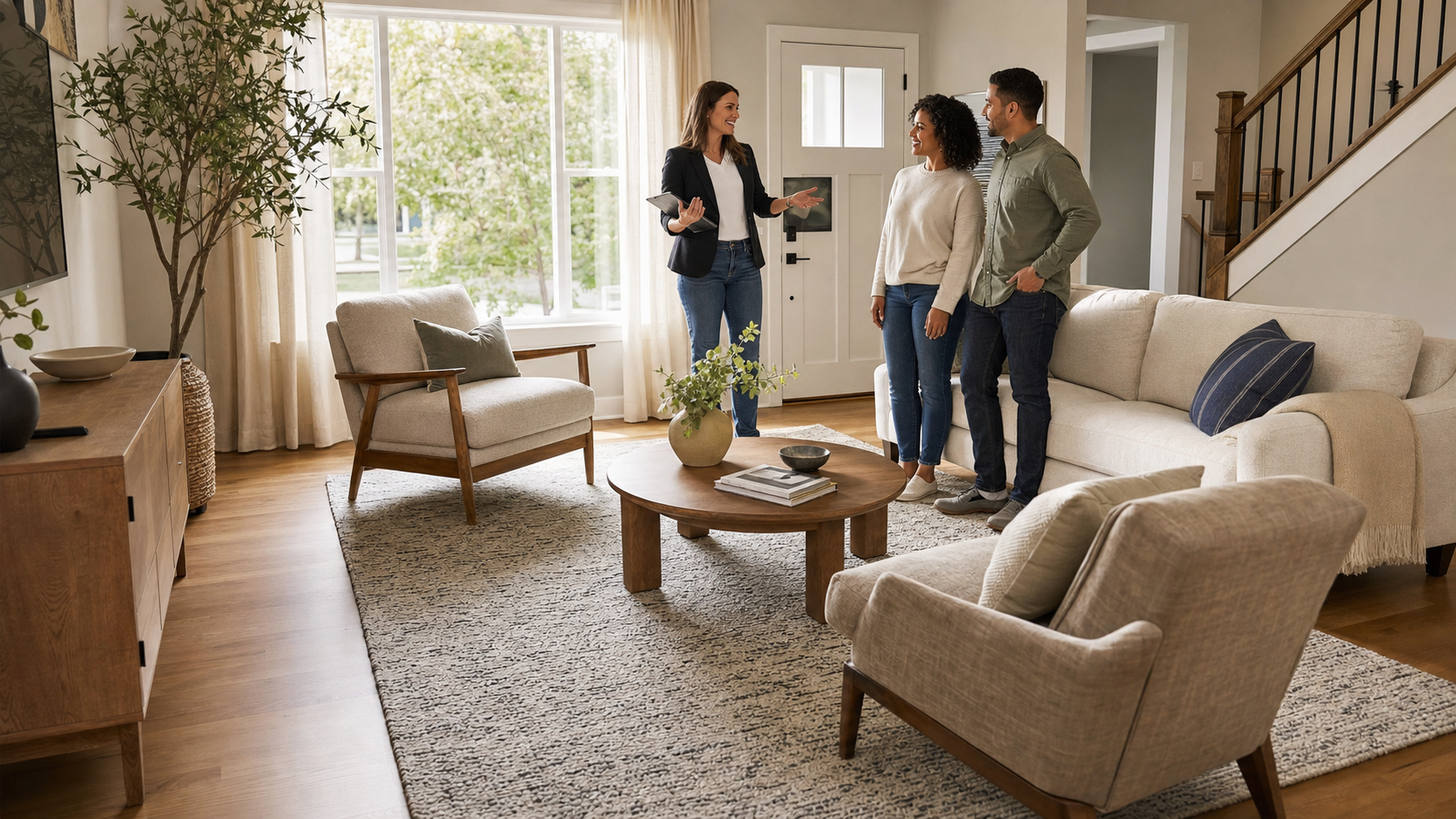
1. Define What the Living Room Must Do
Write down the room's jobs before opening a shopping tab. Is it primarily for watching TV, talking with guests, reading, children's play, gaming, or entertaining? Does someone work there during the day? Will overnight visitors sleep on the sofa? Do you need a clear floor area for exercise or a mobility device?
Rank the activities instead of treating all of them as equal. A TV-first room needs controlled viewing angles and cable management. A conversation-first room benefits from seats that face one another rather than one long line aimed at a screen. A family room needs reachable storage, cleanable surfaces, and enough open floor for daily movement.
Also count people honestly. Plan for the residents who sit there every day, then decide how occasional guests will be accommodated. Two flexible stools or dining chairs may be smarter than oversizing every permanent seat for a party that happens twice a year. Avrela Home's range of living room furniture and coordinated storage options can help define the categories, but the household's routines should determine which ones belong in the plan.
2. Measure the Room—and the Route Into It
Record the room's length, width, and ceiling height in feet and inches. Then locate windows, doors, fireplace projections, radiators, floor vents, HVAC returns, outlets, cable connections, and built-ins. Measure baseboards and window-sill heights where furniture may meet the wall. In an older home, check more than one point because walls and floors may not be perfectly square.
Next, measure the delivery path. Include the front door, hallway turns, stair width, railings, elevator opening, and any tight landing. Compare those dimensions with the packaged size, not only the assembled product. Confirm whether sofa legs or backs can be removed and whether a sectional arrives in separate modules.
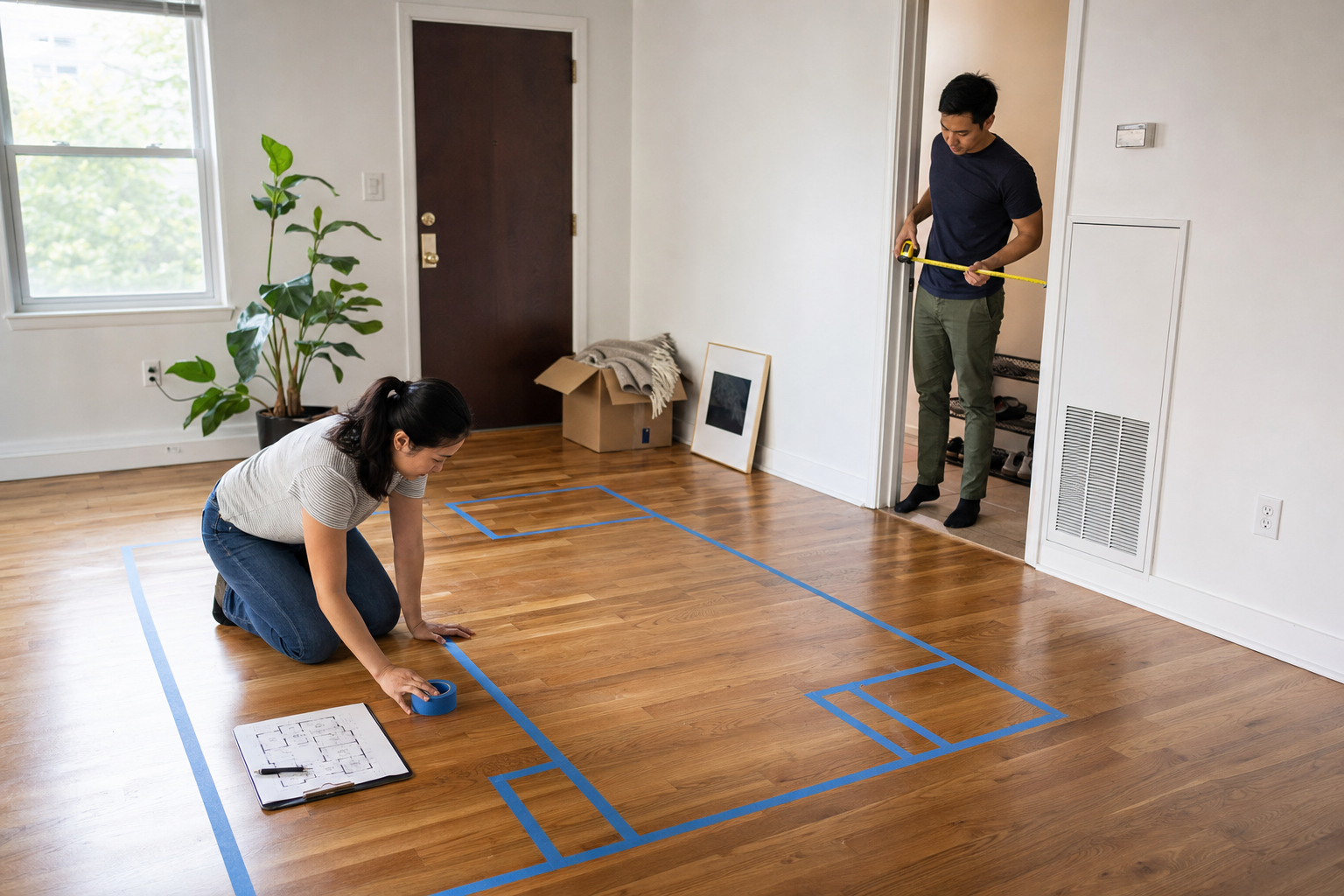
Use graph paper or a simple floor-planning app, but test the result in the room with blue painter's tape. Mark the outside edges of the sofa, chairs, tables, and media unit. Walk the normal route, open doors, and imagine pulling out drawers. A structured room-measuring checklist reduces expensive surprises before ordering.
3. Protect Traffic Flow Before Adding Seating
Most living rooms have at least one route that cannot be sacrificed: entry to hallway, kitchen to stairs, or patio door to the rest of the house. Keep that route visually obvious. As a planning starting point, many layouts feel comfortable with roughly 30 to 36 inches for a primary passage, though the right clearance depends on the users and local accessibility needs.
Do not force people to cut between the TV and sofa or squeeze behind a recliner. Remember that furniture grows while in use: a dining-style game table needs chair pullback, a recliner needs extension space, and cabinet doors need room to swing. In a small apartment, fewer pieces with clear space between them often create more usable seating than a packed room.
If the living room is open to the kitchen or dining area, use the back of a sofa, a rug, or a low console to define the zone without building a visual wall. Keep the tallest storage away from the narrowest circulation point.
4. Choose the Anchor Piece, Usually the Sofa
The sofa sets the room's seating capacity, comfort, color direction, and much of its visual weight. Choose it before smaller tables and accent chairs unless an existing fireplace, piano, artwork, or inherited piece is the true anchor.
Start with the outside dimensions, but do not stop there. Two sofas of the same length can provide different usable seating because of arm width. Check seat height, seat depth, back angle, cushion firmness, and whether feet rest comfortably on the floor. A deep, low sofa supports lounging but may be difficult for some older adults to rise from. A shallower seat can suit upright conversation and compact rooms.
For a sectional, verify left-arm versus right-arm orientation from the manufacturer's stated viewing position. Confirm whether pieces connect securely and whether the chaise blocks a doorway. A sofa with legs showing more floor usually feels lighter; a skirted or low-to-floor frame reads as more substantial. Browse sofa configurations and living room seating ideas only after the maximum footprint and required seat characteristics are clear.
5. Balance Scale, Visual Weight, and Seating Capacity
Scale is relational. A large room does not require every piece to be large, and a small room does not require miniature furniture. Instead, compare heights, depths, and visual mass. A bulky rolled-arm sofa beside a delicate chair may look accidental even if both fit physically. Repeating one or two cues—leg finish, arm shape, material tone, or line quality—can connect pieces of different styles.
Avoid buying a complete matching suite by default. Matching sofa, loveseat, chair, coffee table, and end tables can flatten the room into one visual note. A more natural American home often combines a comfortable sofa, one or two chairs with a different silhouette, and tables related by tone or shape rather than identical detailing.
The rug should help the seating read as one group. In many layouts, at least the front legs of the sofa and chairs sit on the rug. A rug floating entirely under the coffee table can make the furniture feel disconnected. Tape the rug size on the floor before buying, especially when moving from a 5-by-8-foot rug to an 8-by-10-foot or 9-by-12-foot option.
6. Choose Materials for the Household You Actually Have
Fabric color is only one performance decision. Ask for the fiber content, cleaning code, abrasion information where available, cushion construction, and whether covers or components can be replaced. A tightly woven performance fabric may be practical for children or pets, while a loose weave can catch claws. Leather develops character but varies in coating, maintenance, and sensitivity to sunlight.
Bring home a sample and view it morning, afternoon, and evening. Rub it against clothing, test how easily crumbs lift, and compare it with the rug and wall color. Online images and showroom lighting can shift undertones dramatically.
For tables and storage, consider water rings, scratching, heat, direct sun, and cleaning products. Rounded edges can be helpful in tight family rooms. Wood veneer is not automatically inferior to solid wood; construction, substrate, edge treatment, finish, and use all matter. A detailed comparison of materials for custom furniture can help turn “durable” into a useful specification.

7. Build a Layered Room Instead of Chasing a Theme
Choose a simple visual framework: perhaps warm wood, soft neutral upholstery, blackened metal, and one saturated accent. Repeat each important material or color at least once so it feels intentional, but vary texture and shape. A walnut media unit might relate to a side table without matching exactly; a blue chair can connect to a patterned pillow rather than another blue chair.
Mixing new, vintage, ready-made, and custom furniture creates depth and keeps the room from resembling a catalog set. The key is shared proportion and undertone. Compare wood samples in the room, and decide whether the finishes should deliberately contrast or closely coordinate. “Almost matching” is often harder to resolve than a clear contrast.
Leave some empty space. A room needs visual pauses around windows, art, and distinctive furniture. Buying every planned accessory at once usually creates clutter before the household learns how the room is actually used.
8. Plan Storage, Media, Lighting, and Power Together
Living room storage should correspond to an inventory: remotes, games, toys, books, throws, pet supplies, electronics, and display objects. Use closed storage for visually noisy items and open shelves selectively. Make sure media cabinets provide ventilation, cable access, and room for equipment replacement.
Layer lighting rather than relying on one ceiling fixture. Combine ambient light with a floor or table lamp near reading seats and accent light where it adds depth. Before placing furniture, identify how lamps will reach outlets without cords crossing passages. If outlets, switches, or HVAC returns conflict with the ideal layout, solve that conflict before ordering a built-in.
In a TV room, confirm screen height and viewing distance based on the actual screen and seating, not a generic photo. Avoid placing a glossy screen opposite strong windows when possible. A swivel chair or movable ottoman can help one room shift between conversation and viewing.
9. Allocate the Budget by Use, Not by Item Count
Spend more on pieces that carry weight, receive daily contact, or are difficult to replace: the sofa frame and cushions, the primary reading chair, fitted storage, and a heavily used coffee table. Save on occasional tables, decorative stools, and accessories that can change as tastes evolve.
Compare total delivered cost. Include freight, white-glove delivery, assembly, stair or elevator fees, fabric upgrades, protection plans, and removal of old furniture. Review the return policy for custom colors or configurations; made-to-order products may be final sale.
Think in cost per year of realistic use, not only checkout price. A well-built sofa that suits the room for a decade can be better value than two nearly right sofas replaced in frustration. Conversely, a renter expecting to move soon may benefit from modular, lighter pieces even if a fitted solution would look better today.
10. Know Where Custom Furniture Earns Its Cost
Custom work is most persuasive when standard dimensions repeatedly fail: a shallow alcove, fireplace sides of unequal width, a media wall that must conceal wiring, or a compact room needing seating and storage in one footprint. It can also coordinate proportions and materials across an open living area.
Ready-made furniture is usually smarter when a standard size fits, time is short, the plan may change, or mobility matters. A balanced comparison of custom and ready-made furniture helps identify which pieces need precision and which should remain flexible.
11. Use a Final Pre-Purchase Checklist
Before paying a deposit or placing an order, verify:
- assembled and packaged dimensions;
- doorway, hallway, stair, and elevator access;
- sofa seat depth, height, firmness, and sectional orientation;
- actual finish or fabric samples in the room's light;
- material, frame, cushion, hardware, and care details;
- required clearance for walking, doors, drawers, and recliners;
- delivery, assembly, anchoring, and debris-removal scope;
- return, cancellation, damage, warranty, and service terms; and
- the final drawing and specification for any custom piece.
For made-to-order work, use a formal set of questions to ask before ordering custom furniture and keep approvals in writing. Avrela Home's broader whole-home planning approach can be useful when the living room must relate to adjacent dining, entry, or kitchen spaces rather than function as an isolated set.
Conclusion
The best living room is not the one with the most furniture or the newest trend. It is the one where the scale feels natural, people can move without thinking about it, the most-used seats are genuinely comfortable, and the materials suit the household's normal behavior.
Choose in sequence: define the room's jobs, measure the room and delivery path, protect traffic flow, select the anchor piece, balance supporting furniture, test materials, and then spend according to use. That discipline makes both ready-made and custom purchases more confident—and creates a room that can evolve without starting over.
Frequently Asked Questions
What furniture should every living room have?
There is no universal list. Most rooms need comfortable seating, a reachable surface, appropriate lighting, and some form of storage, but the exact pieces depend on activities and space. A compact room may function better with a sofa, one chair, nesting tables, and a wall-mounted light than with a full furniture suite.
Should the sofa face the TV or the fireplace?
Prioritize the room's main activity and architecture. In a TV-first room, provide a comfortable viewing angle without blocking circulation. When both features matter, consider a sofa perpendicular to the fireplace, swivel chairs, or a layout that allows the eye to move between focal points.
How do I know whether a sofa is too large?
It is too large when it restricts the primary passage, interferes with doors or vents, overwhelms other pieces, or leaves no practical table and chair clearance. Tape the full footprint on the floor and test the route before ordering.
Do living room furniture pieces need to match?
No. They should relate through proportion, undertone, material, shape, or repeated details. Deliberate contrast usually looks more collected and personal than a completely matched set.
What sofa color is easiest to live with?
Mid-tone, softly textured colors often disguise everyday lint and minor marks better than very light or very dark solid fabrics. Performance, cleaning method, sunlight, pets, and the room's palette matter more than one supposedly universal color.
Is a sectional better than a sofa and chairs?
A sectional offers efficient continuous seating and lounging, but it is less flexible and can dominate a small room. A sofa with chairs supports conversation and can adapt more easily. Choose based on the taped layout and real seating habits.
—