
A bedroom can feel coordinated without looking like every piece came from the same carton. It can also look disjointed even when the bed, nightstands, and dresser belong to one collection. The difference is usually not “matching” versus “mismatched” by itself. It is whether the furniture fits the room, supports the people who use it, and repeats a small number of deliberate visual cues.
Matching sets reduce decisions and make finishes easier to coordinate. Mixed pieces offer more control over size, function, price, and the furniture you already own. Many American bedrooms benefit from a hybrid approach: match the pieces that establish the room, then vary the pieces that need to solve different storage or space problems.
This guide compares all three approaches and gives you a practical way to choose before you order.
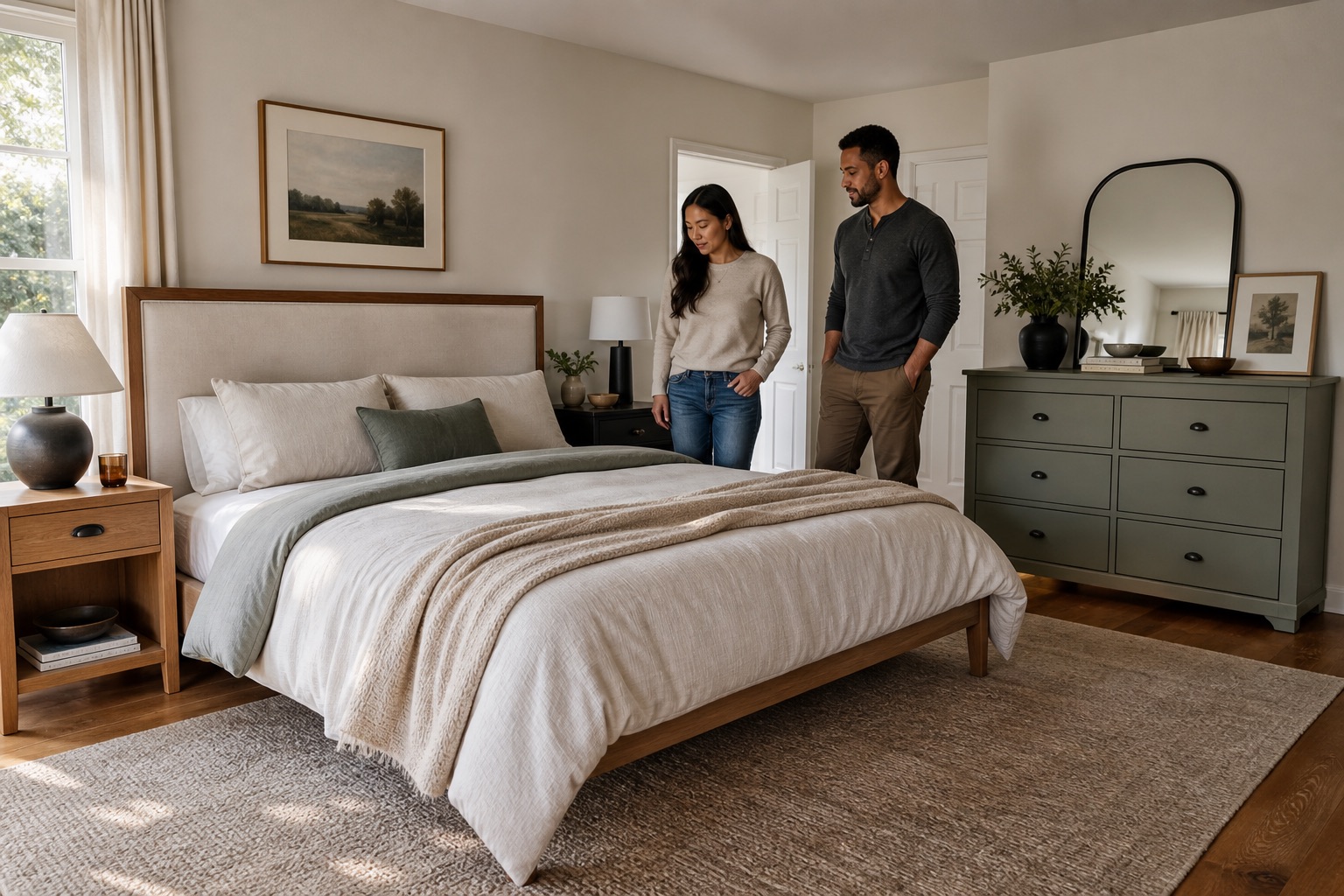
Start With the Room, Not the Furniture Collection
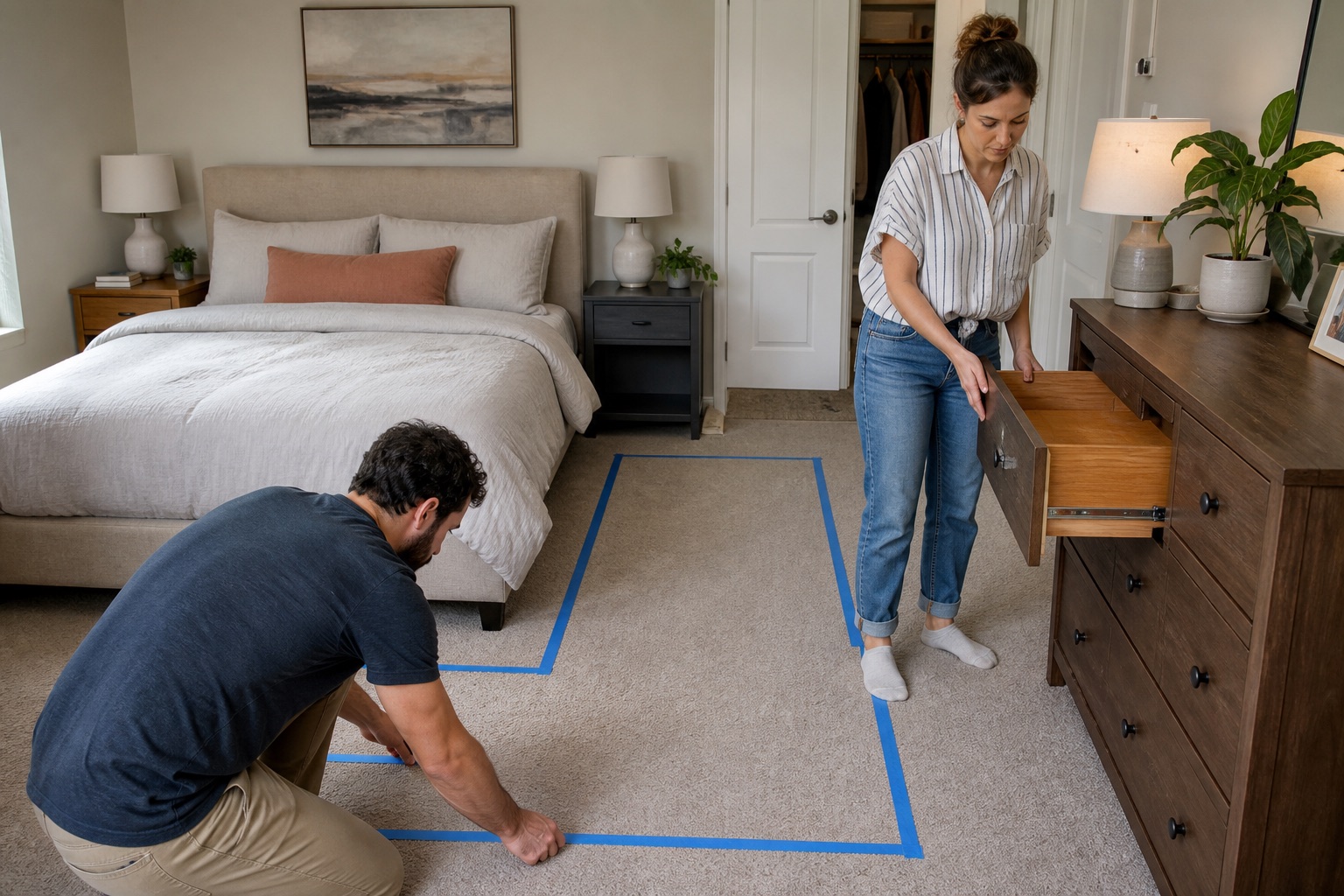
Before comparing styles, measure the finished room. Record the usable width of the bed wall, the distance from the bed to doors and closets, window locations, baseboards, floor registers, outlets, and the delivery route. Use the largest exterior dimensions shown for each piece, not just the top width or the interior drawer dimensions.
Next, list what must stay. A dark wood bed, an inherited dresser, an upholstered bench, or a rug can become the starting point for the entire palette. Keeping one large piece is not a compromise. It simply means that new items should relate to it through color temperature, scale, hardware, shape, or upholstery.
Make a functional list as well. Does one person need more bedside storage? Is a television required? Will a crib, desk, luggage rack, reading chair, or mobility aid share the room? The best starting checklist is the one based on actual habits; this overview of essential bedroom furniture can help separate necessary pieces from optional ones.
What a Matching Bedroom Set Does Well
A matching set creates immediate continuity. The wood tone, edge profile, hardware, leg shape, and finish sheen are already coordinated. That can be useful when you have a short purchasing timeline, want predictable pricing, or need a consistent package for several similar guest rooms.
The risk is assuming every included piece belongs in the room. A 66-inch dresser may crowd a closet door. Two 28-inch nightstands may fit the product photo but not a bed wall with an off-center window. A tall chest may add storage while making the room feel visually heavy. A package price is only a value when each piece earns its footprint.
Treat a collection as a menu, not an obligation. Ask whether pieces can be purchased individually, whether replacement hardware is available, and how long the finish will remain in production. Matching the bed and nightstands does not require adding the dresser, mirror, chest, and bench if those items do not fit.
What Mismatched Bedroom Furniture Does Well
Mixed furniture lets each piece solve a specific problem. You can use a three-drawer chest on one side of the bed and a narrow floating shelf on the other. You can keep a well-made dresser while updating the bed. You can choose a shallow storage piece for a tight wall instead of accepting the deeper piece in a set.
The tradeoff is that coordination becomes your responsibility. Product photos taken under different lighting can make unrelated finishes appear closer than they are. Furniture listed as “walnut,” “oak,” or “espresso” may have very different red, yellow, gray, or purple undertones. Scale can conflict even when color looks compatible.
Mixed does not mean every item should be unrelated. A successful room usually repeats at least two cues, such as warm undertones plus black hardware, rounded corners plus tapered legs, or a consistent upholstery color plus similar visual weight.
Use a Hybrid Approach When the Room Needs Both Consistency and Flexibility
A hybrid plan combines a small matching group with intentionally different supporting pieces. You might pair the bed and two nightstands, then choose a painted dresser with compatible hardware. You might use a coordinated custom bed wall and wardrobe while keeping movable seating and tables from standard collections.
For small rooms, a hybrid plan can reduce crowding. Start by applying the clearance principles in this small-bedroom furniture layout guide, then choose which few pieces deserve a shared finish. Consistency is more effective when it supports the layout instead of adding furniture solely for symmetry.
| Priority | Matching set | Mixed pieces | Hybrid plan |
|---|---|---|---|
| Fast selection | Strongest | Requires more comparison | Moderate |
| Irregular room fit | Limited by available sizes | Strongest | Strong |
| Predictable initial price | Often easiest | Varies by source | Moderate |
| Keeping existing furniture | May be difficult | Strongest | Strong |
| Future single-piece replacement | Depends on collection life | Flexible | Flexible |
| Multiple similar rooms | Efficient | More coordination | Efficient with a room matrix |
Build a Limited Material and Color Vocabulary
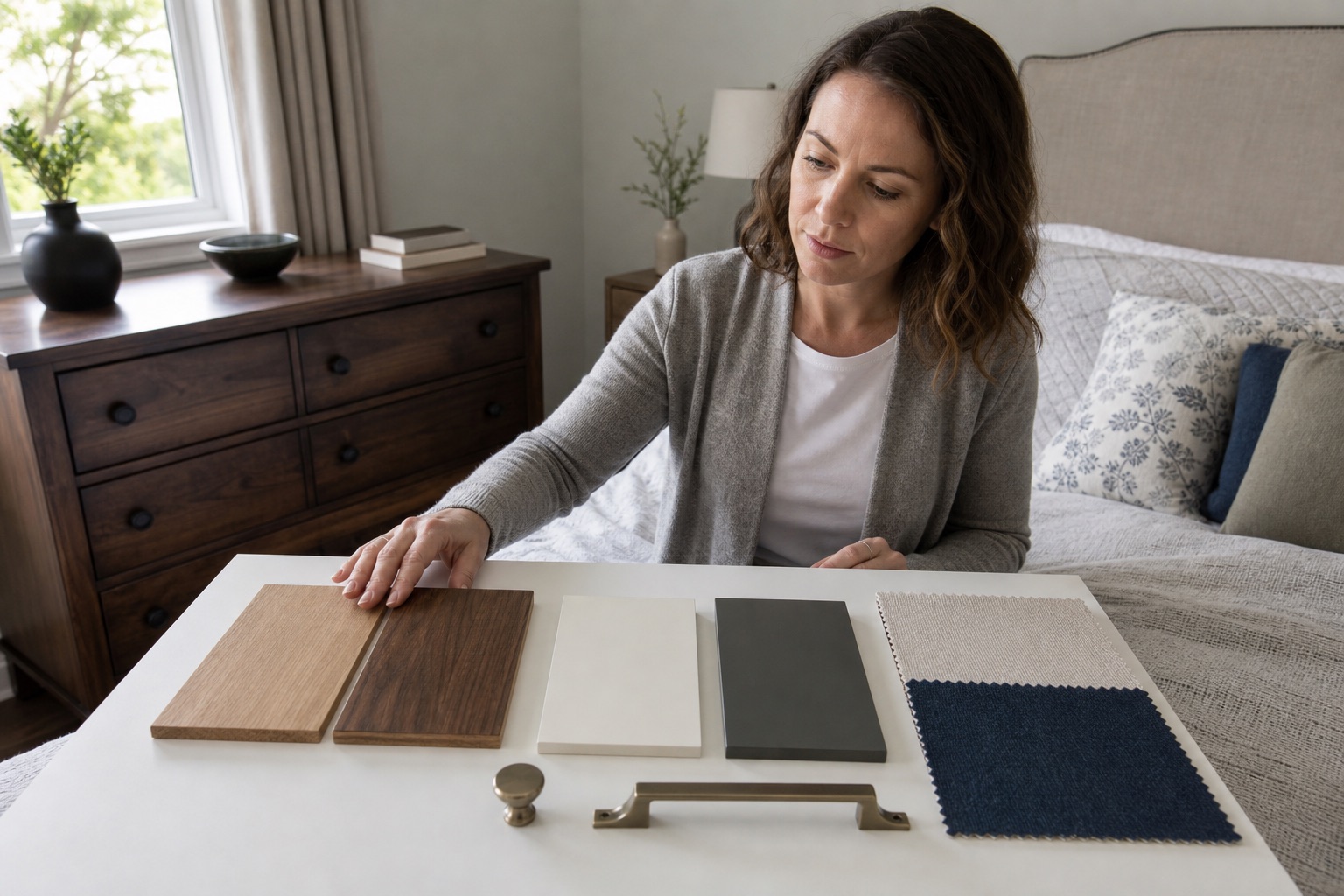
Choose one dominant material, one supporting material, and one connector. The dominant material might be warm oak. The supporting material might be an off-white painted finish. The connector could be matte black hardware, brushed brass, linen upholstery, or a repeated rounded edge.
Focus on undertone before species name. Two oak finishes can fight if one reads yellow and the other gray. By contrast, walnut and painted furniture can work together when the paint, floor, and textiles share compatible warmth.
Do not give final color approval from a screen. Request physical samples when the purchase is difficult to return or when several pieces must coordinate. Place samples beside the wall color, flooring, rug, and bedding. Check them in morning daylight, afternoon light, and the lamps you actually use at night.
Natural wood varies, so record the supplier, sample number, sheen, and an acceptable range. For multiroom work, keep an approved control sample for delivery inspection. Avrela Home’s custom furniture overview is a useful starting point when standard finishes or dimensions cannot create a controlled package.
Coordinate Visual Weight Before Chasing Exact Color
Visual weight describes how much space a piece appears to occupy. A 60-inch dresser on slender legs may look lighter than a smaller chest with a closed base, dark finish, and thick top. A high upholstered headboard already carries significant weight, so the surrounding furniture may benefit from open bases, lighter finishes, or quieter hardware.
Look at the room as a series of solids and openings. In a compact bedroom, preserving visible floor and wall can make circulation feel clearer. This does not mean every item must be small. It means avoiding a lineup in which every piece is simultaneously tall, deep, dark, and fully enclosed.
Proportion matters more than whether profiles are identical. Relate the dresser length to its wall, the nightstand width to each bedside bay, and the chest height to nearby windows and artwork. If a wardrobe provides most clothing storage, a second heavy dresser may not be necessary. The planning sequence in this custom wardrobe design guide can help determine storage capacity before you fill the remaining walls.
Do Both Nightstands Have to Match?
No. Nightstands can differ when the users, wall conditions, or storage needs differ. One side may need drawers for medications and charging equipment; the other may need only a surface and reading light. A closet door, window, or narrower passage may require a different footprint.
Keep the top of each nightstand comfortable from that sleeper’s normal pillow position. The two pieces do not need identical dimensions, but their top heights should make sense beside the finished mattress. Use the reach and clearance tests in this nightstand height and size guide before choosing purely for appearance.
To connect different nightstands, repeat one or two details. Use the same lamps, related hardware, similar corner shapes, or a shared paint color. If one piece is a solid three-drawer chest and the other is a light wall-mounted shelf, balance the wall with a sconce, artwork, or basket rather than forcing equal cabinets into unequal spaces.
Matching nightstands remain a good option when both sides have the same clearance, both users need similar storage, and symmetry is an important part of the room. Symmetry should never come at the cost of a blocked drawer, pinched walkway, or inaccessible outlet.
Handle Wood Tones, Paint, Metal, and Upholstery Deliberately
Mixing two wood tones is usually easier than trying to match two nearly identical tones that are slightly wrong. Let one wood be dominant and use the other in a smaller role. Separate them with paint, upholstery, a rug, or visible wall so they do not appear to be an unsuccessful match.
Painted pieces are effective bridges because they interrupt competing grains. A warm white, muted green, or charcoal dresser can connect a wood bed with metal or upholstered pieces. Check that the paint undertone works with the floor and wall; “white” is not a single neutral.
Metals do not all need to match, either. Keep one dominant metal and use the second sparingly. Black bed hardware and aged brass lamps can coexist when their shapes and placement feel intentional. Avoid introducing a new metal on every handle, lamp, frame, and accessory.
Upholstery offers another connector. Repeating a linen texture or a quiet color in the headboard, bench, and window treatment can unite furniture from different sources. Order fabric samples and review durability, cleaning instructions, and dye-lot variation before approving a large upholstered item.
Plan for the Type of Bedroom You Are Furnishing
A primary bedroom can support more personal variation because it is shaped around long-term habits and existing possessions. A guest room usually benefits from a simpler package: clear bedside surfaces, accessible lighting, luggage space, and enough storage for a short stay.
A child’s room should prioritize anti-tip requirements, rounded or protected edges, cleanability, and pieces that can change as the child grows. Avoid making every component dependent on a theme that will be difficult to update. Follow manufacturer anchoring instructions for tall storage and consider how drawers affect the walking path when open.
Rental bedrooms favor replaceable, durable pieces and finishes that can be repaired without replacing a full suite. Hotels, villas, and other multiroom projects need a room-type matrix. Define which appearance cues stay consistent, which dimensions change by room, and which materials have approved substitutes. The Avrela Home bedroom planning page shows how a coordinated room package can still be developed around the actual space.
For users with limited mobility, prioritize turning space, reachable storage, easy-grip hardware, stable seating, and a clear nighttime route. Function-driven differences between pieces are appropriate when they make the room safer or easier to use.
Buy in a Risk-Controlled Order
Resolve the hardest-to-replace and largest items first: the bed, principal storage, and any built-in or custom components. Add nightstands, seating, and decorative furniture only after those dimensions are confirmed. This sequence protects the wall and circulation space needed by essential pieces.
For a phased purchase, keep a record of product dimensions, finish names, sample numbers, hardware models, purchase dates, and photographs taken in consistent light. Product names alone are not reliable enough for future matching.
When comparing quotes, include sales tax, inside delivery, stair or elevator fees, assembly, wall anchoring, removal of old furniture, and return freight. A discounted set is not economical if two pieces remain unused. Mixed purchases may fit better but lose value through repeated delivery charges. Compare complete installed cost, not just product subtotal.
For custom work, approve dimensioned drawings, material and hardware schedules, finish samples, edge details, acceptable natural variation, packing, delivery scope, and installation responsibility. A documented approval process is more useful than an unsupported promise that every natural surface will look identical. Avrela Home can coordinate these decisions across individual pieces or a broader residential package.
Frequently Asked Questions
Are matching bedroom sets outdated?
No. A well-scaled matching group can look calm and current. The room starts to feel dated or heavy when the full set is used regardless of fit, or when every surface, shape, and accessory repeats without relief. Buy the pieces the room needs and create contrast through textiles, lighting, art, or one supporting furniture finish.
Can I mix different wood tones in a bedroom?
Yes. Choose one dominant wood, compare undertones, and repeat the secondary tone at least once in a small or separated element. Use paint, upholstery, rugs, or visible wall between similar-but-not-matching woods. Physical samples are more reliable than product photography.
Does the dresser have to match the bed?
No. The dresser should fit its wall, provide the required storage, and relate to the bed through proportion, undertone, hardware, shape, or a connecting material. A painted dresser can be a useful bridge when the bed and floor already introduce different woods.
Can two nightstands be different sizes?
Yes. Different widths and storage formats are practical when wall conditions or user needs differ. Keep each top comfortable from the bed, preserve drawer and walkway clearance, and repeat a visual cue such as lamps, hardware, color, or corner shape.
How do I keep mixed bedroom furniture from looking random?
Limit the palette, repeat at least two design cues, and coordinate visual weight. Build a small sample board, review the room elevation, and remove pieces that do not serve a function. Intentional repetition works better than trying to make every object unique.
Which bedroom furniture should I buy first?
Confirm the bed and mattress size first, then the principal storage and any custom or built-in work. Add nightstands, seating, and decorative pieces after the major dimensions and circulation paths are secure.
Should every hotel or villa bedroom use the same furniture set?
Not necessarily. A shared finish, hardware family, or headboard language can create consistency while dimensions change by room type. Use a room matrix and approved alternates so appearance, maintenance, and replacement remain controlled without ignoring actual measurements.
Is mismatched bedroom furniture more expensive?
It can be more or less expensive. Mixed purchasing may avoid unnecessary pieces and let you keep existing furniture, but it can add sampling time and repeated delivery charges. Compare installed cost, replacement flexibility, and expected use rather than product price alone.
The Best Bedroom Looks Related, Not Automatically Identical
Choose matching furniture when it fits the room, reduces meaningful decisions, and supports the delivery plan. Choose mixed pieces when the layout, existing furniture, storage needs, or replacement strategy requires flexibility. Use a hybrid plan when you want one clear visual foundation without forcing every wall to accept the same collection.
Measure first, repeat a few visual cues, and approve real samples before committing to difficult-to-return pieces. A coordinated bedroom is not defined by identical labels. It is defined by furniture that explains its relationship to the room, to the people using it, and to the pieces beside it.